Family traumas and the overpowering challenge of dealing with unexpected pain at a young age combine to tell the sad and often plaintive story of Björn Andrésen, a teenage Swede who was plucked from ordinary life to be hailed as “the world’s most beautiful boy” when chosen by Luchino Visconti to star opposite Dirk Bogarde in the acclaimed film adaptation of Death in Venice.
World-premiering at Sundance – and already sold to Juno Films for the US – this thoroughly engrossing documentary from co-directors Kristina Lindström and Kristian Petri is a beautifully made film that works both as an immersion into a piece of cinematic history but also – and perhaps more importantly – tells the troubled life story of a man who, now in his 60s, still struggles to deal with issues from his childhood and subsequent iconic status. Shrewdly structured, the film slowly draws out and explores its central character and allows room for complexity, remorse and reflection without ever being judgmental or exploitative.
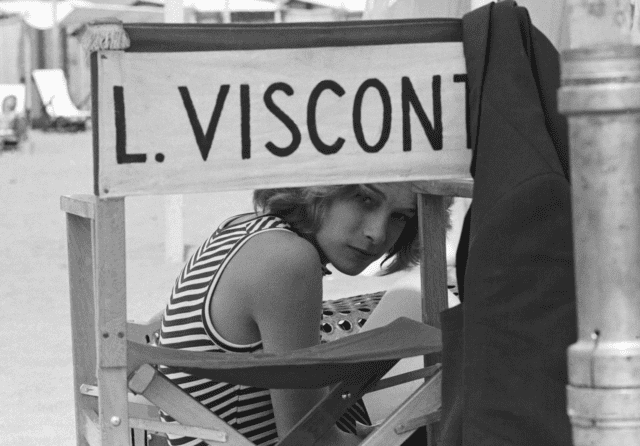
The film opens with hints of a troubled childhood before swiftly detailing the day in February 1970 when Visconti flew to Stockholm on the latest leg of a quest to find the young boy to play Tadzio in his adaptation of Thomas Mann’s novel. Behind-the-scenes black-and-white footage of his casting reveals an awkward and wary 15 year-old Björn – with shoulder-length blond-hair and undeniably striking features – being asked to pose, turn, walk and remove his shirt as Visconti (clearly taken with him) mutters, “he’s damn tall”.
Björn Andrésen, now in his mid-60s, is still tall, but the blond hair is grey and flowing way past his shoulders, and accompanied by a straggly beard. He is gaunt and introspective, and trying (with the help of girlfriend Jessica) to deal with a threatened eviction from his grungy Stockholm flat after fellow tenants claim he is a danger after leaving the gas stove on. As they clean up the flat to try and impress the landlord the film reflects on how, when he was young, his grandmother was ambitious for celebrity and accompanied him to Venice to film with Visconti, where she even had a small part in the movie.
Archive footage of the film shoot shows how Visconti played with the sexuality of Tadzio, who becomes the object of fixation by Dirk Bogarde’s sickly composer Gustav von Aschenbach. More disturbing is when the film plays at Cannes in 1971 (where during the premiere, Visconti proclaimed him to be “the world’s most beautiful boy”) and Andrésen recalling how uncomfortable he felt when Visconti took him to a gay nightclub after the screening. He says that the whole world suddenly seemed to own him, before commenting how, after signing a three year contact with Visconti, the director “owned is face.”
As Andrésen talks about his stuttering career after Death in Venice – including a time in Japan where he made commercials, sang and influenced a generation of manga artists (as well as a period in Paris where he was simply looked after and “treated as a trophy”) – the film starts to gently deviate and delve into his troubled personal life.
He sits with his sister Annike and recalls the happier times they spent together but is haunted – and scarred – by memories of his mother Barbro, a “bohemian soul” who left the family in 1966 and was found dead in woods seven months later. His own daughter Robine Roman says, “in theory he’s an amazing dad…but in practice it doesn’t work,” while he also sadly recalls the death of his infant son Elvin from sudden infant death syndrome, and still carries deep guilt for his drinking and inflated ego at that time.
In his flat Andrésen is surrounded by musical instruments and detritus of his past. He has acted very occasionally over the years – featuring most recently in Ari Aster’s 2019 folk horror film Midsommar – but in essence he has placed a veil over Death in Venice and the way he was portrayed in it. Haunted by past trauma and still struggling to deal with elements of his life, the film thoughtfully and compassionately presents him as a man still dealing with the price of fame and a profound sense of family angst.
Directors: Kristina Lindström, Kristian Petri
Sweden, 2021, 94mins
Production: Mantaray Films, Sveriges Television, ZDF/ARTE, Jonas Gardell Produktion, Filminvestering I Orebro
International sales: Films Boutique
Producer: Stina Gardell
Cinematography: Erik Vallsten
Editors: Dino Jonsater, Hanna Lejonqvist
Music: Filip Leyman, Anna Von Hausswolff
With: Annike Andresen, Björn Andrésen, Silva Filmer, Riyoko Ikeda, Matrgareta Krantz, Robine Roman