Sunny Side of the Doc 2024, running June 24-27 in La Rochelle, France, promises to deliver once again a programme jam-packed with key-notes, market analyses, top-level industry talks, broadcaster showcases, a wealth of networking opportunities and the presentation of 42 new doc projects across seven themed strands.
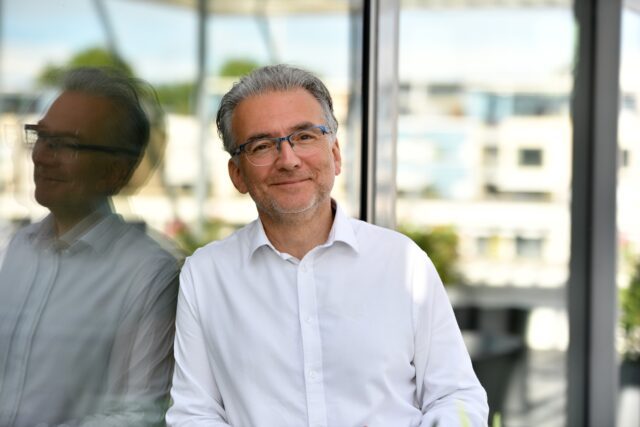
Sunny Side of the Doc is not a festival like IDFA or CPH:DOX with a parallel market component, nor is it a market like MIP which caters for product across all genres. “We are the only pure market dedicated just to documentary,” underlines Sunny Side’s Head of Strategy & Development, Mathieu Béjot, ahead of the event’s 35th roll-out.
“And everybody is under the same roof,” Béjot adds. “I think that really creates a unique atmosphere with a mixture of stands and meeting areas where you can have your business and creative meetings, and with a number of sessions as well where you can get market intelligence and push your projects during pitching sessions. And there is also a lot of possibilities for either formal [contact] through organized meetings or informal network building with drinks on stands. And just walking around the aisles bumping into people – [that is] the serendipity of markets that everybody’s looking for.”
Another thing that differentiates SSD from the likes of the IDFA or CPH:DOX markets is the target destination of the projects it selects. “We are still very broadcast oriented. Our DNA is more with broadcast documentaries, even though the boundaries are getting a bit blurred,” Béjot stresses.
The 42 doc projects selected for SSD 2024, many of which (but not all) have a small-screen vibe, will be pitched within the seven categories of Global Issues, Conservation, Science, History, Arts & Culture, Impact and New Voices. Forty-two may seem a large number of projects, but for Béjot, the number could have been a lot higher. Having to turn down so many other projects was “heartbreaking.”
“I think one of our specificities as well is that we are one of the few markets which thinks along the lines of specialist factual,” he says. “In terms of criteria we need projects that have international potential.”
“It’s a little tricky because we know that sometimes we get projects that are super exciting, but they’re fairly late in their process and they already have strong financing attached to them, even though they might still be looking for 50,000 or sometimes 80,000 euros,” Béjot comments of a selection conundrum.
“But we feel they’ve been around and we know the companies, and we know they’re going to get made. So it’s sometimes a bit of a toss-up between having these projects that everybody would love to have…but at the same time, we also like to keep a balance with projects that need the exposure…Part of our mission also is to make sure that there’s renewal in the industry and that you don’t hear the same pitches from the same companies.”
Béjot adds that a core criterion he and his team look for when making their selection is whether there is “room” within each project for international co-production.
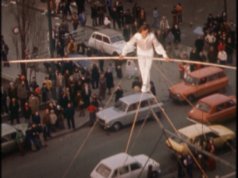
Attendees at SSD 2024 can attend a key-note address every morning of the market. The first, on Monday June 24, presents “an intergenerational perspective from three exceptional Australian First Nations filmmakers (Marissa McDowell, Nitv Head Of Commissions; Marlee Silva, Presenter/Writer at Southern Pictures; Rhoda Roberts, Director at EarthStar Films) who will discuss walking between two worlds on the documentary tightrope,” organisers write. “They will reveal how they navigate industry demands and cultural obligations, sharing Impactful, untold and authentic stories in an expanding global landscape of opportunity.” This keynote precedes an intensive study of the Australian doc scene during the four days of Sunny Side 2024.
The final keynote (27 June) is creatively titled ‘Critical thinking, (fake) news overload and the goldfish’ and is given by Bruno Patino, President of Arte France, in conversation with culture expert Laurent Gaveau. “We are, if I may say so, inviting him not so much in his capacity as the president of Arte, but because he’s also a kind of visionary, and very much a thinker of the digital age,” says Béjot. “He started putting Le Monde, the French newspaper, online a few years ago. And he really believed at the time that the internet was a tool for democracy etc. But you realize a few years later that things are a little different, and where do you go from there, and what role documentaries can play in that universe?”
Other key-notes will be given by Diana El Osta, Sr. Director, Multiplatform Development & Programming at PBS, and Australian XR artist Emma Roberts of Pernickety Split.
Further events during the full SSD programme include showcases by the likes of ORF and NHK; the opportunity to ‘Meet the Executives’ at the BBC, National Geographic, SVT, Blue Ant Media and TVO: and Industry talks on subjects such as Empowering Women In Documentary, Harnessing AI in Docs, Archives at Risk and Meet the Museums, and much more besides.
When Béjot looks back on the past 35 years of doc industry activity (Sunny Side was launched in 1990), the most fundamental changes in modus operandi across the sector have occurred over the past half-decade, he argues. “Thirty-five years ago, the world was simple, where producers were producing, distributors were distributing, broadcasters were broadcasting…”
Even as recently as five years ago, “you still had, especially in Europe, a kind of [production] model that was well established [and which comprised] basically of some local support, your local broadcaster for ambitious projects, a few international partners for international production, and there you had it,” he says.
“Nowadays, the industry is much more complex. Everybody does everything. These days, sales agents will tell you, my role is to read scripts to see whether I’m going to get involved in the project, instead of receiving a finished programme and deciding if [they] want to distribute it internationally or not.”
“So we realize that all the boundaries are being blurred,” Béjot goes on. “Anybody can be a broadcaster by having YouTube channels or fast channels. AI is coming to turn the industry topsy-turvy as well. So yes, I totally agree, the last five years have seen more changes than ever before, and the level of unpredictability is higher than ever before. I mean, it used to be a fairly stable industry. Now people just don’t know what is the next business model. Where are we heading? How do we finance programs? What do people want? It’s so many questions. We are not not claiming that we will [answer] these questions [at Sunny Side], but at least we want to address some of them.”
Béjot further articulates what will constitute a successful market for attendees, describing a sense of elevation that professionals feel through attendance, and a willingness to apply what they have learned. He voices the delegate experience of gaining market intelligence at SSD: “‘I’m going home with concrete ideas of how maybe I should adapt my business model, what kind of projects I should be developing, what I should be paying attention to because it’s an issue that I didn’t realize before. This kind of market intelligence, very, very results-oriented…is actually going to impact my activity, my daily life as a filmmaker, producer, distributor.’”
“And we like this idea of making connections as well,” Béjot adds, recalling a recent conversation with a Japanese producer who described to him the sense of continuum that she believed his market represented. “She was pitching at Sunnyside and a Canadian producer came to see her saying, you know what, this project is not for me, but I remember a year ago you pitched something at Hot Docs and I really liked it, and I’m glad to see you again because I didn’t have a chance to talk with you at the time. And they finally ended up working together.”
“We are one of those stepping stones, not the only one, but we are part of a process, and it’s important to be here because it’s a place where you can nurture, broaden your network,” Béjot stresses. “It [Sunny Side] is not the beginning and the end of everything, but it’s really part of a broader picture. And when we get this kind of feedback, I guess that makes us happy…You get a pulse for the industry, and we think that’s very important.”