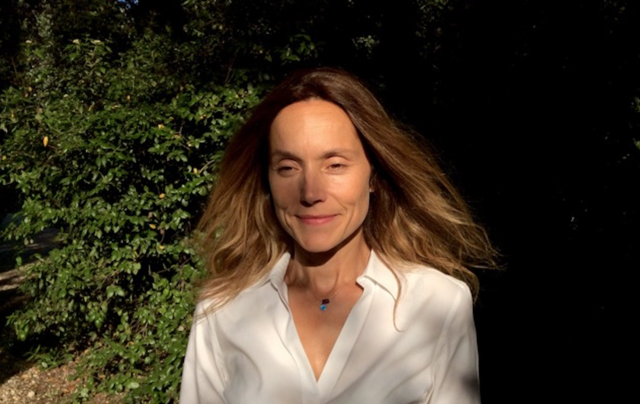
Producer-director Jacqueline Farmer will be overseeing this week’s Sunny Side panel, Why We’re Still Talking About Women (Tues June 22, 4.00 PM, CEST). As she explains to Business Doc Europe, it’s a question to which she herself has many answers.
In 2019, Farmer set up the Nature Through Her Eyes Festival with war photographer Gary Knight. She had worked for many years in natural history documentary. Knight, meanwhile, had long experience of conflict zones.
“We were talking one day about the lack of women in the field in his profession as a war photographer and in my profession as a natural history filmmaker,” she remembers. “All the stories we were seeing on television about the natural world and all the stories we were reading in newspapers about wars were told by white men.”
Now, Farmer is at Sunny Side, following up on many of the themes and debates raised in Nature Through Her Eyes.
“There has definitely been a lot said and written about women in film, really very much sparked by the whole Weinstein affair,” Farmer reflects on the disgraced producer Harvey Weinstein and the emergence of the #MeToo and Time’s Up movements in the wake of his arrest and imprisonment.
However, Farmer points out that long before the Weinstein scandal, feminist film critics (among them Laura Mulvey) were exploring the female gaze, gender stereotyping and economic inequality within the film industry.
“[But] we haven’t really spoken so much about women in documentary,” Farmer notes the lack of debate about the situation within the doc world. That is changing, as evidenced by one of the panelists, Lisa French (Dean of RMIT University’s School of Media and Communication), who has written a new book, ‘The Female Gaze in Documentary Film: An International Perspective’, which addresses this gap.
The session is expected to ask what exactly the female gaze means in a documentary context. It will look at whether the doc world has equivalents to trailblazing female directors like Jane Campion and Celine Sciamma in the fictional sphere.
“As we know, women are under-represented in the field,” Farmer states. “Given that women make up slightly more than half of the world’s audiences, it seems rather unbalanced.”
Farmer has the relevant statistics at her fingertips. In France, the Civil Society of Multimedia Authors (Scam) reported that women represented a third of documentary makers (“we are better represented in documentary than we are in fiction.”) However, the bigger the budgets, the fewer the women involved in the key creative roles. For docs costing over €500,000, only 16% of the directors are female. “That’s pretty damning.”
These French statistics are broadly reflected elsewhere across the European documentary industry. For reasons hard to discern, women “are not trusted by the gatekeepers and the commissioning editors with big budget films.” These gatekeepers tend to have very rigid and dogmatic attitudes about formatting and the type of documentaries they commission and broadcast.
Farmer has produced and directed several natural history films through Saint Thomas Productions. She has worked with many leading broadcasters. “I think women are as good, if not better, from what I see around me, at handling budgets and being careful and responsible with them.”
If this is a ”subconscious bias on the behalf of the gatekeepers, the commissioning editors, the powers that be,” Farmer believes that talking about it can only be beneficial. She is optimistic that attitudes will change. “There is definitely a very different climate today [than] even two years ago,” she notes. “People are really understanding the necessity for diversity and inclusion.”
As ever, the gatekeepers are most likely to re-think their policies if they can be persuaded that it will be profitable to do so. “Even as a business model…when your audience is diverse, and half your audience is made up of women, it would make sense that there were more films made by women and more diverse voices,” she says. “I think people are really getting on board with that.”
The challenge is to ensure that there is “a long term, structural, profound change” to the way the business operates rather just a few token tweaks made to funding models as lip service to the current debate about gender equality.
Across the industry, meaningful schemes are being put in place to promote gender parity. Sweden had its 50/50 programme. Screen Australia has set up its Gender Matters Taskforce. France Televisions announced quotas in 2019 with the goal of achieving at least 30% “female directors across the board” by the end of this year. Meanwhile, in 2019, French state film body the CNC established its 15% support bonus for films with women either as directors or in other key creative roles.
In Farmer’s own field, natural history documentaries, “women have been chronically poorly represented from the outset.” Familiar reasons (she notes) are trotted out: women aren’t strong enough, the work is too dangerous or others can’t take the time off to leave their families for three months to shoot in the Antarctic. The net result is that the films are invariably made from the same limited perspectives.
Farmer’s panel will include such figures as Lisa French as well as Laura Kloeckner who joined Dox Box in 2020 and leads the programme Women In Dox; Noel Kok, Co-Founder & Programmes Director at Nature, Environment & Wildlife Filmmakers Congress (NEWF), and Bill Gardner, Vice President, Programming & Development at PBS.
One point Farmer repeats is that the panel isn’t just aimed at women. “This is Sunny Side’s first conference focusing on women. Please join us to discuss this important topic, particularly you men folk,” she says as she reaches out to as broad an audience as possible. “This is not a women’s ‘problem’. If our industry is to change we need everyone’s involvement. Because the question of female/male equality includes the question of diversity and inclusion au sens large…”
“The more we talk about all of this, the more we talk to the broadcasters and the powers that be about the disparities, the more things will change. It’s not going to be overnight…” she says of the shifts that are slowly but surely taking place.