

Both Raphaël Dubach and Mateo Ybarra have served time as conscripts in the Swiss army, and therefore were better qualified than most when it came to recording a full military mobilization to repel an (albeit fictitious) attack by the (equally fictitious) Global Liberation Front.
Ok, at first Dubach and Ybarra wanted to make a film about basic military training, as they themselves had experienced, over a 5-month period. Then they were going to follow a troupe of male military nurses (which the army deemed too sensitive a subject). But these subjects were totally eclipsed when they were invited to provide their ‘’carte blanche” warts-and-all chronicle of the vast military manoeuvres of early Autumn 2019.
“As we [knew about] this exercise only a month and half before it happened, we had a very short time to write about it, even if we knew well what themes we wanted to approach,” explains Dubach. The 10-day exercise was ostensibly a secret one , despite it being played out so publicly, so the filmmakers had little idea what was going to happen or indeed what details or places they would be able to access. “That’s why a big part of this film had to be written and decided during the shooting and the editing process,” adds Dubach. “We actually really like that kind of cinema, with a really direct approach to the subject and a lot of improvisation.”
As the pair told BDE in 2020, they were also offered the opportunity to “offer a poetic desire to draw the viewers away from preconceived ideas in the heart of one of the most unique armies in the world and one of the most controversial institutions in Switzerland.”
The film goes straight to the heart of whether a conscripted army can be truly effective. Are a bunch of non-professional soldiers (who display varying degrees of interest in the tasks at hand) a mere waste of space, rendered obsolete in an increasingly 2.0 world. Or is an army that is made up of proud Swiss citizens better equipped to defend their homeland?
Co-director Ybarra is not so sure on the latter. “The Swiss identity is very compressed because we have four regions, and three main foreign languages,” he says. “Even amongst the people, there are different points of view. So you have really a lot of people that are maybe willing to do this because of their traditional values, but you also have all the people that do not want at all to be part of the [military] service, but they have to do it. And, yes, it is a really controversial subject in Switzerland because it [costs] a lot of money.”
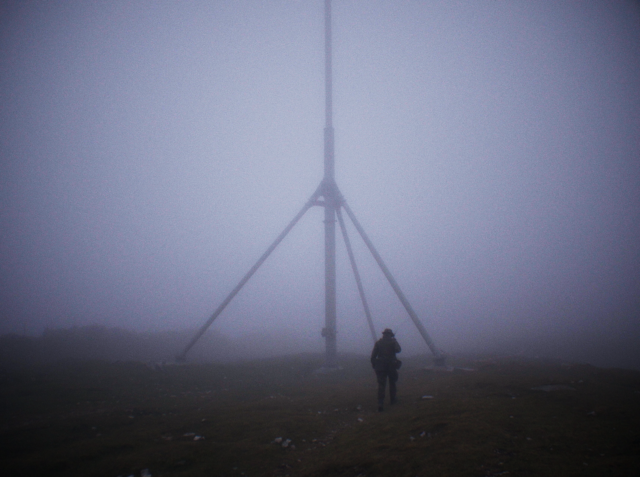
The pair had many problems to overcome, such as the perennial question of raising money for the project. More notably, throughout an unscripted production that was chronicling at times stressful activities in real time, it was not always possible to persuade the soldiers and officers to fall into line. Sometimes they simply didn’t want to be filmed. Also, as the theatre of conflict covered such a vast area over the ten days, knowing precisely where to point the camera was at times a challenge, as was understanding what precisely was going on at any given time. As Ybarra puts it, “trying not to get lost in the fog,” was foremost in their minds.
But such constraints can be a boon, Dubach argues. “We are independent filmmakers, [so] we faced the usual conditions one has to deal with when you are working this way; very small budget, short time shooting, working with all production aspects. But it also gave us the freedom to do what we wanted, the way we wanted.”
Dubach and Ybarra have been friends since childhood and retain “a really organic and strong relationship. Most of the time we don’t even need to speak about what we want. It really helps us to be fast and efficient during the development and the shooting. Furthermore we have really complementary personalities, so when one is down the other can keep up!” says Dubach. They edited a first version of their doc themselves during lockdown before Lucia Martinez came on board to cut the final version.
Back in 2020 the filmmakers mused on the aspect of waiting, of hanging around, that many of the soldiers must inevitably do during such a protracted military operation. “Waiting is an integral part of the day-to-day exercise and energy of the film. It is the comma that punctuates each action, each movement, each cut in the editing process. However, this wait is not a void. It is round and full, because it is through this wait that friendships are born, that discussions blossom and interactions form. It is kind of like a small social theatre in which the most sensitive and intimate parts of our film are played out.”
They continued: “The time spent waiting is on the one hand synonymous with floating and wandering. We use them in the montage to generate daydreams and interiorization. Much like a deep breath, it invites viewers to take a step back from what they are watching and contemplate and question themselves.”
The filmmakers’ contact at the army who gave them “carte blanche” to make a “non-propaganda” film has since moved on, and they have not yet heard back from his replacement at military HQ who recently requested to see a version of the film.
Interestingly the pair were asked last year to return and record a real-life situation that needed the full co-operation of the country’s armed forces, that of mass Covid testing.
“We were in the editing process at the time, and they called us because of course, they think we will make a film about how great the army is. So they call us back and tell us, okay, guys, now we have this huge, pandemic mobilization, would you be interested to go there and shoot some stuff? We just said no,” Dubach signs off.





