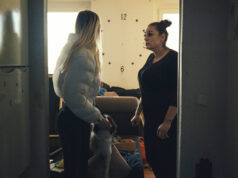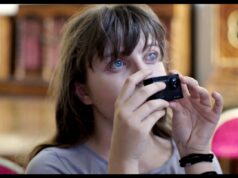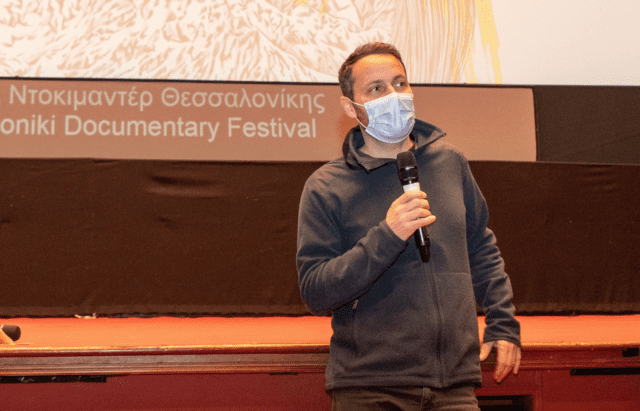
Danish director Simon Lereng Wilmont opened up to Thessaloniki audiences yesterday after the International Competition screening of Sundance winner A House Made of Splinters, about a small group of strong-willed social workers on the Ukraine front line working tirelessly to create a magical refuge for kids.
To a question about whether or not the children’s dialogues are based on a script, the director explained that “there is no script, what you see is their authentic reactions. If you feel that their conversations are too mature for their age, that is because of their experiences. Many children have to grow up abruptly and they gain a wisdom in life much sooner than they have to.”
And how are the kids so natural in front of the camera? “It took me about 1.5 years of coming back and forth to Ukraine to shoot the documentary. I had to build a trust between us in order for them to react naturally before the camera and to be themselves. Also, it was just me and my assistant during shooting and I have two kids their age, so I like spending time with them, just as I enjoyed spending time with these kids. I wanted to learn as much as possible about them and they love the attention you give them. In the more emotional scenes, they did not feel that there is a stranger in the room but they felt safe I was there because they knew me,” Wilmont answered.
Talking to Business Doc Europe before the film’s Sundance world premiere, Wilmont stressed how the shelter, “was cosy and it was small, relatively worn out but it just had this…simple human warmth. The staff had put old but colourful wallpaper in the kids’ dormitories. I also noticed that the kids were hanging out and helping the staff every time they had a chance. That warmth made me super curious but it also made me fall in love with that place.”
He further reflected to BDE on one extraordinary scene in the film when two little girls are talking about their friendship. They’re not sure how to express their affection and so they start scrapping. He describes it as his favourite moment in the entire film because of its emotional nuance and complexity. “They’re not able to say ‘I really like you’ and so instead they fight.”
“I do my own cinematography so it’s not a big team. It’s just me and a camera and my assistant director, who helps me with the translation. But I enjoy hanging out a lot, meeting both the staff and the kids, getting to know everything about their lives, their situation and their characters…I think the kids could actually feel that. Also, I think I was a welcome distraction from their ordinary life,” the director speculates as to how he was able to win his subjects’ trust and to film them at such intimate moments. “They forget me as soon as they notice me.”
Another question posed by a Thessaloniki audience member March 17 concerned the extent to which Wilmont was affected emotionally by the film. He replied: “They are the hardest scenes I have ever shot and will ever shoot. One of the hardest things of making a film like that is that while I want to help these kids because I care about them – I got so close to them during all this time – at the same time I hold no power whatsoever. I fight as much as I can, and with their stories, I give them a voice, which no one else will do.”
“As for the current situation, when we wrapped up, we wanted to make something more for the kids and we made sure they were seen by two psychologists who specialize on childhood trauma, in order to speak with them often and make sure they are alright. They were the ones who also helped one of the kids in the film to move west, so they’re safe now. Another kid did not want to leave his city because that is where their family is, but it’s not a good place to be at right now,” he said with considerable understatement.