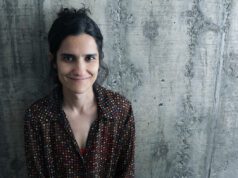
Dutch VR director Celine Daemen underlines how her Venice Immersive selection Songs for a Passerby is a meditative quest through a musical dreamscape that allows the user to step outside reality and look a themselves. “As a puppeteer of your own body you will be entering a poetic space where the melancholy question arises: is this me passing by moments, or is it rather the moments passing by me?”
“By placing spectators outside themselves and showing them the contours of their own ‘self’ through capture with live 3D cameras, I aim to create an experience that touches on a familiar sense of melancholy, wherein we are no longer at one with the world, but in some ways are opposite to it,” Daemen further emphasises in her notes. “As the poet Rainer Maria Rilke wrote: ‘This is what fate means: to be opposite, and to be that and nothing else, opposite, forever.’”
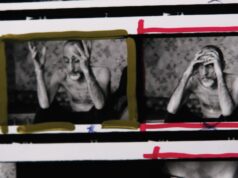
In the 30-minute VR users will follow their own 3D mirror image and, in the process, pass by various scenes: a dying horse, a choir of murmuring people, two playing dogs. “How does one relate to a world of things that are passing?” Daemen asks. Are we a part of it? Or are we just looking at it? And what about the body – is it something that we are or that we have? There is an ambivalence here that prompts the question: could this be the origin of all melancholy?”
“I have attempted to create an experience that investigates the connection between the physical and the metaphysical world. You are both a body that is moving through space and a mind that is looking at it. While the unavoidable passing of time makes itself manifest to you, all past moments will remain present, entering into a simultaneous existence. You are both in the world and simultaneously outside it,” she underlines.
To achieve the dreamlike environment, Daemen worked with Aron Fels on photogrammetry capture and volumetric video. “We worked with a lot of found footage and a lot of staged footage for both the architecture and the people that you see passing by in the scene,” says Daemen. “I think in Songs for a Passerby, there are more than 500 passersby that were all individually captured with volumetric video.”
For the soundtrack and soundscape Daemen worked with composer Asa Horvitz. “I think in this piece there is not really a division between sound and music. All the entities that you meet in the piece, whether it’s a dog, a rock, or a person, they are all these sounding entities that are singing in a way.”
What’s more the libretto, written by Olivier Hertier and sung by twenty singers and four soloists, was very much inspired by the idea of incantation. “They are searching with words in these kinds of repetitive and mantra-like texts,” Daemen explains. “Asa asked them to focus on hearing more than on pronouncing. So the melodies are always sounding like something passing through them, more than something that they really want to express. These dreamlike images, mesmerizing sounds, mantra-like texts and repetitive melodies somehow, by making you take a distance from yourself, bring you in effect closer to yourself. Diminishing distance by taking distance,” the director stresses.
“It was very inspiring to work with Aron, Olivier, Asa and the rest of our amazing team, to shape those ideas together and truly merge their disciplines into a transdisciplinary experience,” Daemen ends.
This is a longer version of an article written for See NL, published by Eye Filmmuseum and the Netherlands Film Fund. After Venice, Songs for a Passerby will feature at the renowned Muziekgebouk in Amsterdam, 20-30 September.