“Structurally, I wanted to make a film whose experience was akin to peeling back layers of truth, one that seems like a history documentary but becomes a psychological thriller.” UK docmaker Sam Hobkinson talks to BDE about his Sundance selection Misha And The Wolves.
When, six years ago, British filmmaker Sam Hobkinson stumbled on “a tiny article” about disgraced Belgian author, Misha Defonseca, his interest was immediately piqued.
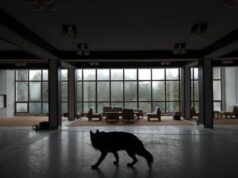
Misha had written a Holocaust memoir, published in 1997, which described how she, as a seven-year-old girl and searching across Europe for her parents (supposedly deported by the Nazis), had been adopted by a pack of wolves. The book was a huge bestseller and spawned a movie adaptation.
The author sued her publisher Jane Daniel for unpaid royalties and won a fortune. Daniel, faced with ruin, then began her own research into Misha’s story. Belgian genealogist and Holocaust survivor Evelyne Haendel was recruited to dig into Misha’s past, at which point the author’s subterfuge was exposed.
Hobkinson’s film Misha And The Wolves (which world-premieres later this month in Sundance World Cinema Documentary Competition and is sold by MetFilm Sales) explores this complex and confusing case.
“It got into my brain. I couldn’t stop thinking about it. It seemed like it was a film about storytelling and about documentary making; a story about what myself and my colleagues do. That is what intrigued me – levels of memory, imagination and history that we draw on for our storytelling as documentary makers,” the director explains of his initial fascination with Misha.
The film also seemed highly topical given the Trump era obsession with fake news.
Understandably, the protagonists were “very nervous” about appearing in a documentary which touches on rancour, fraud and betrayal. Nonetheless, friends and neighbours from the tight knit Massachusetts town where Misha had been living eventually agreed to participate.
“We were at pains to say to people that we did not want to make a film that had clear heroes or villains,” Hobkinson says. The director was intrigued by Misha and was keen to discover why she had spun such a story. Although her memoir was fake, he discovered that she had suffered as a child and that her family had a very troubled wartime history.
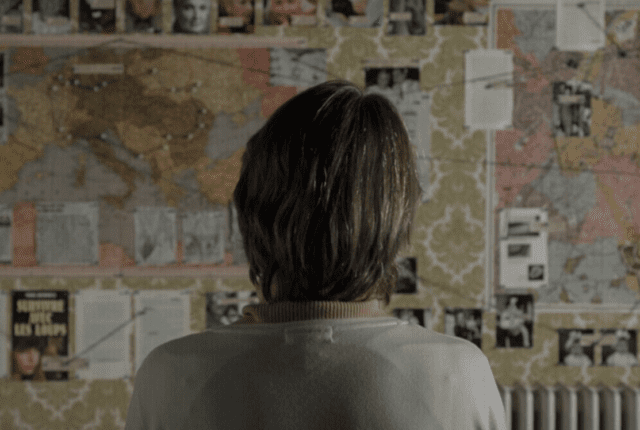
“Structurally, I wanted to make a film whose experience was akin to peeling back layers of truth. One that seems like a history documentary but becomes a psychological thriller. One where the viewer continually has to reassess the shifting truth within the story and one that would provoke debate about the motivations of its characters.”
At different points in the story, new characters are introduced whose testimony either casts new light on what has gone before, or pulls the film in a different direction.
Money is one of the ingredients in the Misha scandal. In the court case in which she sued her publisher, she was awarded $22 million. The judge and jury regarded her as a Holocaust survivor who was being exploited and therefore ratcheted up the damages against Jane Daniel.
One of the interviewees speculates that pure greed on behalf of both Misha and her publisher was really the driving force here. Hobkinson is not so sure.
“For me the characters’ motivations are endlessly complex. Though greed may have been a factor I believe other factors were at play on both sides – a kind of fame, attention, sympathy, professional ambition, personal and family redemption,” the filmmaker suggests.
Those who were taken in by the author were later very embarrassed about their credulity. Hobkinson includes footage of TV show hosts listening with awed sympathy and intense concentration to Misha’s stories about stabbing Nazi officers. He shows school kids who created art projects inspired by the book. “As human beings, we are seduced by great stories,” Hobkinson says of the way everyone bought into Misha’s tales.
Misha certainly had a great story to tell but she was trespassing on sacred turf. To lie about the Holocaust is, for many, beneath contempt. It is also to risk providing extra grist for Holocaust deniers who’ll say that if one story isn’t true, that calls into doubt all the others too.
Hobkinson hadn’t set out to make a Holocaust documentary but acknowledges that the film had eventually turned into one, albeit with a post-modern spin. It was less about the horrific events of the war years than the industry that has sprung up around the Holocaust and the different narrative strategies used to engage with events that are often beyond description.
It is very hard to question someone who claims to be a Holocaust denier – one reason why Misha got away with her lies. No, she hasn’t seen the film. She is living quietly in Massachusetts and trying to keep her head down. The director appears to retain at least some pity for her.
“I wanted the audiences’ sympathies to twist and turn and to trap the viewers in the same moral maze as the film’s characters,” Hobkinson says. “I wanted to give them a similar experience to that of the participants.”
He adds that he sees the researcher and real-life Holocaust survivor Evelyne Haendel as the documentary’s “centre of good.”
“It was difficult to end the film – to find an interpretation that was nuanced and someone to deliver it who felt unencumbered by ulterior motive. Ultimately that was Evelyne…whose struggle to ultimately define her emotions towards Misha seemed to sum up the complexity of the character and the story.”
Misha And The Wolves wasn’t easy to finance or make. Potential US backers were “queasy” about the subject matter. “It was a huge effort really from Vesna Cudic at MetFilm Sales who worked incredibly hard to fund the film. We have got a lot of partners in all the European territories,” Hobkinson says.
Shooting took place during the Covid pandemic with Hobkinson conducting some of the interviews via Zoom, “The plan was to shoot in the States and Belgium in March/April time. When everything locked down, it became clear that wasn’t going to happen.”
All the struggles seem worthwhile now that the film is completed and soon to premiere during Sundance. The hope now is for a theatrical run in the UK (if cinemas are open) before the film is seen on BBC Storyville and elsewhere.