

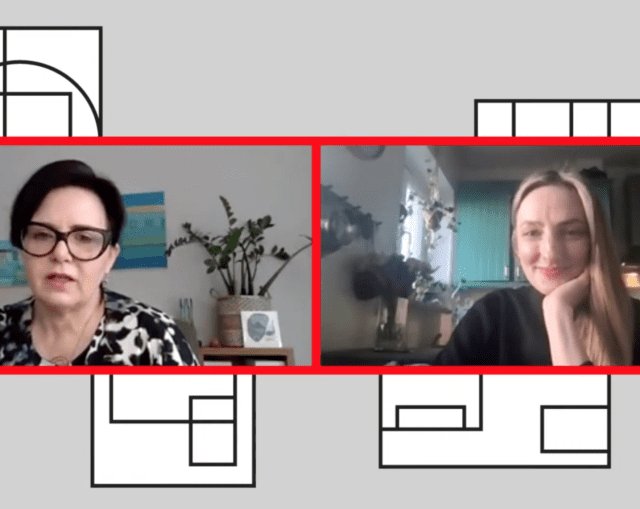
Producer Ruth Reid (Warner Brothers ITVP) and exec-producer Hanka Kastelicová of HBO Europe held an East Doc Platform online masterclass last week during which they outlined ten lessons they learned in producing the upcoming Scandi-noir doc series Pray, Obey, Kill.
The story was one that gripped a nation. On a bitterly cold night in January 2004, gunshots sounded across the tiny Swedish village of Knutby. A young woman was murdered. Her neighbour suffered multiple gunshot wounds. The world’s attention turned towards the tight-knit Pentecostal congregation and the ensuing court case became an international sensation.
In the six-part Pray, Obey, Kill, directed by Henrik Georgsson (The Bridge), investigative journalists Martin Johnson and Anton Berg seek to shed new light on what really happened that night, investigating new angles of the case, accessing material never before revealed and conducting exclusive interviews with people who are now talking after years of silence.
The doc series will premiere across HBO Europe territories on April 4. In the US, the series will debut on HBO, and be available to stream on HBO Max, later in April 2021.
Last week at East Doc Platform, producer Ruth Reid (Warner Brothers ITVP) and exec producer Hanka Kastelicová of HBO Europe, discussed the overall success of the production as well as the significant lessons they learned in the process.
After Reid pointed out how Pray, Obey, Kill was “the most challenging but also one of the most enriching projects of my career to date, possibly the most,” HBO Europe’s Kastelicová told of her reaction to the initial Warners pitch. “You have to always rely on your instincts…We were curious, we were very passionate. That was a good sign.”
Lesson One during the masterclass was to ‘do your homework in advance’, especially for a story told in myriad ways in the past, and across diverse media in the past. “What we wanted to analyse as a team was…what made the other global true crimes series stand out, and also think very clearly what made this series different from everything that had been told [on the subject] before, but also how it could stand out on the global stage,” said Reid.
Added Kastelicová: “In Sweden this was the most covered crime case in the media, so we had to come with something new and fresh, and our goal…was to make this series accessible to the global audience.” She particularly applauded the creation of a “miniature world” which was designed and created for the production, which reflected the tiny scale of the Swedish village in which the crime took place. It served as “an important element to help us better understand the relationships between the protagonist…the whole geography of the story.”
The second lesson (What is it all about?) underlined the importance of truly understanding a story in all of its intricacies (and the material at your disposal) and deciding on a solid structure that delivers to the audience. “What is important in a series is to have enough to carry you through four or six episodes,” said Reid, pointing out how, on this project, it was necessary to identify the plot, the sub plots, the theme and also the sub-themes to maintain momentum and to make sure there were enough twists in the story to keep the audience engaged. “Thematically it was very rich. We had crime, religion, power, lies, secrets, deceit, sex and and a sect, misuses of power, potential injustices, and through the journalists we tried to explore the ‘then’ and also the ‘now’ storyline.” That is, the story as historically reported and the new investigation as undertaken by Martin Johnson and Anton Berg.
“Creating a strong ‘now’ was very important because the story had parts in different times, so when you have the one platform you can always come back to, it’s very good.” said Kastelicová.
Lesson three was ‘write and re-write your script.’ While Reid experienced ‘pushback’ from some of her creatives on this, for her a detailed script was essential. “We actually wrote 40-60 pages per episode and it was an extremely important exercise. Purely from a production perspective it very much focuses your resources, your time, your money, your energy, knowing what you are going to try to do, testing out some dramaturgical worries,” commented the producer.
Kastelicová concurred: “The expectation and time pressure was very high, so therefore I had a natural instinct that we had to have a strong base in the beginning…for me writing and rewriting – it is somehow focussing.”
Lessons four and five (‘be realistic with your budget’ and ‘double your edit time’) were conflated with Reid underlining how, on a complex story such as Pray, Obey, Kill, involving crime, entailing use of archive and with massive international potential, the budget on ‘legals’ should be more than adequate from the start.
Meanwhile Kastelicová was banging the drum for extra money in the budget for editing. “If you want to do a perfect production you need to have enough time for editing, because when you have hundreds of hours of materials, and there are so many ways how to tell the story, and if you have such a complex story with so many strong protagonists, and you have to make so many expositions and drive so many storylines, of course it’s important to have enough time (to edit).”
She added: “I knew from the beginning that the editing would be very decisive and very difficult and it was even much more difficulty than I could imagine…so for the next one [addressing Reid] I will vote for doubling your editing time.” Reid pointed out that the production was in edit for over a year, more than double the time they anticipated.
After they discussed the necessity for a great pitch (lesson six) both for development and production – “it’s very important to come with a vision, not just a story” – the pair addressed the all-too-human-foibles that afflict both producers and creatives alike.
In delivering lesson seven (‘don’t make too many detours’) Reid advised the online audience to “trust your gut, know that the preparation that you’ve done is good. You’ve made those decisions for a reason. Don’t feel like you need to go off in another direction.” This project was, she said, extremely complex with many threads and storylines and many more potential storylines. “There are many many stories that could be told, and also many we chose not to.” Only the essential ‘red thread’ should be maintained, she advised.
In lesson eight, Reid talked about ‘considering the unthinkable.’ In the case of Pray, Obey, Kill this was exemplified by their losing a director halfway through, but finding another [Henrik Georgsson] “who was perfect and who delivered fantastically.” Also, just as they were approaching production lock, local Swedish broadcaster SVT committed to its own mini-series on the murder in Knutby. “It was a challenge…but both these two huge things that were completely unthinkable really helped us to refocus what we were doing. It really brought [forward] the question for the national vs international audience focus,” says Reid.
For Kastelicová, these unforeseen circumstances proved her adage “that everything bad is good for something…You should not panic when the unthinkable happens. The success rate is on how the producers are able to carry this big shock when it comes.”
The final two lessons underlined the need both for creative ambition and an attitude of zen, to ‘dream big’ and at the same time to acknowledge that ‘you don’t have to know everything.’ I
n the first instance, what seemed impossible, ie to secure an interview with even one of the three main protagonists of the story, was achieved with aplomb, with two major new interviews in the bag (that of assailant Sara and the head of the religious cult).
As per the final advice, Reid stressed how, “what I learned in this process is that you cannot control everything. You have to have structure [and] you have to have flexibility. Flexibility is absolutely key, accepting the fact that you cannot control everything, even if you plan…you will be much more creative and much happier.”
Kastelicová added: “I believe it was a fantastic collaboration. It was a very well working mechanism. In documentary-making I think we are already [expecting] that the unexpected can happen, so then you just accept [it] and have the intuition, and feel how things are changing.”
Pray, Obey, Kill is directed by award-winning Henrik Georgsson (The Bridge, Tsunami, Marcella, Stieg Larsson – The Man Who Played with Fire), produced by Ruth Reid for Warner Brothers ITVP, and Anton Berg, Martin Johnson and Martina Iacobaeus serve as Executive Producers. Executive producers for HBO Europe are Hanne Palmquist, Hanka Kastelicová and Antony Root. It is produced by Warner Bros ITVP Sweden for HBO Europe. International Sales for Pray, Obey Kill are handled by WarnerMedia International TV Distribution.





