

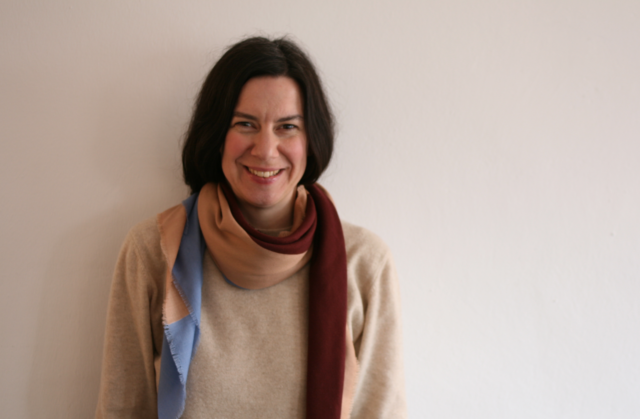
Julia Teichmann, pic courtesy of German Films
Julia Teichmann is Head of Documentary & Regional Desk Central and Eastern Europe at German Films, the agency which promotes German films worldwide. Speaking to BDE, Teichmann, who took up her job last autumn after many years working as a journalist and film programmer, explains why she expects the German doc sector to bounce back quickly after the Covid crisis.
“People were shooting,” Teichmann hails the resourcefulness of German documentary makers who managed to keep working throughout the pandemic, shooting remotely or using Zoom, in spite of travel restrictions. “I think that [German] documentary filmmakers are always very creative in adjusting to the situation.”
Look through the 2021 German Films catalogue for documentary and you will find hundreds of titles. In some respects, the virus notwithstanding, these appear to be boom times for the sector.
Maria Speth’s Mr Bachmann And His Class, a classic three and a half hour cinema verité documentary about a middle school teacher and his pupils, was selected for main competition at this year’s Berlinale – and won a Silver Bear. Teichmann sees its success as yet more evidence “of the international trend that has already been taking place in the past years – all the big festivals are showing documentaries now…there’s not the segregation that there used to be: documentary on the one side and feature films on the other side.”
The evidence pre-pandemic was that German audiences were going to docs in increasing numbers. The giant streamers, Teichmann points out, have also been getting behind German documentary for the first time. A Perfect Crime, the first German Original Netflix docu-series, has been racking up views on the Netflix platform. Meanwhile, underlining the growing crossover appeal of docs, German production powerhouse Constantin has recently set up its own documentary arm, Constantin Dokumentation.
Young talent is also emerging. One film which has already enjoyed a lengthy festival run is Berlin-based Alison Kuhn’s The Case You, about sexual harassment in the film industry. This has been competing this week in Dok Fest Munich’s student competition.
German docs have featured prominently at spring events like Visions Du Reel, CPH: DOX and Hot Docs. Daniel Sager’s Behind The Headlines, which showed in Copenhagen and also opened the Munich docfest, is among the titles attracting buyers and festival programmers.
Current affairs-based docs are predicted to surface at festivals later in the year, among them Lennart Hüper’s No News, made through sixpackfilm. This is about the crew of the non-governmental sea rescue vessel ‘Lifeline‘ which ended up stuck in Malta for months and was forbidden to go to sea – an incident highlighting the absurdity of European migration policy.
UFA Fiction is currently producing a so-called docu-thriller, The Big Fake – The Wirecard Story, which combines documentary and dramatised elements.
Another new title blending documentary and fiction is Silke Meya’s Mojsłońik – My Little Elephant, about two female artists, one of whom is suffering from a crippling disease, who perform in an elephant costume together. The film, which is based on the real story of these women, was recently selected for the Visions Du Réel Film Market.
There are high hopes, too, for Vera Brückner’s new film Sorry Comrade, about two students in love separated by the Iron Curtain, and for Evgeny Kalachikhin’s Beyond The White, handled in the market by Taskovski Films and which looks at the struggles of villagers living in communities in northern Russia, beside the White Sea.
In the short term, Teichmann acknowledges there may well be a logjam at festivals. Several German documentaries from 2020 and even 2019 have been held back until the pandemic has eased. There are also plenty of new titles from 2021, vying for selection at international festivals.
“But the festivals have smaller programmes now, still being [held] online…and the markets are full.”
Now the pandemic is easing, Teichmann and her colleagues are continuing to organise German Film Weeks in Beijing, Moscow, Buenos Aires, Madrid and elsewhere in order to showcase German titles, including docs, to distributors, festival programmers and local audiences. Even if some docs coming out now don’t get the festival exposure they might have anticipated, they should still have the chance to be seen internationally.
German Films will underwrite filmmakers’ travels costs and help pay for such services as subtitling when their documentaries are selected for international festivals. With so many festivals being held online, the organisation has been looking in recent months for other ways of supporting these filmmakers and the festivals at which their work is shown, such as recording interviews with the filmmakers for the Film Weeks.
“For international festivals we would help in providing contacts to the filmmakers, highlight films (like always) or buying ads in the catalogues/online to name German titles and support the German presence at the festivals,” Teichmann adds.
There have been occasional stumbles in the sector. She points to the intense public debate about Lovemobil, the recent film by Elke Lehrenkrauss about German sex workers from foreign countries. It won the German Documentary Award – but the award had to be returned after it emerged that Lehrenkrauss had staged some of it.
Although this was a scandal at the time, it has provoked worthwhile discussions about documentary and ethics, the limits of hybrid filmmaking and how far directors should be allowed to go in blending factual and fictional elements. Teichmann expresses her opinion that, “art should be free, there should not be a formal censorship; and as a consequence one should be not or not have to be afraid of making transparent the way he or she is working.”
Teichmann (who used to programme for Dok.fest Munich) further explains her own fascination with documentary. “I consider myself really lucky to deal with documentary more than feature film. It’s a nicer life as a documentary programmer than feature film programme because there are so many more good documentaries than there are feature films.”
The Munich-based exec is clearly delighted to be in her new job at German Films. “Helping German documentaries to be seen abroad is like a dream job,” she enthuses.
She takes particular pleasure in helping directors find the right international and festival strategy for their docs. “For filmmakers, especially first-time filmmakers, it is like a jungle. Many are their own producers. They really don’t know [what to do] and I can help with that…you make people happy and their films seen!”





