

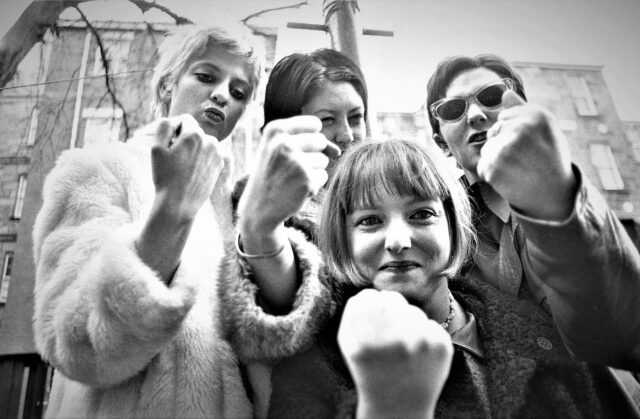
It’s a shocking detail in new documentary Since Yesterday: The Untold Story of Scotland’s Girl Bands, but only one record from a Scottish girl band has been a UK top 30 hit. Many of the girl bands in Scotland over the last 40 years have recorded sparkling debut albums – but very few have got on to consolidate their initial success.
The film, directed by Blair Young and Carla J Easton, is premiering on the closing night (August 21) of the Edinburgh International Film Festival and will be released in UK cinemas by Cosmic Cat on October 18. Its appearance on the big screen will remind audiences of groups like The McKinleys, The Ettes, Strawberry Switchblade, Sophisticated Boom Boom, Twinsets, His Latest Flame, Sunset Gun, LungLeg, Pink Kross, Sally Skull, Hello Skinny and The Hedrons. Their names are less familiar than those of the many Scottish male groups of the era – but the filmmakers set out to explain why pop history has never given them their full due.
Co-director Easton was in a girl band herself, TeenCanteen.
“When we launched in 2011, we were very much one of the very few if not the only girl bands on the scene at the time. We were always referred to as the ‘female four piece.’ I had always been a fan of the American girl groups. Naturally, I started looking for something closer to home,” Easton remembers how she became interested in the stories of other girl bands. “I think subconsciously it was to validate my right to be on the stage.”
Blair Young, one of Scotland’s best known pop video directors, had been working on a promo with TeenCanteen when he and Easton first discussed the way Scotland’s girl bands have been treated over the years.
“None of the bands in our film got to a second album,” Easton points out. “The progress has been really slow.” One band, The Hedrons, weren’t given a record deal on the astonishing, deeply chauvinistic grounds that “they might get pregnant and mess it up.”
If you’re so inclined, there is, then, plenty here to get depressed about. The UK Parliament’s ‘Misogyny in Music” report from earlier this year makes grim reading. Sexual abuse is endemic in the industry. Opportunities for women in the music business remain limited. Blatant sexism and discrimination remain.
“Me and Blair are left with a lot more questions after making the film than we are answers. You take a step back and on a global scale, you go: ‘where is the all-female equivalents of the Beatles or the Rolling Stones or U2 or Coldplay – [bands] that are stadium selling and that have careers of longevity.’ We’ve had flashes in the pan here and there like the Spice Girls or Destiny’s Child but they never seem to keep going and get to album 10.”
The film makes it very clear that the music industry has a long-standing “problem with girl bands,” as Easton puts it. She and Young are calling on promoters, festivals, bookers and records labels to book and sign “more diverse line-ups.”
Nonetheless, both directors point out their film is as much a celebration as a piece of polemic.
“Practically every band in the documentary merit their own documentary,” Young points out how difficult it was to fit in all the material they gathered. He and Easton had to work out the “key stories” to tell. There were “heart-breaking” decisions along the way about bands that couldn’t be squeezed into the doc.
Easton provides the film with its lively and playful voice-over. One key point she makes is that getting up on stage can be exhilarating.
“There is nothing more joyful than having that first joy and excitement of being in a room or a garage with your pals, plugging in and making a noise. It is just glorious. I feel everyone should have the chance to do that if they want. That was what was so great about the film. I was interviewing the women. It was musician to musician. The shared experiences were huge. That was what I think made the film so great.”
Easton’s message to the film’s viewers is that “you’re never too old to pick up an instrument and learn three chords.” Then you too might have the chance to experience the terror and exhilaration of performing live. She mentors young kids. When they confide that they’re apprehensive about performing, she tells them “nerves are good. They show you care about what you are doing.”
She also believes that it’s a basic human instinct “to want to make a sound. Whether you’re a baby and you’re playing hand clapping games or you’re bashing away on pots and pans in your parents’ kitchen, I think there’s a need to create noise and create tunes. That’s why when we’re very young, we love lullabies and nursery rhymes. Music is ingrained in us.”
Easton was 27 when she started TeenCanteen and had loved music from a young age but didn’t always have the role models she needed. She remembers going to a gig at legendary venue Barrowland in Glasgow when she was 13. If there had been an all-woman band playing, it might have inspired her to set up her own band even earlier.
Screen Scotland eventually backed the documentary, which was produced by Miranda Stern, Beth Allan and Sinéad Kirwan. The filmmakers also launched a kickstarter campaign to ensure they’d be able to pay for the archive material they needed.
“We always knew that we didn’t want it to be just talking heads. We always wanted it to feel like the greatest mixtape your friend had ever given you of music you’ve never heard of – and to represent that visually,” Easton says of the aim of the doc. “I think we’ve done that. Everyone in the film is so exciting and interesting. [We wanted] to colour in their story, make it fun and fresh, vibrant and fast-paced!”





