

The 32nd Sheffield DocFest kicks off June 18, heralding six jam-packed days of public- and industry-facing documentary activity. The festival opens with the gloriously British Still Pushing Pineapples, in which DocFest alumnus Kim Hopkins provides an antidote to megastar pop profiles of recent years as she tells the moving story of Dene Michael Betteridge, frontman with the much-derided UK pop outfit Black Lace.
Thereafter, eight docs will compete in the Academy Award-accredited International Competition (all world prems), and eight more in International First Film Comp. DocFest presents four other competitive sections: International Short Film Competition; International Virtual Reality Competition; the Tim Hetherington Award and the Youth Jury Award.
Meanwhile, the broad spectrum of day-today existence and human interaction is covered within the festival’s themed sections, encompassing the music that defines us (Rhythms); resistance, revolution and the fight for our rights (Rebellions); the personal ties that bind us all (People and Community); exploring the past (Memories); the metaphorical and physical paths we must navigate (Journeys), and the conversation that inspire and inform (Debates).
DocFest guests of Honour this year are the award-winning producers and directors Fenton Bailey and Randy Barbato, also co-founders of media company World of Wonder (WOW). A programme of their work includes a 20th anniversary screening of Inside Deep Throat, a preview of Murder in Glitterball City, and the UK premiere of Strange Journey: The Story of Rocky Horror.
At the core of DocFest Industry is the MeetMarket presentation of 45 feature doc projects making their pitch bow, and five Rough Cut projects nearing completion and hopeful of festival/distribution roll-out.
International delegations at DocFest Industry hail from Scotland, Chile, Palestine, Ireland, France, Iraq, Serbia and Wales, while cross-border deputations arrive courtesy of Chicken & Egg and the New Generation Europe Foundation.
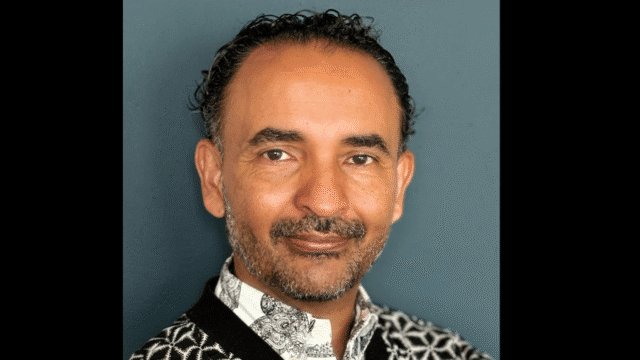
Raul Niño Zambrano is overseeing his third festival as Creative Director. For him, is DocFest ostensibly a public-facing or an industry-oriented event? Where do his priorities lie?
“I really think that we are quite unique and are one of the few festivals that are genuinely 50:50,” he responds. “I have always felt that within the DNA of Sheffield DocFest Industry is as important as public-facing. There’s something about making sure that we are part of the same ecosystem and that we complement each other. So the conversations I’m having with Patricia [Mancini] and with the whole industry team are the same conversations I’m having with the program advisors and the consultants.”
He points how equal onus is placed on “creative and risky” projects within the festival programme and MeetMarket selection (many of which return to Sheffield when complete). But nor is small screen production off limits. “Television is not a bad word for us,” he underlines.
As ever, the number of new projects at MeetMarket is high (45 new; 5 rough cut). An industry veteran, Zambrano is totally aware that Sheffield comes at the end of an intense 6 months of pitch activity at a plethora of doc events that have offered up international, regional and national pitch opportunities for hundreds of new works. What’s more, there is another six months of equally intense pitch activity to come. What makes him so sure that his offer to Industry is as strong and competitive as possible?
“First of all, we believe that the 50 projects are a clear reflection of what we think are the best projects out there,” he tells BDE. “But also a reflection of what is happening in the world, of what is happening in terms of style, or what is happening in terms of emerging countries or with emerging filmmakers, or the well-known filmmakers that are coming back.”
“That’s the kind of the magic that happens with us,” he continues. “I think producers find their way and they know who they will reach when they are with us in Sheffield, and especially with the matchmaking there’s always this really good feeling of, ‘oh yeah, I am going to have the meeting I need or maybe the one I was not aware of – but I have really found this person finally.’”
Zambrano further stresses a sense of egalitarianism across the professional set-up, whereby only one Industry pass is needed, so everybody has equal accessibility, and lines of demarcation are blurred.
As the UK’s leading docfest, Sheffield is also the natural launchpad for home-based projects, which make up approximately a third of the selection, he points out.
“We want to be also the home for UK producers. We get a lot of submissions, so we have to disappoint a lot of producers,” he confirms. “But yeah, there is a strong presence and again, believe me, it’s not because we are pushing. I think UK is really developing into a very, very interesting production and also co-production country in terms of their stories and storytelling.”
Zambrano further feels that Sheffield has reclaimed a seat at the top table of doc fests over past years. “Yes, there is something specific in the current climate – with misinformation, with artificial intelligence, with fake news – but I think we are really playing a key role in shaping the landscape of what the discussions can be about. We are giving something necessary, but also something different.”
“These are complex times, but I think the genre is offering something beautiful as well,” he adds. “So I think it is just a matter of encouraging people from the industry. I know how complicated it is to make a documentary. Our conversations with filmmakers are sometimes ‘my goodness, I have no idea how you are finishing your film,’ but fortunately they always find a way to make it …and when they share it with us and with the audience, something really happens. Documentaries are having a special space and we are proud to be part of that ecosystem.”
Zambrano cites guests of honour Fenton Bailey and Randy Barbato as custodians and defenders of this ecosystem. “There are broad options today in terms of media, and they are definitely examples of that, no matter how complicated it is now in the States with queer content. These are filmmakers and producers who have done everything from starting their own streaming online to very serious linear documentaries. They are also doing podcasts.”
“No matter how dark things may look, there’s always this light in there,” the Sheffield boss signs off to the wider creative doc industry. “And I think the documentary community has been always able to look forward and nurture and present these beautiful works.”





