

Ukrainian producer and director Alexander Rodnyansky is best known to European audiences as the producer of Oscar-nominated films from Andrey Zvyagintsev, and for his work with such prominent director as Kantemir Balagov, Michel Franco and Ari Folman. He was a prominent businessman and media magnate who set up the independent TV channel 1+1, and ran Moscow-based broadcasting outfit, CTC Media.
In the eyes of the Russian law, though. Rodnyansky is also now a felon. He was sentenced in absentia by a Russian court to eight and a half years in prison for criticising the Russian full-scale invasion of Ukraine. He is also currently overseeing a host of newer productions from his company AR Content, from his exile in LA.
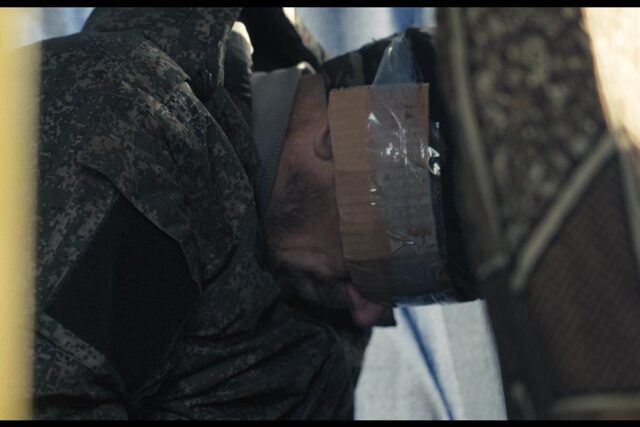
Everything changed for Rodnyansky on February 24, 2022, when Russian tanks crossed the Ukrainian border. It was then, as he remembers in his new feature documentary Notes of a True Criminal (sold by Cinephil and world-premiering in Venice) that his son Alexander Rodnyansky Jr, an economic advisor to Ukrainian president Zelensky, called him early in the morning. His son held the phone up to the window so Alexander could hear the Russian missiles flying over Kyiv.
In the new film, Rodnyansky uses the invasion as a starting point for a cinematic journey through his family history. “This is the first film I made as a director in more than 30 years,” Rodnyansky confides to Business Doc Europe.
Back in the early 1990s, Rodnyansky made another, related documentary, Last Farewell USSR, part of which was “devoted to the endless war that had befallen several generations of the Soviet empire….I shot many different episodes in a country that was breaking apart in front of my eyes. I was a documentarian travelling across a huge country.”
Rodnyansky had filmed footage of the withdrawal of Soviet troops from East Germany. “I was looking into the faces of soldiers at that time,” he remembers. His question was whether these Soviet soldiers were actually leaving a war or going toward it. They were becoming citizens of new countries. As the geo-political landscape changed, former comrades risked becoming enemies. 30 years on, the fault lines finally cracked open.
“That made me think of the need for a new film, one that would connect events from different times and throw in an emotional reckoning with the end of an empire which, more than 30 years ago, had seemed to come without bloodshed,” the producer/director reflects.
Notes of a True Criminal, which Rodnyansky co-directed with film critic Andriy Alferov, isn’t just about war. It had a strong personal dimension. He looks at key events in Ukrainian history and asks how they have affected him and his family.
Rodnyansky’s relatives have been continually in the firing lines. At the time of the massacre of Jews at Babi Yar in Kyiv on September 29 1941, his grandfather handed his mother through the window of the last train leaving for the east – and that was how the family survived.
As the documentary reveals, Rodnyansky was also there at Chernobyl at the time of the nuclear leak and disaster. The Russian full-scale invasion, then, is just the latest in a long line of historical calamities which he and his family have witnessed at first hand.
Rodnyansky comes from a family of documentary makers. In the film, Rodnyansky also talks at length about his relationship with his mentor, Felix Sobolev, who taught him at film school. Sobolev was very tough on his students but was also an inspirational figure. Rodnyansky was only six years old when he first watched one of Sobolev’s documentaries about science and was immediately enraptured by it. He was delighted to be one of only five young filmmakers from the thousands who applied who was chosen to participate in one of Sobolev’s workshops. “I was the youngest and spent five years with him, [working] very closely…I kept a very, very close relationship with him and worked as an assistant on some of his movies as well.”
Sobolev stood for progress, science, and the idea that technological development will change the world for the better. He may have come from a generation which suffered during the Soviet era but retained his humanism and his optimism.
Another key figure in the documentary is the director’s son. Alexander Jr is shown as a boy in December 1991 visiting the Kyiv cemetery where his relatives are all buried at the very time Ukraine was voting on its independence from the Soviet Union. The son became a distinguished young academic abroad but eventually returned to Ukraine to serve in Zelensky’s government as an economic advisor.
“For him, it was a very important sentiment to be helpful to his country,” Rodnyansky says. “I believe his life was somehow changed by Ukrainian history…I decided to make him a part [of the film].”
The director insists he first embarked on the movie simply as a video-diary for himself and his family. He financed it out of his own pocket, and only gradually decided to look for a bigger audience.
Rodnyansky’s hope now is that audiences will be able to identify closely with Notes of a Criminal. It is dealing with dark subject matter but still has a strain of optimism. “It is a story of an unending conflict but of a deep, enduring hope that one day the war will end. This is what the film is about. I believe this experience is shared by many, many families around the globe.”
Rodnyansky adds that he always intended the documentary to be primarily a “personal statement,” not a film about politics or war.
“That’s why, when I finished the film, I decided to show it to Venice and see the reaction. If the reaction was not good, I am quite experienced as a producer and I would understand…but the Venice Festival invited the movie and that’s how I came to think about the film’s destiny.”
He is very happy to have a blue chip doc sales outfit like Cinephil overseeing international distribution, and is curious to see what the film’s fate will be.
“I do believe this movie can be an important personal experience for many people around the globe and that it can make them think about the human dimension of the war. This movie is not about the people who are fighting or military action on the battlefield or about political conflicts or presidents and governments…it’s about ordinary people and how they experience this war,” he concludes.





