Charlie Shackleton doesn’t have a middle name – which may be a relief. As his new feature documentary, Zodiac Killer Project, tells us, serial killers in America often tend to be known as much by their middle as their Christian names.
“That’s how you know I am not capable of murder, because I don’t have a middle name. I can be well trusted,” Shackleton reassured Business Doc Europe a few days in advance of the Sundance 2025 World Premiere. Now the film id prominent in the race for the 2026 Feature Doc Academy Award.
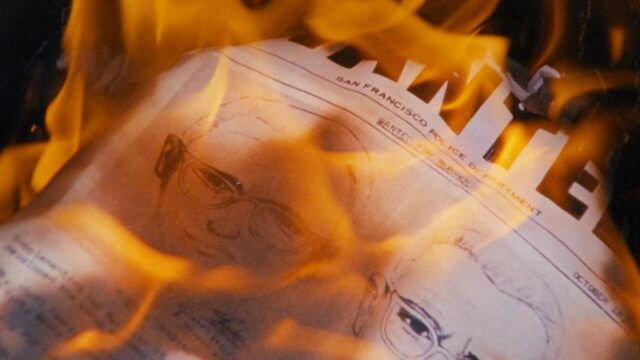
This is a serial killer movie with a difference. In fact, it’s a documentary about a serial killer film that almost got made but never did. Shackleton had been in negotiations with the executors of retired California Highway Patrol officer Lyndon Lafferty for rights to Lafferty’s book, The Zodiac Killer Cover-Up. In the book, Lafferty claimed to have cracked the mystery of the killer (who was active in San Francisco in the late 1960s). This is the holy grail for true crime enthusiasts, a story of an unidentified murder that has taken on the same macabre mythical status as those of Jack The Ripper.
“I had been dancing around the idea of making a Zodiac Killer documentary for a couple of years before I found and read Lyndon’s book. I had read every book on the market,” the director recalls. “I had always had this love-hate relationship with true crime. I was a very voracious consumer of true crime.”
Shackleton knew there had never been a proper documentary about the case (although it had inspired David Fincher’s famous 2007 dramatised movie Zodiac). He thought he could fill the gap and spent much of 2022 in negotiations with Lafferty’s family. (Lafferty himself died several years ago).
By the time it became clear that he wasn’t going to secure the rights, Shackleton had already devoted a huge amount of time to the project. “I did the thing you shouldn’t do – I got way ahead of myself before we actually had the rights. I had worked it all out in my head, essentially scripted the whole thing.”
The director had even been scouting locations in Vallejo when he had been in San Francisco for a screening.
Having failed to get the Lafferty project off the ground, the director didn’t immediately start making Zodiac Killer Projectinstead. There was “a period of mourning” (as he puts it) before he was able to re-conceive the idea in its current form – as a playful, ironic essay movie, more in the spirit of Patrick Keiller than of James Ellroy.
“It was a while before I was able to let go of that movie and think about this new idea,” the director says. “And, obviously, the new idea was premised on that inability to let go…”
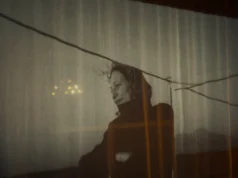
In the documentary, we see footage of freeways, car parks, hotel corridors and other locations where the Zodiac killer may once have roamed as we listen to Shackleton’s quizzical, funny and eccentric narration about what it takes to make a serial killer flick.
There were two distinct phases of the production. In the summer of 2023, Shackleton and his crew went to California and shot all the location footage that makes up the vast majority of the film’s images.
“At that point, I had a sense of what we wanted to shoot because I had the bare bones of the unmade film and all of my ideas about how each scene within that would have played out.”
The second phase was to record the narration. Equipped with plenty of notes, the director “improvised” the commentary. “I wanted to preserve as much as possible that feeling of a spontaneous telling.”
In the documentary marketplace today, it’s very commonplace to hear producers, sales agents and distributors bemoaning the outsized role that true crime content has assumed. Streamers and broadcasters are so busy buying films about maniacal killers that it sometimes seems they have no budget or slots for anything else. Shackleton admits he shares some of his fellow filmmakers’ frustrations at having their work squeezed out by all those stories about mass murderers.
“It does increasingly feel that absolutely the only thing you can get made is true crime or celebrity documentary. And it feels really suffocating.”
The director knew, though, that a serial killer project was potentially more commercial than some of his earlier films. “I hoped I could do something interesting with it but also figured this could reach a level of prominence than had previously eluded me.”
Shackleton adds that he was a “very voracious consumer” of true crime, whatever “ethical issues” he felt about much of the subject.
Making the documentary proved a chastening experience. He found his love of the genre slowly ebbing away as he diligently watched every piece of true crime content he could find. “It just becomes quite exhausting, how formulaic these things are now…”
The days when directors like Errol Morris and Joe Berlinger were making their most ground-breaking work are now very long in the past.
“I think that The Thin Blue Line [by Morris] is an absolute masterpiece and so many of the visual tropes of true crime are still, decades later, referencing that film, knowingly or otherwise,” Shackleton reflects. “And it feels like both ends of the market have met in the middle. Even the trashiest, cheapest stuff looks more slick than it used to…but equally it feels that at the top end, there isn’t such a high watermark any more. Even Errol Morris’s true crime films of the last few years…don’t feel close to as interesting as the stuff he was doing with that genre 20 or 30 years ago.”
When he was making his earlier film, Beyond Clueless (2014), about teen movies, Shackleton watched hundreds of examples from that genre, quoting many of them. “I really thought I was done with genre study as a form. Obviously, this [Zodiac Killer Project] didn’t really begin as that – but it has very much wound up as that,” the director sighs. “It is a good way to take the fun out of almost anything…”
The Zodiac Killer’s identity is still to be discovered. Shackleton remains sceptical about all the theories surrounding the crimes. Is there scope for him to return to the subject and finally lay the mystery to rest?
“Oh God, yeah,” he says. “Obviously the point of the film is not to answer the question of who the Zodiac Killer was. I’d be talking to people and saying actually the film is investigating something much more meaningful, something about society and about the industry. [But] at the back of my mind was always still the thought that, fuck, it would be amazing if by through some bizarre series of events, we could stumble on something meaningful that could actually resolve the case. Needless to say, we got absolutely nowhere near that at any point!”
Cinetic is handling sales on Zodiac Killer Project. Funding came from Field of Vision.