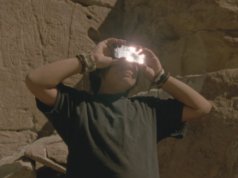
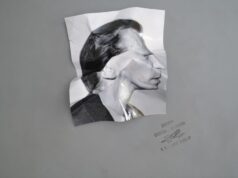
Anna Fitch and Banker White’s feature documentary YO Love is a Rebellious Bird is selected for Berlinale Competition 2026. It is the sole documentary within the section.
The US film details how, after losing her friend Yo, director Anna builds a detailed 1/3-scale version of her friend’s house. It is just big enough for Anna to squeeze into, and inside lives a puppet of Yo. When the pair first met, Yo was 73 and Anna was 24.
In Berlinale Competition, 22 films will compete for the Golden and Silver Bears, among them one first feature, one animation as well as Fitch and White’s documentary. Productions from 28 countries are represented. 20 films are world premieres. Nine films were directed or co-directed by women. 14 filmmakers have been at the festival before, six even in Competition.
“We’ve found so much to fall in love with in this year’s bumper Competition line up. And we are so confident in the charms of these 22 films that we say defiantly, ‘if you don’t find something here to love, you don’t love cinema!!,” says Festival Director Tricia Tuttle. “Satirical and formalist comedy, genre, a psychological thriller, a love story, a self-love story, anime, a western… these 22 films show off just how diverse great cinema is in 2026. Each one is beautifully crafted and delivers on its own artistic promise. We can’t wait to discover the films that will receive the Golden Bear and the Silver Bears from Wim Wenders’ jury on February 21st.”
The other documentary selections so far selected for Berlinale are:
BERLINALE PANORAMA 2026 (DOCUMENTARY SELECTIONS COMPLETE)
- Bucks Harbor by Pete Muller. USA 2026 | World premiere | Debut film | Boys in Downeast Maine are shaped by the brutal winters, their harvesting of the ocean’s bounty and the rigid codes of their fathers. Bucks Harbor explores growing up in a community where a man’s worth is often defined by the strength of his back.
- Im Umkreis des Paradieses (Around Paradise) by Yulia Lokshina, Germany |World premiere | In Caazapá, the “city of magic and legends”, two Paraguayan students are searching for happiness, gold and a magic bird. Their European dropout neighbours are hoping for freedom, healing and salvation from Armageddon. Everything has its price.
- Jaripeo by Efraín Mojica, Rebecca Zweig. Mexico / USA / France 2026 | International premiere | Debut film | A journey to the hypermasculine rodeos of Michoacán state in Mexico delves into the subconscious of memory, queer desire and longing, leading to a reckoning with the wounds and beauty of a home left behind.
- La Face cachée de la Terre (The Hidden Face of the Earth) by Arnaud Alain | France | World premiere | Dimitri loves photographing friends, strangers, lovers. Over the years, images have slipped away from his sight. Behind his camera, he gathers light and bodies, inviting us to gaze toward the hidden face of the Earth.
- Siri Hustvedt – Dance Around the Self by Sabine Lidl. Germany / Switzerland) | World premiere | Sabine Lidl presents Siri Hustvedt’s journey from her first novel to being a leading voice in contemporary literature – a film about feminist perspectives, Hustvedt’s soulmate Paul Auster, and the power of thought.
- The Other Side of the Sun by Tawfik Sabouni | Belgium/France/Saudi Arabia) | World premiere |After the fall of Assad’s regime, five survivors return to the former torture prison of Saidnaya to reenact what they experienced there during their incarceration. They reclaim their voices and bear witness for those who can no longer speak for themselves.
- Traces by Alisa Kovalenko, Marysia Nikitiuk | Ukraine / Poland) | World premiere | Despite the deep traces of trauma caused by sexual violence and torture at the hands of Russian troops, Ukrainian women survivors are uniting to break stigma and silence, transforming their testimonies into a powerful form of resistance.
- Trop c’est trop (Enough is Enough) by Elisé Sawasawa. France / Democratic Republic of the Congo 2026 | World premiere | Debut film | Thirty years of war, seven million displaced, ten million dead. Trop c’est trop is a plunge into the chaos of the city of Goma, capital of North Kivu in the Democratic Republic of the Congo.
- Two Mountains Weighing Down My Chest by Viv Li. Germany / Netherlands 2026 | World premiere | Debut film | A Chinese wannabe artist drifts between Berlin’s overwhelming queer scene and her traditional family in Beijing. With wit and insight, the film follows her search for identity and belonging in a globalised but polarised world.
- Tristan Forever by Tobias Nölle, Loran Bonnardot | Switzerland | World premiere | For 30 years, a doctor from Paris has maintained a friendship with a fisherman on Tristan da Cunha, the most isolated inhabited island in the world. Now he travels back one more time, with the plan to stay there for good.
- Un hiver russe (A Russian Winter) by Patric Chiha. France 2026 | World premiere | After the invasion of Ukraine, many people in Russia faced a brutal choice: prison, the army – or exile. Margarita, Yuri and their friends are caught in the crosscurrents of history, with no way to return home, but also no place where they feel truly welcome.
BERLINALE SPECIAL (DOCUMENTARY SELECTIONS)
- The Ballad of Judas Priest by Sam Dunn, Tom Morello (World premiere, US). The Ballad of Judas Priest follows heavy metal pioneers Judas Priest and their half-century journey from working-class origins in England to their recent induction into the Rock & Roll Hall of Fame.
- The Story of Documentary Film by Mark Cousins. (European premiere, UK). From Mark Cousins (The Story of Film) comes a definitive history of documentary: tracing the evolution of the genre across time, encompassing landmark works and hidden treasures, while revealing how the form has helped us to see and make sense of our world.
- Tutu by by Sam Pollard. (World premiere, UK). Through never-before-seen archival footage and first-hand accounts of those who knew him best, the film traces Archbishop Desmond Tutu’s rise as the voice of the oppressed, guided by faith, hope and an understanding of the power of forgiveness.
- Un hijo propio (A Child of My Own) by Maite Alberdi (World premiere, Mexico). The profound desire to become a mother and pressure from her surroundings drive Alejandra to fake a pregnancy. What begins as a simple lie turns into a complex charade and unleashes a media scandal that makes it impossible for her to continue the pretence.
- Wax & Gold by Ruth Beckermann. (World premiere, Austria). Starting from a hotel in Addis Ababa built by Emperor Haile Selassie, Ruth Beckermann explores a place both familiar and foreign to her. Archive footage and conversations on the ground combine personal reflections with the histories of Ethiopia and Europe.
- Who Killed Alex Odeh? by Jason Osder, William Lafi Youmans (international premiere, US). The assassination of a beloved Palestinian American activist in Southern California ignites a 40-year quest for justice that uncovers the roots of a dangerous political movement that still thrives today.
BERLINALE GENERATION (DOCUMENTARY SELECTIONS COMPLETE)
- A Fabulosa Máquina do Tempo (The Fabulous Time Machine) by Eliza Capai | with Manuellinha, Manu, Sophia. Brazil 2026 Generation Kplus | World premiere | In the arid Brazilian hinterland, girls play poised between their mothers’ difficult pasts and fantastic dreams for the future. In a place where men are still seen as giants compared to women, the girls cross the threshold from childhood into adolescence. OPENING FILM
- Memories of a Window by Mehraneh Salimian, Amin Pakparvar, USA 2026 | Generation 14plus | World premiere | Short film. Following crackdowns on protests in Iran, civilians begin documenting the unrest from behind windows. When a woman is shot while recording, a film student writes her a letter raising the question: Can revolution emerge from behind windows?
- Riding Time by Roopa Gogineni, Farhaan Mumtaz. United Kingdom / France 2025. Generation Kplus | International premiere | Short film. Horse-obsessed Jaleal comes of age on the West Yorkshire moors while carrying forward the ancient cavalry sport of “neza bazi.” Filmed over three summers, this joyful portrait blows the dust off traditional tales of Empire, migration and belonging.
- What Will I Become? by Lexie Bean, Logan Rozos. US) Generation14plus | Co-directors Lexie and Logan weave together the stories of two trans boys who died by suicide and their trans masculine+ community, offering resources and imagination for a way forward.
BERLINALE RETROSPECTIVE 2026 (DOCUMENTARY SELECTIONS)
- Berlin, Bahnhof Friedrichstraße 1990 by Konstanze Binder, Lilly Grote, Ulrike Herdin, Julia Kunert | with Ula Stöckl, Jon Rose, Jörg Foth. Germany 1991. A changing of track. Observations and interviews with border guards and commuters at Berlin’s Friedrichstrasse station in 1990, as the border between East and West Germany was becoming ever more porous and this crossing was already being dismantled.
- D’Est (From the East | Von Osten) by Chantal Akerman. Belgium / France / Portugal 1993. A documentary following a journey from West to East, from summery Germany to wintry, snowy Moscow. In this road movie of still lifes, which eschews voiceover narration, the camera explores the landscapes and the faces of the people who live in them.
- Glocken aus der Tiefe. Glaube und Aberglaube in Rußland (Bells from the Deep. Faith and Superstition in Russia) by Werner Herzog. Germany / USA 1993. A visual study of believers and religious charlatans in Siberia after the dissolution of the Soviet Union. A fascinated Werner Herzog encounters real spirituality and genuine ecstatics, but also dubious faith healers and shamans.
- Im Glanze dieses Glückes (In the Splendour of Happiness) by Johann Feindt, Jeanine Meerapfel, Helga Reidemeister, Dieter Schumann, Tamara Trampe. Germany 1990. Citizens of East Germany talk about their experiences and feelings in the face of upcoming elections that will lead to reunification with the West. The past is tinged with regret, frustration and anger, while the future is uncertain.
- Oranzhevye zhilety (Orange Vests | Orange Westen) by Yury Khashevatsky. Belarus / Germany 1993. A radical cinematic letter about the hardships facing women in the collapsing Soviet Union. Shot in Belarus, Tajikistan, Ukraine and Siberia, these interviews and observations document the exploitation and repression of an unwavering patriarchal doctrine.
- Tito pro drugi put među Srbima (Tito Among the Serbs for the Second Time) by Zelimir Zilnik | with Dragoljub Ljubičić, Milan Pavlović. Yugoslavia (until 1992) 1994 | Short film. An actor dresses up as the former Yugoslavian ruler, Tito. Walking around Belgrade, he talks to passers-by, evoking a variety of reactions. This “happening” triggers heated discussions, documented on film.
- Videogramme einer Revolution by Harun Farocki, Andrei Ujica. Germany 1992. A minute-by-minute chronology of the Romanian revolution in December 1989 in Bucharest. This cinematic montage of live footage from the state television company TVR and video taken by numerous amateurs becomes a new media-based form of historiography.
- Wildwood, NJ by Ruth Leitman, Carol Weaks Cassidy. USA 1994. Shot with an all-female crew on Super 8, Wildwood, NJ catapults the audience into the lives and stories of young American women in the 1990s. Yet under the blazing sun of the Jersey Shore, it also sometimes reveals the underbelly of the boardwalk carnival.
BERLINALE FORUM (DOCUMENTARY SELECTIONS)
- Barbara Forever by Brydie O’Connor | with Barbara Hammer. USA 2026. International premiere | Debut film. Lesbian experimental filmmaker Barbara Hammer (1939–2019) was an icon and a pioneer. Infused with dyke poetry, this archive film shows how she lived, loved, worked, fought and inspired, also showing that the private is uncompromisingly political.
- Beaucoup parler (A Lot Talk) by Pascale Bodet | with Amr Hanafy. France 2026. World premiere. Pascale accompanies her Egyptian friend Amr on his rocky path to a residency permit. The system, authorities, lawyer, papers, paperwork, a language course. A refreshingly honest film full of solidarity about “the state of migration” and “se comprendre.”
- Black Lions – Roman Wolves by Haile Gerima. Ethiopia / USA 2026. World premiere. Decades in the making, Haile Gerima’s sweeping survey of Italy’s brutal colonial legacy in Ethiopia is a monumental reckoning with suppressed history. With a balladeer’s spirit, Gerima forges an epic saga of resistance, freedom and national pride.
- Chronos – Fluss der Zeit (Chronos – Flow of Time) by Volker Koepp | with Tanja Kloubert, Anetta Kahane, Volha Hapeyeva, Ana Scutelnicu. Germany 2026. World premiere. Tracing biographical lines, Volker Koepp steps into his oeuvre, rich in encounters. Returning to Lithuania, Moldova and Czernowitz, he looks back and brings things up to date, as the war against Ukraine becomes a determining element of the present. Epic.
- Crocodile by The Critics, Pietra Brettkelly | with Raymond J. Yusuff, Godwin Josiah, Ronald Yusuff, Victor Josiah, Richard Yusuff. New Zealand / Nigeria 2026. World premiere. Documentary form. In Nigeria, the young art collective The Critics, armed with makeshift gear, conjures homemade sci-fi spectacles, chronicling their reality while blasting into wild imagined worlds. A vibrant documentary and a gleeful ode to the power of (self) invention.
- Effondrement Collapse by Anat Even. France 2026. World premiere. In mourning, Anat Even began travelling with a camera along the Gaza Strip after October 7 – again and again. Striving to show the reality of this painful border. Trying not to look away. An essay about questions of causality and responsibility.
- Einar Schleef – Ich habe kein Deutschland gefunden Einar Schleef (No Germany Did I Find) by Sandra Prechtel | with Einar Schleef. Germany 2026. World premiere. With his monumental productions, Einar Schleef pushed theatre to the outer reaches, confounded expectations in East and West alike, grappled with GDR origins and the BRD present. A universal artist emerges from the archive: “I’m not human, I’m dynamite”.
- Flying Tigers by Madhusree Dutta | with Madhusree Dutta, Mi You, Purav Goswami. Germany / India 2026. World premiere. An Alzheimer’s-plagued mother’s fear of tigers in Assam sparks a multi-location probe into the US army unit supplying Kunming in WWII. A collective quest through history’s butterfly effects, told via found stories and turned hybrid.
- Forest up in the Mountain by Sofia Bordenave | with Mirta Ñancuano, Lorena Cañuqueo, Joaquin Rapoport. Argentina 2026. World premiere.In 2017, young Mapuche Rafael Nahuel was killed by police in the Patagonian forest. Site visits, court proceedings – the film unites the elements involved in solving the crime. Meticulously observed: the struggle for civil rights and narrating history.
- Frauen in Berlin by Chetna Vora. German Democratic Republic 1981. World premiere of the digitally restored version.A projection on a sheet, secretly filmed, now restored from VHS: for her film, Indian Chetna Vora, who studied in the GDR, spoke with women from the ages of 11 to 83 in East Berlin. “It turned out longer than permitted.” What luck! Praise the privacy!
- If Pigeons Turned to Gold by Pepa Lubojacki | with David Richter, Pepa Lubojacki, David Lubojacki, Marco Arnone. Czechia / Slovakia 2026. World premiere | Debut film. Alcohol addiction is a constant in Pepa Lubojacki’s family. In an attempt to find a sisterly way of dealing with it, text, long-term observation, beats and AI-animated photos are combined into an unflinching, yet loving form of disclosure.
- Istenmezején 1972–73-ban A Hungarian Village by Judit Elek. Hungary 1974. Young women in the country, a village disco – idyllic? Far from it. Life in 1970s Hungary already forces 14-year-olds to choose: marriage (for which everything is ready) or profession (for which a woman must fight). Judit Elek: “My most important film.”
- L’uomo più bello del mondo (The Most Beautiful Man in the World) by Paolo Baiguera. Italy 2026. World premiere | Short film. One member of the family is not remembered – only 25 photos of the uncle who died of AIDS remain. His nephew asks both his mother, who looks back via the pictures, and AI tool Google Vision API, which reads the photo data statistically. Memory cultures.
- Masayumeby Nao Yoshigai | with Nao Yoshigai. Japan 2026. World premiere | Debut film. After her mother’s death, Nao retreats to a Zen temple to wrestle with grief. Blending family archives, hand-drawn animation and performance art, this seductively meditative documentary explores suffering, and the gentle art of transcending it.
- Nous sommes les fruits de la forêt (We Are the Fruits of the Forest) by Rithy Panh | with Pa Kreb, Mak Kreb, Yeay Kreb, Mak Lisa, Pouk Choeut. Cambodia / France 2025. European premiere. The Indigenous Bunong practice agriculture by hand and end up in conflict with Cambodia’s lucrative trade in CO2 certificates, losing the forest of whose ownership they have no conception. Now and then, split screen. A visual firework display.
- Prénoms (Given Names) by Nurith Aviv. France 2026. World premiere. Flowers as a gift for guests, the Latin alphabet as a form of order. A film of rules which varies, multiplies and expands into a novel of nomadic world knowledge as it narrates. Nurith Aviv visits her friends and asks for their first names – c’est ça!
- Quand tu écouteras cette chanson (When You Listen to This Song) by Mona Achache. France 2025. Director Achache and writer Lafon engage with Anne Frank by way of smart mental jumps, hand-picked footage, refinement and breathtaking montage, liberating this symbolic Shoah figure from cliché. Cinema of remembrance, complex and empathetic.
- River Dreams by Kristina Mikhailova. Kazakhstan / Switzerland / United Kingdom 2026. World premiere | Debut film. Young women imagine themselves as a river: what starts off as a poetic metaphor is linked to images of landscape and becomes a many-voiced narration, radically morphing into a political statement. The Kazakh woman, she prefers life without man.
- Szenario (Scenario) by Marie Wilke. Germany 2026. World premiere. In Europe’s biggest military model city, war is not just rehearsed, but also directly taught. Marie Wilke’s sober, focused observation shows the Bundeswehr navigating how to deal with the past, adapt to the future and present itself.
- The Day of Wrath: Tales from Tripoli. by Rania Rafei. Lebanon / Saudi Arabia / Qatar 2026. World premiere. The story of a city and its uprisings. From the 1940s into the present, Rania Rafei follows Tripoli, Lebanon’s second-biggest city, over the years, moving through different generations and factions. An act of political tenderness.
- The Moths & the Flame by Kevin Contento | with Jean Voltaire, Malik Hall, Wiltavious McKelton, Tavion Jamal Dent, Helen Contento. USA 2026. World premiere. In Pahokee, Florida, the myth of the absent Black father is contradicted every day: housework, children’s birthdays, neighbourhood, care. In vignettes brimming with solidarity, Contento traces out his protagonists’ self-confidence. Calm and attentive.
- Was an Empfindsamkeit bleibt (Sometimes, I Imagine Them All at a Party by Daniela Magnani Hüller. Germany 2026. World premiere | Debut film. Soberly and with restraint, the director reconstructs the attempted femicide she survived 14 years before. Intense conversations with people from her past provide an external perspective on an act subjectively and objectively impossible to grasp.