They don’t have shop stewards in space but maybe they should. That’s the conclusion some viewers are bound to reach after watching Graeme Arnfield’s The Case Against Space, a world premiere at Visions Du Réel before it screening on the closing night of the Open City Documentary Festival in London.
Arnfield’s film is inspired by his own research into the 1973 NASA Skylab mission. The astronauts aboard the space station began to chafe against the stress they were being placed under. Everything the crew did was measured by their controllers in Houston who wanted as much data as possible about how humans coped in space – but didn’t care for their well-being. Eventually, they began to protest.
“It was about seven years ago. I was researching another project about cosmic radiation. At the time, I was reading a lot about the effects of cosmic radiation on the Apollo astronauts, particularly the effect of the slow flashing lights they saw in their eyes,” Arnfield recalls.
By chance, he stumbled on an anecdote in a book about astronauts going on strike. “Obviously, that opens up a whole world of possibility,” he says of his foraging into hidden recesses of space history and discovering evidence of a labour dispute up in the stars.
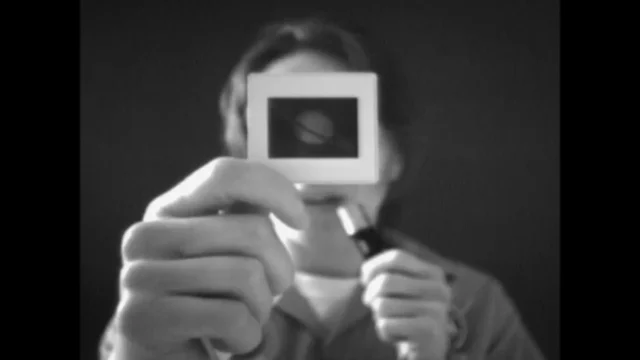
This is a cut-price space epic made in low-fi “sticky back plastic” style. “I knew we weren’t making Interstellar here,” Arnfield says. Nonetheless, he was obsessed with finding technology that would be appropriate for the period. The film is therefore shot on “a late 1970s CCTV camera system…I found one in an attic in Wembley through a woman on Gumtree.”
This kind of equipment was used by corner shops for security purposes. “But it has this very particular quality to it. It’s a kind of live feed camera so it gives a sense of surveillance and closed circuit TV but it is also quite poetic and beautiful and breaks apart in this crumbly way if you light it in a certain way.”
The film unfolds in a series of “tight close-ups” of its three astronaut protagonists, played by Katie Smale, Nezar Alderazi and Yana Penrose, generally talking directly to camera.
One of the uncomfortable paradoxes here is that the astronauts are living in very close proximity to one another in extremely claustrophobic conditions but spend little time together. They’re too busy performing their never-ending tasks to socialise or relax.
The language used by the disgruntled astronauts is partly taken from transcripts from the time and partly invented by Arnfield himself.
“There were about 60,000 pages of transcripts I read. I would go with a highlighter pen and highlight the things that I thought were these amazing breaks in language. It’s a collage, stitching together all these elements.”
Over the course of the film, the language gradually changes. Early on, the astronauts express themselves in a technical and precise way. They’re highly trained and want to stay on top of the mission. But then, as the work becomes more irksome and their frustrations rise, they begin to talk in a different way.
This is a good moment for Arnfield’s space movie. It is landing with audiences with NASA’s Artemis mission fresh in people’s minds.
“It’s a return to a nationalised project after a decade of privatisation. It’s nationalisation in a strange form because it is also in collaboration with SpaceX, Blue Origin and Axiom who are in the vanguard of privatisation in space,” Arnfield says of Artemis, Elon Musk and co. He remains sceptical, though, about what he calls “the easy sublime” of space travel, and points out that the late 1960s and early 70s, the era of the original moon landings, was also the period when the Americans voted Richard Nixon into the White House.
“What I am really trying to underpin is labour and work as this kind of structure? Who will benefit from the things that are done?… What worlds are we building and who are will we build them for?” the director continues. “That is the big question. Artemis 2 is ultimately a mission to do scientific research but also the geo-mining of certain elements…and the benefits won’t go to me and you.”
Living in space remains a dream for scientists and tech entrepreneurs but Arnfield asks what kind of existence they are actually envisaging. “For me, living is not just surviving. Living is having a life. It’s reproducing, it’s leisure, love, art, communities, culture…it builds into the idea the earth is already over. I’m against that. It is just divided wrong.”
The Case Against Space is a collective endeavour. It’s the first time the director has worked with actors. His previous films were more essayistic in nature. “I used to say that I make all my films in bed and that was often accurate.”
As for the casting, he says he got lucky. Smale is a trained RADA actor – but she is also the director’s hairdresser in Tooting, south London. The other two leads we’re also found through personal connections.
“It was very much hands on deck. Everyone who worked on the film, the crew is a list of filmmakers who weren’t doing anything this week…I was the lucky one of my little cohort who got funding this year, so everyone was helping me out – so I’ll help them out next year with their projects.”
The film was commissioned by Flamin, The Film London Artists’ Moving Image Network, and also had some support from the CNC in France via the French producer, Boris Garavini. All the post-production was done in Paris.
The director came Nyon for his Visions Du Réel premiere, rushed back to London for the Open City Documentary Festival premiere at the ICA and returns to Nyon for his remaining VdR screenings. The film has also been nominated for the Doc Alliance Prize.
“I spent seven years telling people about this research. Everyone, at least to my face, was excited and interested. I think we’ve made a good film that hopefully lives pop to what people expected and wanted!”