When Russia’s full-scale invasion forces a family of Ukrainian documentary filmmakers to leave their homeland, they take their three children to Britain in search of safety, reads the logline of Ukrainian Roman Bondarchuk and Dar’ya Averchenko’s feature doc project, pitched at Baltic Sea Docs. As the children learn a new language and grow into a new culture, their parents keep filming — trying to understand what has been lost, what still binds them to Ukraine, and what returning home might mean when home itself is changing…
“When [the] invasion began, Dar’ya and I could no longer make films in the way we had before,” Bondarchuk tells BDE. “We turned the camera towards our children, ourselves and our parents. It seemed the most important thing to film, and technically, the one thing we could still manage. Gradually, this became a film we are co-directing. The children have also started filming, so there are now several versions of what is happening to us, and the parents’ version is no longer necessarily the most convincing.”
“Access to our main characters is quite good. Getting them to listen…is another matter,’ Bondarchuk adds ruefully.
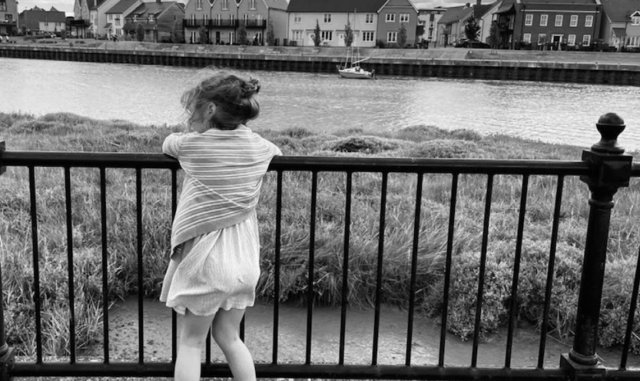
Little by little, the kids became more attuned to life in the UK. They began to speak English, made friends and went to the local school.
“The children begin to feel at home here. They acquire friendships, habits and a sense of humour we are a little slow to follow. This is what we wanted for them. It also makes returning more complicated. The country we miss can become, for them, a place they are afraid to go back to,” the director further articulates his dilemma.
“We know this uncertainty reaches far beyond our family. Its urgency is in the way the choices keep changing. Returning means bringing the children back to danger. Staying means more time away from our parents and a growing distance between the Ukraine we remember and the one our children know.”
The film will deliver a particular visual aesthetic, Bondarchuk continues, within an essay format that combines observation, memory and attempts to understand what is happening in the world of the family, and “without pretending that we have reached a final conclusion.”
“There will be several kinds of images, because everyone in the family sees things differently,” he underlines. We have our observational footage, old family recordings, phone videos, a surveillance camera in our Kyiv apartment, and the children’s own films and animations. They sometimes notice things we miss while we are busy worrying about their future.”
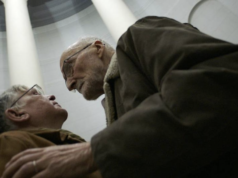
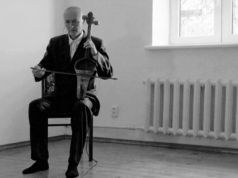
“The archive has its own texture: different cameras, different periods, images made without much concern for how they would fit into a film,” he adds. “You see our parents younger, the children very small, a garden where everyone is occupied with something. Now you look at the same footage and notice everything in the background.”
“For a while, we could look into our empty Kyiv apartment through a surveillance camera. It is a strange form of visiting home,” he continues. “We want the film to have room for the children’s games and the oddness of our daily life. The sadness is already in the material,” he laments.
Lituanian producer Jurga Gluskinienė (Monoklis) has signed up South Films in Ukraine and VFS Films in Latvia as co-pro partners on the project the team hopes to deliver in 2027. “There is already substantial footage, an archive and a developed structure, so partners can see what we are working with,” says Bondarchuk. “We are building the remaining financing through co-production, public funds and potential broadcaster participation. The next phase needs time for filming the return, observing what follows, and editing these experiences together. The plan has to leave room for safety, the children’s needs and real life, which so far has been very active in revising our plans.”
He articulates again the essence of his, Dar’ya and their kids’ doc endeavour. “The story is about losses and gains, and these are not distributed equally across the family. News of material losses reaches us through neighbourhood chats: more windows blown out, another wall destroyed. Other losses are less visible. We miss ordinary time with our parents and friends, and find ourselves living increasingly different lives from theirs. Continuing our professional work becomes harder because of distance, the economics of filmmaking and raising three children without the help we had at home.”
“The children, meanwhile, gain a language, friends, new food, holidays and another understanding of how the world works,” Bondarchuk further underlines. “We hope they will carry this with them: the knowledge that no country is perfect, that every place has its peculiarities, and that they can find their way without feeling that a better life always belongs to somebody else.”