In Georgian Shorena Tevzadze’s Concrete Grassland, pitched at Baltic Sea Docs in Riga, a young couple in Tbilisi invests in an apartment that never gets built. That couple is the director and her husband. As they raise their son, “seasons shift, war comes and goes – a decade slips by in temporary homes, revealing a country where no one is held accountable,” the project’s log-line reads.
“The film begins with the director’s private decision as a newlywed to buy a home with her husband. But it gradually expands to almost two decades of social, economic, urban, and political transformations in Georgia,” confirms Georgian producer Elene Margvelashvili of Parachute Films.
Core to the documentary is the “extraordinary” 15-year archive that Tevzadze has created along the way, adds Margvelashvili. “It is precious because it is not an archive made to document history – it is life unfolding. We experience with Shorena how hopes, relationships, homes, and the country itself change over time, and how systems [that are] meant to serve people gradually turn against them, leading to a civic struggle shaping Georgia to this day.”
Shorena is not just an observer, the producer further points out. “She has spent all these years trying to make things right, so her perspective is just as important. She brought people together and kept looking for ways to be heard. Along the way, her camera became her strongest tool.”
The 70-minute film is in development. Paris-based Ceresa Film have signed up for co-pro duties.
Producer Margvelashvili describes her director’s ability to deliver such a personal, and ambitious, project. “Her storytelling has the quality of a dream—leaving space to question what really happened. There is something in the way she observes people and places that evokes a sense of fragility, yet she still finds beauty in ordinary moments and in simply being present.”
“While telling her own story, Shorena gradually brings us into the lives of others: people like her who have waited years for homes that never materialised, people pushed into desperate choices, or those who lost their homes during the August 2008 war between Georgia and Russia. Yet the film never becomes a conventional social portrait. Her personal story becomes a way into a much larger picture of a society where people are left to find their own ways of seeking justice,” she continues.
“The project has a strong artistic identity and a solid foundation aimed as a Georgian-French co-production open to more partnerships,” Margvelashvili adds of Concrete Grassland’s market potential. “It is now at a decisive stage where the right editorial input and committed international partners can help us shape the strongest, most beautiful and authentic feature documentary — and build a path for the film to reach audiences and find the right sales and distribution partners internationally.”
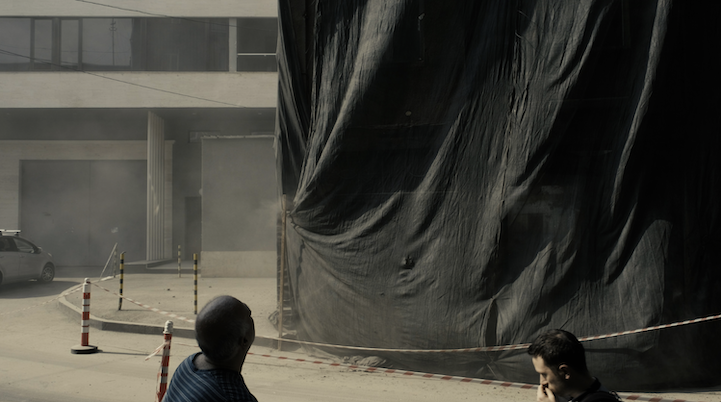
Concrete Grassland also promises to deliver on a high cinematic level. “The language of the film grows from the contrast between a family world and the changing world around them. The years-long archive allows the visual texture of the film itself to carry the passage of time, yet it captures moments of daily joy that feel eternal,” says the producer. “Different seasons, temporary homes, and daily rituals become part of the language, creating dialogue within the wider story through atonal music. The city functions almost as another character: unfinished structures, concrete, open spaces, and the urban landscape full of open wounds reflect a country in transition.”
The film is also selected for DOK Leipzig’s DOK Co-Pro Market in October, which makes the upcoming months “a very important moment in the project’s development/financing stage,” Margvelashvili tells BDE. “This is an opportunity to invite industry partners that can commit at an early stage, such as co-producers, broadcasters, funds and financiers, as well as sales agents and distributors.”
“Concrete Grassland [is] also a cautionary tale relevant beyond Georgia,” she advises the international doc community. “It is about what happens when institutions weaken, when informal power takes over, and ordinary people are left to find their own ways forward—and how solidarity matters when this happens.”
In Georgian Shorena Tevzadze’s Concrete Grassland, pitched at Baltic Sea Docs in Riga, a young couple in Tbilisi invests in an apartment that never gets built. That couple is the director and her husband. As they raise their son, “seasons shift, war comes and goes – a decade slips by in temporary homes, revealing a country where no one is held accountable,” the project’s log-line reads.
“The film begins with the director’s private decision as a newlywed to buy a home with her husband. But it gradually expands to almost two decades of social, economic, urban, and political transformations in Georgia,” confirms Georgian producer Elene Margvelashvili of Parachute Films.
Core to the documentary is the “extraordinary” 15-year archive that Tevzadze has created along the way, adds Margvelashvili. “It is precious because it is not an archive made to document history – it is life unfolding. We experience with Shorena how hopes, relationships, homes, and the country itself change over time, and how systems [that are] meant to serve people gradually turn against them, leading to a civic struggle shaping Georgia to this day.”
Shorena is not just an observer, the producer further points out. “She has spent all these years trying to make things right, so her perspective is just as important. She brought people together and kept looking for ways to be heard. Along the way, her camera became her strongest tool.”
The 70-minute film is in development. Paris-based Ceresa Film have signed up for co-pro duties.
Producer Margvelashvili describes her director’s ability to deliver such a personal, and ambitious, project. “Her storytelling has the quality of a dream—leaving space to question what really happened. There is something in the way she observes people and places that evokes a sense of fragility, yet she still finds beauty in ordinary moments and in simply being present.”
“While telling her own story, Shorena gradually brings us into the lives of others: people like her who have waited years for homes that never materialised, people pushed into desperate choices, or those who lost their homes during the August 2008 war between Georgia and Russia. Yet the film never becomes a conventional social portrait. Her personal story becomes a way into a much larger picture of a society where people are left to find their own ways of seeking justice,” she continues.
“The project has a strong artistic identity and a solid foundation aimed as a Georgian-French co-production open to more partnerships,” Margvelashvili adds of Concrete Grassland’s market potential. “It is now at a decisive stage where the right editorial input and committed international partners can help us shape the strongest, most beautiful and authentic feature documentary — and build a path for the film to reach audiences and find the right sales and distribution partners internationally.”
Concrete Grassland also promises to deliver on a high cinematic level. “The language of the film grows from the contrast between a family world and the changing world around them. The years-long archive allows the visual texture of the film itself to carry the passage of time, yet it captures moments of daily joy that feel eternal,” says the producer. “Different seasons, temporary homes, and daily rituals become part of the language, creating dialogue within the wider story through atonal music. The city functions almost as another character: unfinished structures, concrete, open spaces, and the urban landscape full of open wounds reflect a country in transition.”
The film is also selected for DOK Leipzig’s DOK Co-Pro Market in October, which makes the upcoming months “a very important moment in the project’s development/financing stage,” Margvelashvili tells BDE. “This is an opportunity to invite industry partners that can commit at an early stage, such as co-producers, broadcasters, funds and financiers, as well as sales agents and distributors.”
“Concrete Grassland [is] also a cautionary tale relevant beyond Georgia,” she advises the international doc community. “It is about what happens when institutions weaken, when informal power takes over, and ordinary people are left to find their own ways forward—and how solidarity matters when this happens.”