

Have you heard the one about the two London cabbies? According to popular cliché, taxi drivers in the UK capital city are garrulous, colourful characters who love a good natter with their customers. Max Colson’s short doc in International Competition Short Film at DOK Leipzig) shows them in a different light.
The two subjects in Max Colson’s London Knowledge have been driving their cabs for many years. The world around them is changing. Self-driving cars are on the horizon. However, they have terrific powers of recall and an instinctive grasp of location which no AI can yet match. They also have qualities of empathy and human insight which you won’t find in a computer-controlled vehicle.
The director met one of the drivers, Billy, through a friend of his brother. He contacted the other driver, Nicky, through Billy. Both have the “knowledge.” That’s to say, they have passed the hugely gruelling memory test which black-cab drivers take, requiring them to know every corner of London.
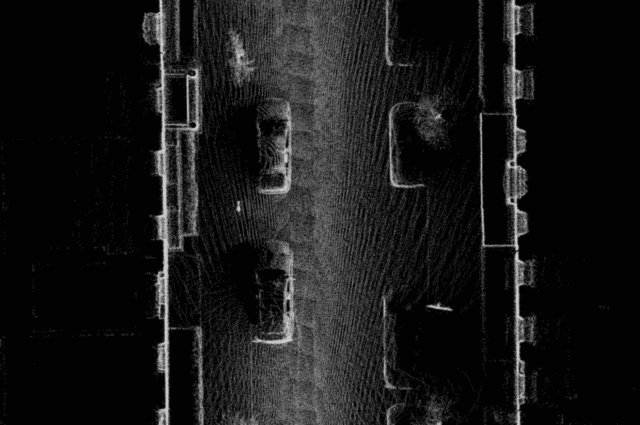
“The starting point for the interviews was that I had access to this 3D mapping technology, Lidar, and would be able to show the streets being mapped in this automated way,” the director explains of the intention behind London Knowledge. At the same time, as we hear the drivers’ reflections on their profession, we see the Lidar-generated images of the streets.
“The drivers are talking about their own, I guess, organic method of mapping the streets, the labour and the history involved in that,” comments Colson.
The drivers remember how they had to put their “heart and soul” into passing the “knowledge.” They used to ride around town on mopeds with maps pinned in front of them, trying to memorise each alleyway and junction.
“When you do the knowledge, all you see is the map. You see roads in your head…you’ve got the picture of the map on your brain,” they observe of the dedication required to be a London cabbie, Now, though, technology can match them.
“It’s a moment of transition. You wonder what will be lost in this process because this technology is able to record instantaneously. But what is it recording and what isn’t it recording?” the director asks. The computer programme can recognise shapes, objects and streets, but the Lidar-generated images shown in the documentary are strangely abstract and ephemeral. They’re a long way removed from the point of view of the drivers going about their daily business. There is a limit to what Lidar scan. “It doesn’t see completely everything,” Colson points out. ”There is a radius to its field of view. There are things that are in focus and things that are out of focus and so there is this contrast between light and darkness.”
“I don’t want to fetishise the 3D scanning technology,” the director continues. His film shows the power of Lidar but also its limitations. “With any kind of mapping through technology, there is not a total map ever. There is what the map-makers might want to map…and there are things the map-makers don’t really care about.”
London cabbies, Colson believes, don’t yet see driverless cars as a direct threat to their livelihoods. “The city is just such a chaotic and difficult place to drive. There are so many different variables to be thinking about.”
The drivers who’ve passed the “knowledge” have phenomenal powers. The director notes wryly that one of the cabbies told him that he was so focused on the London streets that even when he was making love with his partner, he was still thinking about short cuts, slipways and traffic hazards.
Colson has “been scanning London streets for a coulee of years now,” working in partnership with academics at University College, London. He has also roamed further afield. His 2017 documentary The Green And Pleasant Land is a meditation on the British landscape at the time of Brexit. An artist, photographer and teacher as well as a filmmaker, Colson has taken the technology developed as a scientific tool, but customised it for his own purposes. “I am always interested in how a tool which can be used for empirical measurement can also be used in a more subjective and impressionistic way,” he states.





