

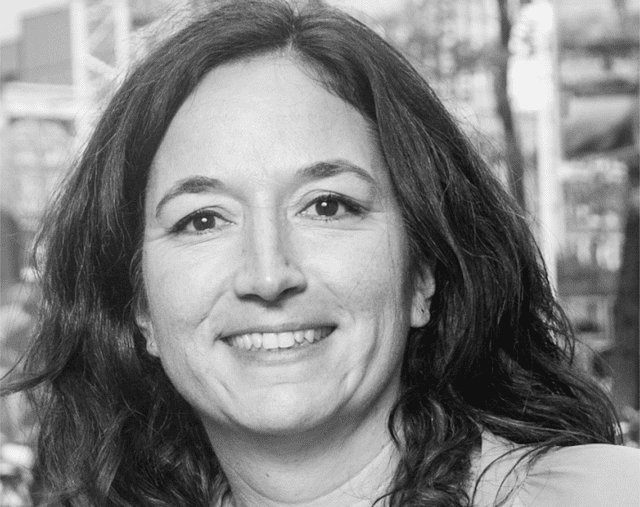
Isabel Arrate Fernandez
The pandemic has thrown up new challenges for the IDFA Bertha Fund (IBF) which, in September, announced it was backing a record number of new projects in the latest IBF Classic selection.
The Fund supports creative documentary from Africa, Asia, Latin America, the Middle East, and Eastern Europe. It has long been recognised as a vital force in stimulating documentary filmmaking in these regions.
IDFA set up a new “Filmmaker Support Department” in the summer, bringing together the activities of IBF with those of the festival’s talent development programme under the same umbrella. This is headed up by Isabel Arrate Fernandez, now deputy director of IDFA as well as head of the IDFA Bertha Fund.
As COVID-19 hit, the IDFA Bertha Fund classic scheme received a huge increase in applications for production and post-production support. “We received double the amount of applications,” Arrate Fernandez notes. “We were left with around 450 eligible applications. Normally, we would have the budget to support 10 projects…that was a little bit of a scare.”
To deal with the upsurge in applications, IDFA approached The Ford Foundation to ask for an emergency grant in order to support more projects. This was eventually provided. As a result, many extra films (20 instead of the usual 10) received IBF Classic support in the September selection round.
These included films both from newcomers and some very well-known directors, among them Malek Bensmaïl, who received backing for Algerian doc The Earthquake, and Mexican director Tatiana Huezo, whose new project The Echo was also backed.
The IDFA Bertha Fund works with a budget of €845,000. As ever, titles in which IBF is involved are included across every section of the festival, from the main programme to the Forum and Docs For Sale.
On the face of it, IBF is thriving. Three of its films were in Sundance at the start of the year, Maite Alberdi’s The Mole Agent, Annabel Rodriguez’s Once Upon A Time In Venezuela and Iryna Tsilyk’s The Earth Is Blue As An Orange (which won the Directing Award in World Cinema Documentary).
However, as Arrate Fernandez points out, coronavirus has put huge pressure on the distribution of these and many other films.
“Talking about distribution in a pandemic year is very complicated…nothing is as we know it,” she says. “We did an online session on distribution in September [as part of new year-round initiative Project Space], talking about the industry landscape in terms of all the different avenues a film can take, TV, cinema, VOD and all that. Everybody knows you need to understand that but, at the same time, nothing is going as we know it. It’s extremely difficult.”
Several IBF films have had their international roll-out halted because of the pandemic. “It has been super sad to see how, for example, films that premiered at IDFA last year like the opening film, Mehrdad Oskouei’s Sunless Shadows [have been affected]. From November until March, it was going from one festival to another. And then…it stopped. Or it went to festivals online. All that is different now.”
IBF-supported films can eventually be screened online through the IDFA Platform but, as Arrate Fernandez points out, films such as the three IBF titles that in Sundance had significant commercial potential. That potential has been stymied.
“The IDFA platform is really something that comes in last in line, when all the rest has been done, when films have done all the selling and touring they can do. Also, for filmmakers with films this year, who have dreams and ambitions, that has become super difficult.”
“In how we work and what we do, there hasn’t really been a downside,” Arrate Fernandez adds of how she and her team have carried on much as normal. “What was a bit of a shock was the amount of applications we received…the downside is the consequences for filmmakers – sales agents that already have a full catalogue and are not taking films any more. The opportunities for filmmakers are lessening.”
But there has been an upside.
“On the other side, with the steps we’ve taken with the Filmmaker Support department, what we’ve seen is that even though we all have Zoom fatigue and are tired of doing everything online, at the same time, when you are working with filmmakers from all over the world who are not working with huge budgets, going online and being able to offer them consultancy and tailor-made support is really a solution. It can work.”
In a normal year, Arrate Fernandez and her team would have spent much of their time on the road. “Overall, we’ve been able to participate in many more events than we would have if we had had to travel. That is really positive. Your outreach widens…On the other hand, you need the exchange. You learn from each other [when you travel], you meet new people, you hear stories of how certain films were made, you meet new filmmakers,” Arrate Fernandez reflects. “Participating in an event online, you still have your daily life and work because you’re here. Organising yourself fully to get into an event [online], I find that very complicated.”





