

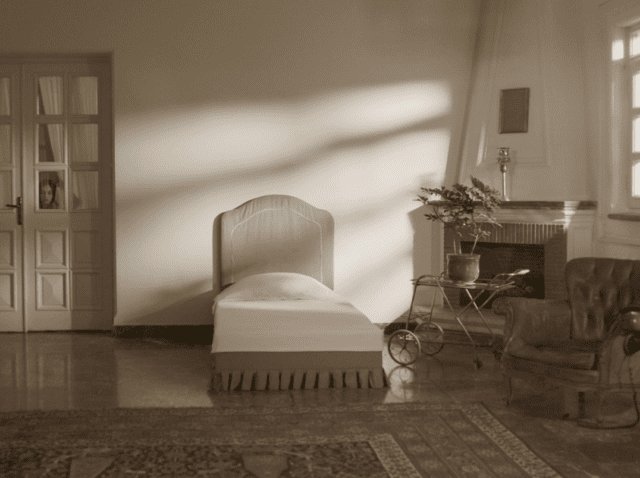
Firouzeh Khosrovani’s Radiograph Of A Family
These are halcyon days for Swiss documentary. The country has 11 different titles in official selection in IDFA, ranging from the opening film Arami Ullón’s Nothing But The Sun to another Feature-length competition entry Radiograph Of A Family to titles in Short Competition, Kids & Docs and all other corners of the festival too.
Asked to explain the current surge in Swiss docmaking, Aida Suljičić, Head of Festivals & Markets at Swiss Film, speculates as to just why the country’s filmmakers are currently catching the imagination of IDFA’s programmers.
“We are a country with a lot of [documentary] production right now. That might be because we already had some titles in the pipeline, from the beginning of the year and last year, but also because we are a country that values documentary making,” Suljičić suggests. ”There’s a lot of financial support from the financial institutions for documentary.”
Slightly more than half the feature films produced in Switzerland are documentary. The passion for the form is shared by every community – German, Italian and French-speaking.
“It doesn’t happen often to have a Swiss film opening IDFA so we were so pleased to hear about Arami’s film,” Suljičić says of the Paraguayan-born but Swiss-based director. “Her film is exactly the example of what diversity is in Switzerland. It’s a small country, basically a country made out of borders. Yes, there are Swiss people but more than one third of the population has migrant background and brings new perspectives.”
“What I really like about her film is that it reflects the need for this kind of documentary making which is also a need IDFA artistic director Orwa Nyrabia has been trying to meet,” Suljičić continues of the thematic complexity of Nothing But The Sun and its probing critique of colonialism.
Swiss docmakers come in all shapes and sizes. There are young directors like Ullón but also veterans like Thomas Imbach, whose latest feature Nemesis (which the director filmed from his window as Zurich’s old railway station was knocked down) also screens in IDFA’s main competition.
Over recent months, Swiss doc making has continued with far fewer interruptions than elsewhere during the Covid-19 pandemic.
“Since we’re not in a proper lockdown now – we were in March but not for such a long time – I think that also enabled production to keep going.”
One intriguing hypothesis shared by Suljičić is that the Swiss love of documentary is rooted in the country’s famous neutrality. Many documentary makers are, by temperament, balanced and inquisitive people. As Suljičić puts it, “they try to be careful before judging situations and people. I think that is something [also] very much reflected in the arts in Switzerland, especially filmmaking. I think that is one of the reasons why documentary filmmaking is so successful in Switzerland.”
Several Swiss titles including Roman Hodel’s The Game (IDFA’s Best Of Fests) are eligible for the Oscars. Meanwhile, last week, Susanne Regina Meures’ Saudi Runaway (produced by Swiss filmmaker and Oscar nominee Christian Frei) was nominated for a European Film Award.
During IDFA, the Swiss documentary community will be coming together to talk about their work – and just why they’re so good at it. At a special event, organised in collaboration with Visions du Réel, Artistic Director Emilie Bujès will be talking to the directors with titles in the festival. This takes place next Tuesday (24th Nov 5pm).





