

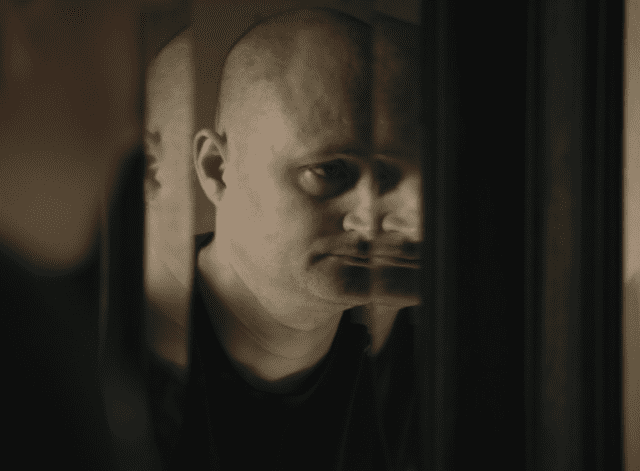
Norwegian producer Bjarte Mørner Tveit of Pirayi Film discusses the Nordic collaboration (plus UK, courtesy of BBC Storyville) on the dynamic doc mini-series The Mole: Undercover in North Korea.
Mads Brügger’s documentary about North Korean sanctions busting is about as audacious and as chilling as it gets.
The series tells the story of ‘the mole’, an ordinary family man from Denmark turned secret agent, and ‘Mr. James’, a former jet-set cocaine pusher posing as a Scandinavian billionaire. Together with director Brügger, they attempt to find a smoking gun to prove how North Korea is busting UN sanctions, and gain access to the heart of an international criminal network that produces and distributes drugs and weapons for the most dubious of clients.
The Mole and Mr. James use hidden cameras and microphones to secretly record their meetings; contracts are signed, deals are cut and soon the team become involved in a plan to build a secret, underground weapons and drugs factory somewhere in Africa. But how far can they go without blowing their cover?
Comments Brügger of the doc series: “The Mole has two sides to it. It is a very genre conscientious film, which allows itself to fully explore all the codes and forms of a traditional Cold War spy thriller. At the same time it is also a piece of hard core investigative journalism which succeeds in unravelling and exploring a criminal network, which links a cabal of North Korean arms dealers with their business partners and helpers in Europe and the Middle East.”
For all intents and purposes the production seemed relatively straight forward in that producer Bjarte Mørner Tveit was able to turn once again to regular collaborator Peter Engel of Danish Wingman Media, and enlisted the support of broadcasters NRK (Norway), DR (Denmark) and (SVT) on the undercover film. That combo had gelled well in 2019 on Tveit’s 2019 undercover film The Secret Life of Pigs which, the producer says, “really shook Norway when it came out.”
“It’s a good group of people, so when we put our minds and heart to something, we know that we can get very far. [These are] people who are willing to invest in a project and have the loyalty in the film for as long as it takes.”
Tveit stresses to two axiomatic principles in making such undercover documentaries. The subjects of pig farming and illicit North Korean weapon-dealing may differ radically, but the same “ethical and methodical questions” apply, “and we have to go through the same procedures.” Secondly, within his production and broadcast network there can be nothing other than complete trust.
The producer further tells of Brügger and his approach to production, how “when he puts his heart into it, something exceptional comes out the other end. So he is the first reason why we trusted in all this.”
“Me and Mads, we ‘ve done stuff with hidden cameras before, so we know how to do it, how to make it safe for the broadcasters, we have been down that route,” he adds. “There are a lot of ethical and judicial questions, so there is a huge process to [land] a project like this in a way where we can make sure that the broadcasters can transmit.”
Another helpful component is the region in which Tveit and his partners operate. “We are very lucky in Scandinavia because the freedom of speech is so well protected,” he says. “After the pig film, for instance, there was a big police case and the police wanted to get our raw material, but they can’t.”
“So when we have the main production out of Norway, that makes it possible to do these kinds of films, which would be very dangerous to do for instance in, let’s say, America,” Tveit adds.
A very non-Nordic partner on the project was BBC Storyville (the series is currently available on the BBC I-player). “We know very well the commissioning editor and trust her very much [Mandy Chang]. She is super strong. She has loads of experience and she is super tough, meaning that she can take on a project like this and represent it internally in the BBC, also understanding and respecting the need for secrecy for a long time. You know, she could get in but she could still keep the circle very small, which was super important for us.” Secrecy on the project was, Tveit reminds, an absolute essential.
The production, which is currently presented as two and a three-part series, is ongoing, and there are plans to release a feature in 2021.
An interesting conundrum for Tveit is that the UN has made contact requesting that he share unreleased information about the grim issues raised in the film involving arms dealing, even the sale of intercontinental ballistic missiles to individuals, “meaning that they [North Korea] are willing to deal with terrorists.”
“If the police asks us about unreleased information we would say ‘no’, so what are we doing here?,” Tveit reflects of the UN request. “But we are talking to them to try and understand what…can be done. But it is also an ethical question, is this something that we as a production company own? Do we have the right to keep this away from the public? We have a detailed menu of North Korea’s arms which they are willing to sell to terrorists. Should we keep it, as a principle? I don’t think it belongs to me, to be honest, as a producer, so we have to find a way to either release, or we give it to [the UN]”.





