The Trans Syrian Express, selected for Forum
Matti Paunio started his job as Head of Production at The Finnish Film Foundation in the autumn of last year. Then, the pandemic came. “As with everybody, this was a total surprise and changed a lot of things we had planned,” Paunio says of the sudden challenges posed by Covid-19.
“I think we worked as efficiently as we could in this situation. As the industry is rather small in Finland compared to some other countries, I think we coped rather well with the situation, even though it was horrific for everybody,” he points out.
When it came to documentary, certain projects were postponed but others were able to continue shooting without too much interruption. “This is the case with all of the industry. It has been hit but still the work in general has continued,” Paunio notes, adding how extra support was provided for films (including documentaries) that had been hit by the pandemic.
Paunio cites the recent box office performance of local documentaries as evidence of the sector’s continuing resilience. Lost Boys was one recent hit. Directed by Joonas Neuvonen and Sadri Cetinkaya, this story about three men who go missing in the drug hell of Cambodia achieved around 70,000 admissions, a huge number for a documentary. Virpi Suutari’s documentary film Aalto, about architect Alvar Aalto, has also done solid business.
“They’re very good films and they are working well! I think documentary in Finland at the moment is in a very strong position,” Paunio states.
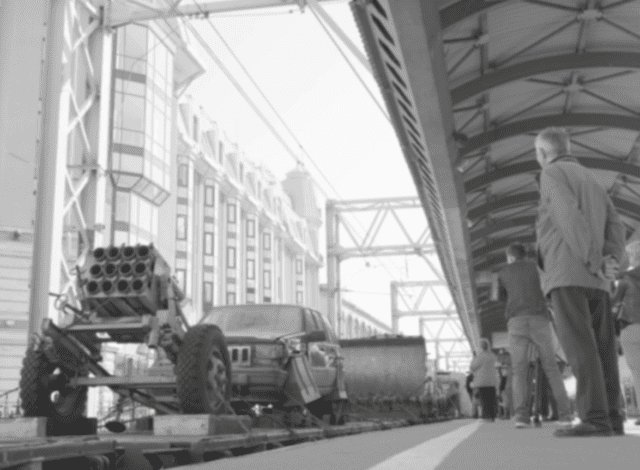
Several Finnish projects are at IDFA this week, among them The Trans Syrian Express, selected for the Forum. Directed by Alina Rudnitskaya, the project (which has already received development support from The Finnish Film Foundation) is produced by Pertti Veijalainen. It’s about the so-called “Syrian Breakthrough” train exhibition which travelled across Russia, visiting all the major cities. Wherever it went, an exhibition would be staged, showing off the spoils of war taken from Syria. Music would be played. The exhibitions were used to celebrate Russian military might and to boost recruitment to the armed forces.
The project is being put together as a co-production with Poland and Russia.
Another Finnish title in the festival is Saara Hakkarainen’s Silence, which is in IDFA’s competition for Student Documentary. Meanwhile two filmmakers, Vesa Kuosmanen and Einari Paakkanen, are participants in this year’s IDFAcademy.
“The fact is that there are no documentaries in the so-called main sections,” Paunio acknowledges of the smaller than usual Finnish presence at the festival. Nonetheless, he argues that the doc sector is in reasonable health in Finland considering the difficult circumstances.
“There are very strong female directors who are up and coming. We are going to hear a lot about them in the coming years,” he says, pointing to last year’s IDFA when filmmakers like Elina Talvensaari with Lady Time and Winter Lake by Petteri Saario were in official selection. Over the years, many of the films from Pirjo Honkasalo, one of the most feted figures in Finnish documentary, have screened in Amsterdam. British/Finnish documentary film director John Webster, currently at work on a new film, is also a regular IDFA participant.
No, Paunio says, the Finnish Film Foundation hasn’t been establishing any new initiatives for documentary during what has been a tumultuous year. “I have to say the main focus is on keeping things rolling as well as we can…the perspective is shorter – the main focus is on coping with the situation and helping filmmakers when we can!”