

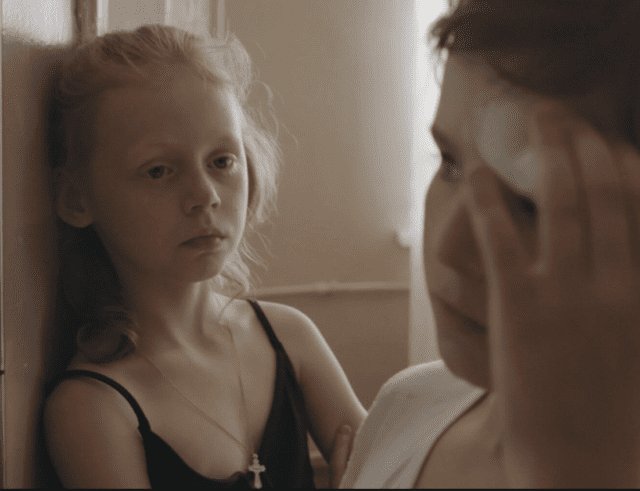
A House Made Of Splinters by Simon Lereng Wilmont
“We may make very dark films but we actually laugh a lot,” says Signe Byrge, co-founder of widely admired Danish outfit Final Cut for Real, whose very dark films include Joshua Oppenheimer’s The Act of Killing, The Distant Barking of Dogs by Simon Lereng Wilmont and the IDFA 2020 Best of Fests selection Songs of Repression.
Founded in 2019 by Signe Byrge and Anne Köhncke, the company produces high-end, creative documentaries and fiction films for the international market. The company’s attitude is one of curiosity and daring, and to “seek out” directors and creatives, both Danish and international, who have “serious artistic ambitions.” They are also confirmed co-pro addicts with a raft of top name production partners across the Nordic countries and beyond.
The Distant Barking of Dogs picked up both the IDFA First Appearance top prize in 2017 and an Academy Award nomination in 2019. Other notable successes (among many) have been Land of the Free (2017) by Camilla Magid, which won the Nordic DOX Award at CPH:DOX, and Joshua Oppenheimer’s The Look of Silence (2014) and The Act of Killing(2012), both of which were Oscar®nominated.
Company producer Monica Hellström joined Byrge to discuss their IDFA activities this year, which consists of four Forum projects and Songs of Repression in Best of Fests. The film world-premiered at CPH:DOX where it picked up the DOX:AWARD.
First of all, they reflected on the past nine months of coronavirus and its impact on their professional output. Or, to be more accurate, how it hasn’t really impacted on workflow at all.
“Nine months in our way of counting time is not a lot because the films we do will take maybe three years on average, but some take seven years,” says Byrge. “We are still working on projects we had started long before this thing happened, and of course we can feel the difference, and it has been a challenge… but otherwise everything we’ve been working on in the editing we have been able to continue, and we have also been able to start up new projects.”
One of the company’s projects in Forum is Simon Lereng Wilmont’s A House Made of Splinters, for which the director returned to war-battered Eastern Ukraine to chronicle a small group of strong-willed social workers who are working tirelessly in a special orphanage to create a much-needed safe space for kids to inhabit.
“He found this really amazing place where he could see that there were staff, social workers, that were really trying to make a difference for the kids and to make it like a safe place for them, and trying to give them some qualities and values in life that will help them [survive],” says producer Hellström.
“What’s really lovely about Simon’s work is he is at complete eye level with the kids,” she continues. “He can come close to the kids and he also finds hope.”
“In short, I see the film as a tribute to the people who look after the weakest,” says director Wilmont. “And to children’s remarkable ability to survive, adapt and find the magic in life despite the tragic circumstances.”
Sales on the film are handled by Philippa Kowarsky at Cinephil and co-production partners are Story (Sweden), Sami Jahnukainen at Donkey Hotel (Finland) and Darya Bassel at Ukrainian production company Moon Man. The expected date of delivery of the project is Autumn 2021.
Two other Forum projects are School Shooters and
Of Boys and Men.
School Shooters forms the third part of a trilogy, following on from Frida and Lasse Barkfors’ Pervert Park (Sundance 2014), about the residents of a trailer park in Florida whom nobody wants as a neighbour, and Death of a Child(CPH:DOX 2017) which asks how parents deal with the unbearable when it happens. In School Shooters, as the disaster of yet another school shooting hits, some parents are faced with a brutal fact that their child was the one who pulled the trigger.
The premise of Anders S. Jepsen’s Of Boys and Men is equally dark. When they were both boys, one sexually abused the other. Now as adults, they try to understand what happened. It is a film about identity, sexual boundaries, transgressions and grey areas.
Also at Forum is I See For You (working title) by Cille Hannibal, about the much-needed care given to a man by his loving family. Most people have five senses. Peter only has three, having lost both his sight and hearing as a newborn. His family must therefore see and hear the world for him.
“It is a film about relations, depicting the incredible bond a mother shares with her children,” says Hellström. “It is a poetic documentary that simultaneously presents us with some of the challenges the family faces, and the battle they are fighting to ensure that Peter will have a good life.”
The conversation widens to embrace the Nordic region as a whole and why it has evolved into an epicentre of strong documentary production?
Byrge answers that the reason lies both in the long history of public service television engagement with the documentary form, as well as high levels of public funding via the core Nordic institutes. “Those 2 types of institution combined have succeeded in creating a foundation that makes it possible for companies to make films, to have documentary filmmaking as a full time profession, and to allow companies to be able to sustain themselves over a long period of time,” she says.
“It is basically an institutional structure that has been developed over many years, and supporting documentary filmmaking as an art form,” she adds.
Which is a top down reason. Is there not also a bottom up factor? “Yes,” answers Hellström. “There’s a long tradition in the Scandinavian countries to be curious and also to have the ability to travel the world and explore other countries and nations, cultures and people.”
Byrge further points out the company’s reliance on international collaboration to make the films that they do, as well as their in-house policy of project advocacy, whereby producers must be able to truly justify why the company must dedicate time, resources and finances to a given film over a number of years.
“It’s not like we get most of our money from Denmark – quite often we only get the fund, maybe 20-30 percent, and the rest we find abroad,” Byrge says. “We all get approached with different projects, but we never say ‘yes’ alone. We discuss them together and make a decision together, so it’s a critical evaluation, and it means that we have to really defend the projects that we want to do.”
“It’s a commitment for the next few years of our lives and that kind of commitment also influences everyone else in the company, so these decisions are extremely important.”





