

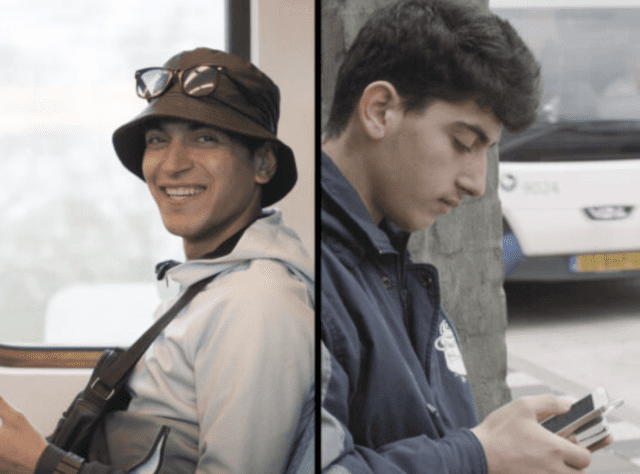
Els van Driel and Eefje Blankevoort’s Jano & Shiro, a Brothers’ Journey
Kids and Docs section embraces young adults in 2020, explains co-ordinator Marije Veenstra to Business Doc Europe ahead of IDFA Junior Day at Amsterdam’s Eye. Plus there is a VR in competition for the first time, alongside 12 short and feature documentaries.
As ever, kids’ tastes and sensibilities are ably catered for within IDFA’s Kids and Docs competition section. As co-ordinator Marije Veenstra underlines, younger viewers are just as imaginative, smart and media savvy as their adult counterparts (probably a lot more so, let’s face it). And they are audiences therefore who must be taken very seriously.
This year’s crop is widened in age terms for the simple reason that so many excellent films for older kids were submitted, and couldn’t be ignored. “We thought it would be a shame to leave them out,” says Veentra.
These include the likes of Cut the Chit Chat, about boys aged 12-18 who, while getting their hair cut by a French barber, answer forthright questions about love, sex, bullying, and what it’s like to be a man. The short film An Intermissionprovides young homeless people in Britain the opportunity to tell their own story. Meanwhile, Els van Driel and Eefje Blankevoort’s Jano & Shiro, a Brothers’ Journey is an experimental account of the far-reaching consequences of Dutch asylum policy for Jano and Shiro, two brothers who fled from Syria.
For the first time, a VR will compete in Kids and Docs competition. Cabinets of Wonder refers to a space full of treasures – in this case a collage of photographs, paintings and 3D objects – where the user can just watch, listen or interact. From there, the user can enter the fantasy worlds of four children who, each for their own reasons, feel out of place in the real world.
Veenstra reflects on the qualities needed, and exhibited by, directors who target younger audiences. “What you need as a filmmaker is a real genuine interest in your audience group and also in your protagonists, and if you don’t have that, if you don’t have this real genuine interest and also patience, I don’t think you can make a good documentary about younger children or young adults,” she says.
“Especially young adults,” she adds. “I think it’s quite a difficult age group to make a film about because often they only expose themselves to their peers, and they exclude adults a little bit from their world. Which of course fits into their development towards independence, that you leave adults out of your world and you focus just on each other.”
Because of COVID restrictions, the festival expect a kids’ audience of approximately 1100, as opposed to the 10,000 youngsters who are normally expected. Audience capacity is a mere 30 people per auditorium and, yes, that includes the vast Tuschinski 1. The main venues during IDFA 2020 are Tuschinski and Eye.
For the online school programme, the festival has selected from both this year’s programme and IDFA 2019. Veenstra expects a classroom audience of approximately 5000 kids. Teachers are consulted closely during the programme selection, Veenstra confirms.
“Some schools have made a whole documentary festival in the school for one day, for example, with moderators in the schools,” the Kids and Docs manager continues. “We produced introduction videos for all the films…and we made educational materials online. And we have pre-recorded Q and As online as well with the filmmakers.”
COVID was the subject of many of the submissions for the 2020 Kids and Docs, Veenstra says, but they didn’t quite make the cut, possibly because their production may have been too hasty, she agrees. “I hope that next year there will be some good films that were made with more time and with less stress that will give us a more valuable impression of this time,” she ends.





