“In established power structures, there are many people who abuse their power willingly and for their own benefit, and also at least as many people who know about it and silently tolerate it.” Alison Kuhn talks to BDE about The Case You, her documentary response to a horrific experience.
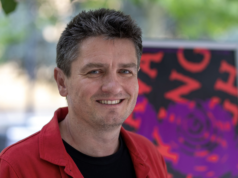
Alison Kuhn’s The Case You, a world premiere in IDFA Luminous, was made while she was studying directing at Filmuniversität Babelsberg Konrad Wolf in Potsdam. Kuhn has a blossoming career as an actor and writer. She has also won an award for her poetry.
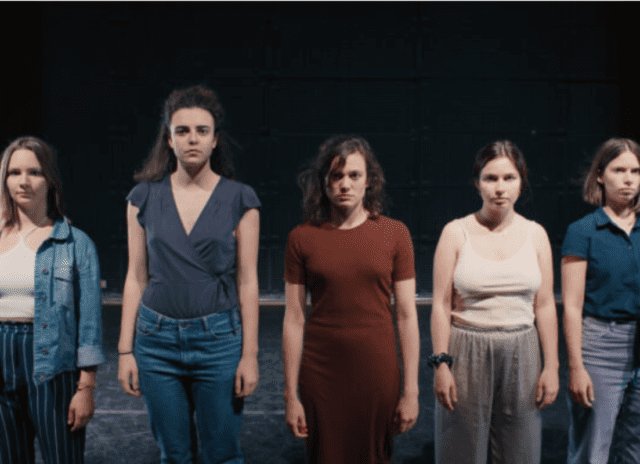
Her documentary deals with her own experience, and that of several other women, who auditioned for a new film being made by an established male director. They were all very young at the time and the director took advantage, subjecting them both to sexual and verbal abuse.
“Having a personal connection to the story that I’m narrating is what’s important to me,” Kuhn says of what she looks for in any new project she takes on. A cinephile, she is a passionate fan of contemporary Greek cinema. “Directors such as Giorgos Lanthimos, who is also an actor, or Athina Rachel Tsangari. I love the weirdness and boldness of it. I also admire François Ozon for the variety of his storytelling. It’s something that I aim for, too. Not limiting myself on genres or even on either documentary of fictional work.”
In her own career, Kuhn is determined not to become pigeon-holed. “I will keep on pursuing both acting and directing,” she says of the way the different disciplines enrich each other. “My acting experience inspires my writing and directing while my acting benefits from my growing knowledge of being behind the camera.”
Business Doc Europe: Given the horrific nature of your audition, was it traumatic to revisit your experiences in The Case You? When and why did you decide to make the film?
Alison Kuhn: By comparison, my audition was not as traumatic as those of many others. But making this film transformed this oppressive feeling that I had been carrying around with me when thinking about this experience into something empowering and constructive.
When I started my directing studies at Film University Babelsberg in 2018, I knew that I wanted to make this film as soon as possible. Working behind the camera was a new privilege for me and I wanted to use it to support my acting colleagues by giving them a platform. So, within my first semester, I assembled an amazing team of fellow students who believed in the importance of my story and who wanted to help me narrate it.
BDE: How easy was it to persuade the other actresses to take part? When did you realise that they had had similar experiences?
AK: Actually, I didn’t have to persuade any of my protagonists. I think they felt that they could trust my intentions and that I would tell their story in all its complexity, which is so important in this case. Of course, I met all of them in advance and we had long talks in which I noticed many similar aspects, but also very different ones that they had made in their personal experience.
BDE: Did this start as a film school project? What was the role of The Konrad Wolf Film University of Babelsberg in supporting the film?
AK: It is a Film University project, but it was not part of my curriculum. I developed, shot and post-produced it simultaneously to my other study obligations and student films. Looking back, it was quite a crazy ride and I don’t know where I took the energy from. But I don’t regret all the work and the strain of it at all. I learned so much from it.
BDE: Can you say anything about the legal case between the actresses and the director? Is the director aware of the film? Has he seen it? Has he made any public comment about you or the documentary? Do you think he expected to get away with this behaviour? Why hasn’t he been called to account before? What do you feel would be the appropriate punishment for him?
AK: We did not make this film for the people who were responsible for the assaults, but for those who must live with them now. That’s also the reason why the whole film is anonymised. What I can do as a filmmaker is elaborate this topic as an example for the major social issue. In established power structures, there are many people who abuse their power willingly and for their own benefit and also at least as many people who know about it and silently tolerate it. Often because they’re afraid of the economic or social consequences for them.
BDE: What influence did the Weinstein case and the #MeToo movement in the US have on your decision to make the film?
AK: I think it’s a bigger influence on the people who watch the film now than it was on my decision to make it. There is a lot of rethinking and discussing happening right now that was long overdue. If I would have made this film a few years ago, people might have been more afraid to show it.
BDE: Are you still in touch with the other actresses?
AK: Oh yes, we’re in touch on a regular basis. We all like each other very much and the shared experience of making this film will always connect us in a very special way. There is a kind of sisterhood that we all found great relief in.