

Brazilian actor, director and producer Bárbara Paz can remember exactly when she decided she had to make Babenco: Tell Me When I Die, her documentary about her late husband, the legendary filmmaker Hector Babenco (1946-2016), chosen as Brazil’s Foreign-language Oscar candidate.
“On a day when he was very ill in a hospital bed. I was afraid time was running out. I wanted to make a film record of this man while there was still time,” Paz says of Babenco. She was filming the director during the final months of his life.
“To know that I was filming was a comfort for him,” she notes. “My making this film was a gesture of love…of companionship. One holds the other’s hand and together we navigate this ocean of pain – transform it into cinema.”
When Babenco asked when she planned to start shooting, she replied that she already had.
The film won the Venice Classics Award for Best Documentary on Cinema when it premiered at the Venice Festival last year. It has now been chosen as Brazil’s Oscar candidate, a rare honour for a documentary, and was recently released to considerable acclaim in Brazil.
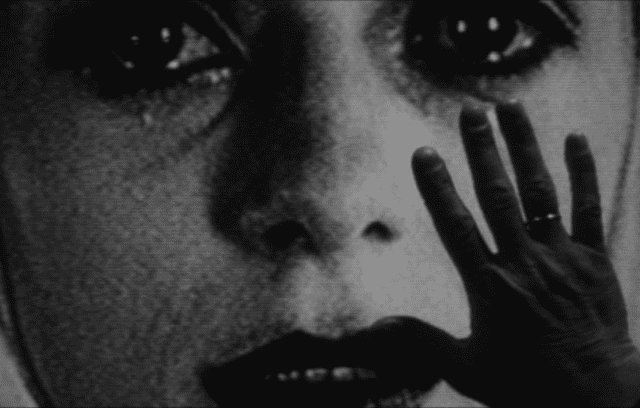
Babenco’s work and life were always completely intertwined. He lived to make films – and he made films to understand the way in which he lived. Paz therefore set out to chronicle Babenco’s life as a magical realist cinematic folk tale. She didn’t want it to be a dry, fact-based affair, with talking heads and voice-over narration. Instead, her approach was playful and lyrical. The film is full of Babenco’s reflections on the art and craft of filmmaking. It has many poetic flourishes and is shot in monochrome.
”Hector said that all his memories are in black and white…he thought in black and white.”
Babenco received his first diagnosis of cancer when he was 38, just after he had completed The Kiss Of The Spider Woman (1985), considered to be one of his greatest films. In spite of gloomy medical forecasts about how long he would live, he continued making movies for more than three decades.
Babenco: Tell Me When I Die (sold internationally by Taskovski Films) took several years to complete. It was partially funded by Paz herself. There was also backing through Globo Films, Globo News, Itaú Cultural and Canal Brasil (through state film body Ancine).
“Only after he (Babenco) left us did I begin to construct something larger. And I needed help. But it’s not easy in Brazil. Audiovisual has ground to a halt. It’s being massacred by the Bolsonaro government. As if we were villains….” she notes darkly of the contempt with which the right wing President Jair Bolsonaro treats artists and filmmakers.
This was not an easy project to edit. “It’s like the process of decanting and maturing wine,” Paz says of the lengthy time, and different editors, it took to put the film together.
Without support from Ancine, Paz and her collaborators (including Babenco’s daughter who is the film’s co-producer) are using crowd-funding and their own resources to fund the Academy Awards campaign. “We’re investing our own money in the campaign. But it’s not easy. Our campaign will be modest and small, but with much love and desire for this film to be seen.”
Although this is a deeply personal documentary, the film is also a celebration of Babenco’s achievements as a director. Babenco may have been born in Argentina but he explored Brazilian culture and politics with a lyricism and insight that no other contemporary Brazilian filmmaker has come close to matching.
“Hector’s films are like investigative reporting. Historical films. A depiction of our country in some of them. Pixote, Carandiru, Lucio Flavio, At Play in the Fields of the Lord… Films that told of a part of our history and our society. They are very important films in our country,” the director says of Babenco’s work. “Many in the new generation don’t know his films. But they can be seen on digital platforms. And my documentary, which is now on general release in cinemas, gives rise to the wish to see all Babenco’s films.”
Paz appeared in Babenco’s final feature, the autobiographical My Hindu Friend (2015), in which Willem Dafoe plays a director stricken with illness who befriends a young Hindu boy in the hospital where both are being treated.
The movie features an astonishing, highly charged performance of the ‘Singin’ in the Rain’ dance sequence featuring Paz. She brings humour, eroticism and manic energy to the old Gene Kelly routine. It turned out to be the last scene Babenco ever filmed.
“It was a scene I had performed for him years before. I was actually standing in pouring rain and dancing a lot. Because I love to dance. It was on a day he was in great pain and I wanted to cheer him up somehow,” Paz remembers. Before she began, Babenco had told her: “My final scene for cinema has to end with life. And you will represent life for me…”





