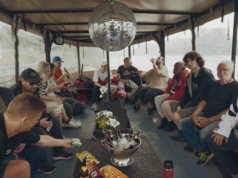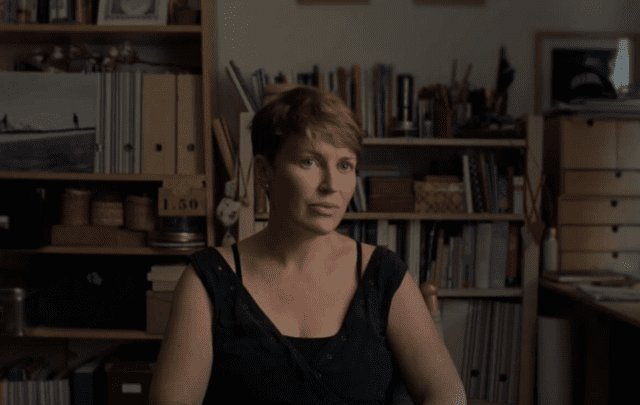
On the night that she was murdered in February 2018, Martina Kušnírová’s laptop had been left open. It revealed she had been looking at wedding dresses. Her partner and fiancé Ján Kuciak, a Slovakian investigative journalist, was also killed. The entire country was shocked at the brutal slaying of the couple. It appeared that Kuciak had been targeted because of his reporting. One possible suspect for the crime was shady, Mafia-like businessman, Marián Kocner.
Matt Sarnecki’s riveting documentary The Killing Of A Journalist, looks at the story behind the two deaths. The film, produced by Danish documentary powerhouse Final Cut For Real and OCCRP (Organised Crime and Corruption Reporting Project), is sold internationally by Cinephil and is selected for AJB Doc Last Minute Cinema. The film world-premiered in Hot Doc’s International Spectrum section.
This is the second documentary Sarnecki has made about the politically charged murder of a journalist. It follows on from the American director’s earlier film Killing Pavel, about Belarusian journalist Pavel Sheremet, whose reporting had antagonised authorities in Russia, Belarus and Ukraine. He was killed in a car bomb in Kyiv in 2016.
“This will be the last film I ever make about a murdered journalist. It is not my beat,” Sarnecki says of the new doc.
Immediately after the murder of Ján and Martina, some journalists who had collaborated previously with Sarnecki contacted him. They invited him to the village where the murder had taken place. They were trying to convince the police and local mayor to provide them with the CCTV footage relating to the crime. Unfortunately, the footage wasn’t made available. It was only a year later when another journalist contact agreed to share the leaked case file about the murder with him that Sarnecki realised he had the material he needed for the documentary.
This, he explains, isn’t just the story of a murdered journalist. It’s also a “blueprint of how corruption works…[how] organised crime has worked hand in hand with law enforcement and other political leaders to corrupt a country.”
Before the world premiere, the former Prime Minister Róbert Fico and former Interior Minister Róbert Kaliňák were arrested by the police and charged with organised crime offences. This obviously lends an added topically to Sarnecki’s documentary. Meanwhile, Kocner is being retried for having ordered the murder. (He was acquitted in an earlier trial).
Kocner’s lawyer is one of the participants in the documentary. “He is a very charming and likeable guy, on the surface at least,” the director says of him. The lawyer’s motive for cooperating with the filmmaker isn’t entirely clear. However, Sarnecki convinced him the film would give him the chance to present his client’s case on camera. The lawyer was also reassured that the documentary wouldn’t focus on his own messages to Kocner, which had also been leaked.
“He said yes but he also said at one point that ‘this may be the last time I ever do an interview for a film,’” Sarnecki remembers the lawyer commenting. “I think he was nervous to some extent but I think he trusted me…we treat him very fairly. He does a great job of defending his client. And I think the movie is much better with him as a participant.”
As the documentary makes very clear, Slovenian society was utterly rocked by the murders. “I think everyone was a bit naive. No-one thought that this could happen. No-one thought that this would go beyond threats of intimidation…no-one thought the murder of a journalist due to his work could take place in the centre of the European Union,” Sarnecki reflects on the upheaval that the Ján Kuciak has caused.
One of the most painful parts of the filmmaking process was speaking to the families of the two victims. Sarnecki describes the interviews as “heart-breaking…when we were there with the crew, filming the interview with Ján’s family, half of the crew was crying the whole way through the interview. It is devastating, especially because they are such sweet and honest people. That makes it all the harder. They are so humble and modest.”
The families have now seen the documentary and have given it their blessing.
Sarnecki came together with producer Signe Byrge Sørensen of Final Cut For Real in roundabout fashion. At one stage, Joshua Oppenheimer, who made his Oscar-nominated films The Act Of Killing and The Look Of Silence for Final Cut For Real, had been interested in partnering with OCCRP (Organised Crime and Corruption Reporting Project), the organisation for which Sarnecki works as a senior producer. Although the collaboration between Oppenheimer and OCCRP didn’t happen in the end, Byrge Sørensen found out about the documentary on Ján and Martina and threw her weight behind it after Sarnecki flew out to Copenhagen to meet her.
If you want to know just why an American filmmaker like Sarnecki is so immersed in stories about eastern Europe, he suggests you should look to the Peace Corps. He was a Peace Corps volunteer for two years, 2004-2006, in the region, learning to speak Romanian in the process. He went on to help run OCCRP’s documentary division, based in eastern Europe.
Some have already compared The Killing Of A Journalist to Romanian director Alexander Nanau’s multi-award winning film Collective (2019), which also untangles a complex web of corruption in eastern European society. Sarnecki is a big admirer of Collective but insists that his own film is very different in subject matter and style.
Sarnecki is now hard at work on a new project which promises to be just as harrowing as The Killing Of A Journalist. “Right now, I am sitting with my Ukrainian colleagues and we are working on a multimedia project about the atrocities in Bucha,” he explains. “I can’t give much more details about it…but the urgency right now is to focus on what is happening now in Ukraine.”
This article was first published during BDE coverage of Hot Docs 2022.