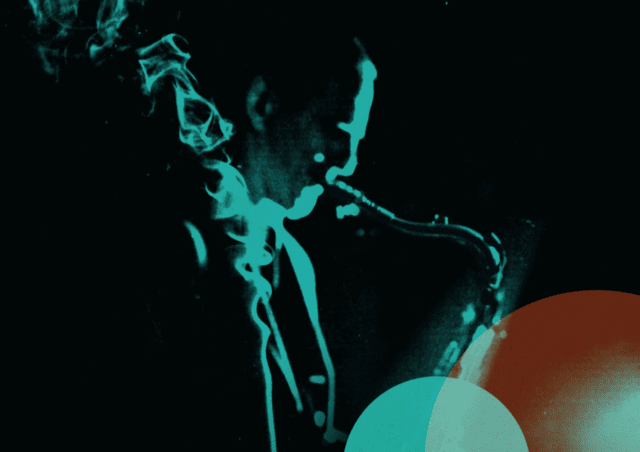
British doc director Oliver Murray (whose film Ronnie’s about legendary jazz club proprietor Ronnie Scott is still screening on the festival circuit) is preparing an ambitious new three-part documentary series about the Montreux Jazz Festival.
The series, being made with BMG Films, will draw on the Swiss jazz festival’s vast and extraordinary archives which are now part of UNESCO’s “Memory of the World Register.” These contain over 5000 hours of performance featuring many legendary figures, among them Marvin Gaye and Miles Davis.
“It is bubbling up nicely. We will get that together and begin to show people bits and pieces, probably in the summer,” Murray said of the series, which is called They All Came Down To Montreux. (The title comes from a line in Deep Purple’s song ‘Smoke On The Water’, about the legendary Frank Zappa performance in Montreux that came to an abrupt end after the stage caught fire).
Meanwhile, Murray’s Ronnie’s (which British viewers can now watch on the BBC iPlayer) is continuing to win plaudits.
“It’s a real tapestry of material which comes from all sorts of different places,” Murray says of his Ronnie Scott doc which contains not only performances from jazz and rock legends (Nina Simone, Jimi Hendrix, Sarah Vaughan, Miles Davis and many others) but evocative footage of London’s Soho bohemia over the years. This was assembled from multiple sources, among them both well-known archives like the BFI and BBC, and private collections.
“I really wanted to make sure that London, and Soho especially, was a really prominent character in the film,” the director explains of the painstaking research behind his documentary.
Ronnie Scott (1927-1996) was a complex and private figure. He was prey to depression and often downplayed his own achievements. However, he was a revered figure in the jazz world and his old colleagues felt a tribute like this film was long overdue.
The documentary features contributions from a roll call of Scott’s friends and admirers, among them producer Quincy Jones, veteran comedian Mel Brooks, broadcaster Michael Parkinson and the great saxophonist, Sonny Rollins.
“I felt a huge amount of pressure just to get it right,” Murray says. “I was under no illusion that these people gravitated toward it [the documentary] because of their affection for Ronnie and I was the grateful recipient of their help.”
Murray was first brought on board Ronnie’s after attending the Tribeca Festival with his previous feature doc The Quiet One, about Rolling Stone Bill Wyman. At Tribeca, he met producer Eric Woollard-White who had long wanted to make a film about Ronnie Scott.
“When he [Woollard-White] offered it to me, I really felt I had something to say about it,” Murray, 34, remembers. As a director of pop videos and commercials, he had spent much of his working life in Soho. In pre-Covid times, he would walk past Ronnie Scott’s jazz club, “almost every other day.” He saw a chance to make a film about “the man behind the name.”
Murray may have been too young to have known Scott personally but wanted to bring his story “to a younger generation, the future generation. There is such a buoyant jazz scene for young players at the moment and for film enthusiasts. I just thought that’s absolutely the challenge that I want to tackle.”
“Jazz is sometimes considered to be an old-fashioned art form and possibly a closed off world…I think that actually jazz is very forward thinking, very open-minded.”
Murray has noticed how younger viewers who think that a musician like Dave Grohl (Nirvana, The Foo Fighters) is the greatest drummer ever are invariably blown away by the footage in Ronnie’s of jazz greats like Buddy Rich performing solos.
“It’s great stuff and it’s hiding in plain sight. Sometimes, [younger] people need it repackaged and given some additional context so they can get into it,” the director observes of the jazz music featured in Ronnie’s.
The documentary was made through UK film financing and production outfit Goldfinch, whose boss Kirsty Bell was the executive producer. The film was championed by Jan Younghusband, Head of Commissioning, Music TV at BBC Television. Unusually, in this Covid-ravaged year, it also received a cinema release, screening on the Everyman circuit in October, in a break between lockdowns. Abacus Media is handling international rights to the film which screened at Doc NYC late last year. Now, other North American festivals are also vying to show it.
To the director’s relief, the UK jazz community has embraced the film. “I wanted to go back and have a nice evening at Ronnie Scott’s eventually,” he says of the enthusiasm with which the documentary is being greeted by members of the “inner circle.”
“You don’t want them to be completely happy because [that means] you’ve probably pulled a few punches,” Murray adds. “Because they knew there was a darkness to Ronnie, they knew this was the right way to do it. I think those jazz critics and the players understand that Ronnie was an artist and that we’re trying to be artists making a film like this as well.”