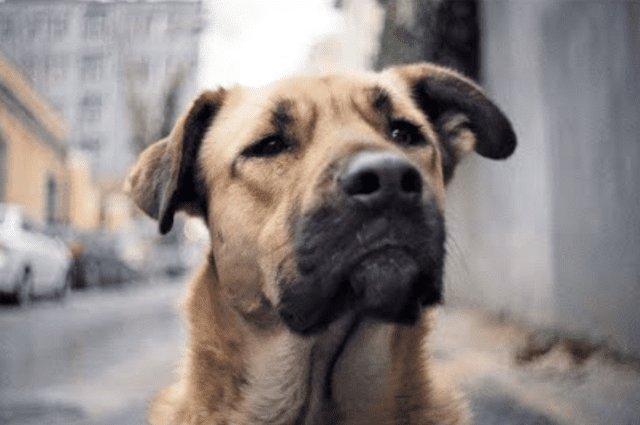
Stray was inspired by director Elizabeth Lo’s love for a dog, but one she knew long before encountering her film’s main protagonist, an Istanbul street scrapper named Zeytin.
“It came from a really personal place. I had a childhood dog growing up who passed away. And I remember feeling a lot of regret for suppressing my grief,” Lo recalls. “Grieving for him made me want to give narrative time and space to beings who are not ordinarily afforded that. That led me to want to make a film around a stray dog, and see where that takes us.”
Stray takes us around Istanbul with three street dogs — Zeytin, Nazar and Kartal — who encounter people and places as they go about their daily explorations.
As one might expect with canine subjects, it wasn’t a straightforward filmmaking experience. “The stray dogs wouldn’t be answering to call sheets,” Lo recalls with a laugh. “There was no-one who could wrangle them, because they lived on their own, completely on their own terms.”
That fact inspired an important and unique approach for Lo and her team. “We had to adapt to their schedule, adapt to the rhythms of their life. The film is trying to be this authentic document of what a dog gets up to both when humans are around and when they’re not around.”
Lo, who also edited the film and served as DoP, makes her feature directorial debut with Stray, after previously directing acclaimed documentary shorts including Bisonhead, Hotel 22 and Mother’s Day. Lo also produces the film alongside Shane Boris, together with co-producers Ceylan Carhoglu and Zeynep Koprul and Ina Fichman as executive producer.
The filmmaker knew Turkey would be a fascinating setting to follow the dogs — the country “has really progressive laws protecting dogs and they have huge stray dog populations,” Lo explains. The humans in Turkey also inspired the film. “From 2017 to 2019 Turkey was undergoing a lot of social and political turmoil, and I was interested to see the peripheral gaze of a stray dog who is ostensibly at the margins of human society,” she says. “I’ve always been of the belief that the view from the sidelines is always more accurate than from the centre.”
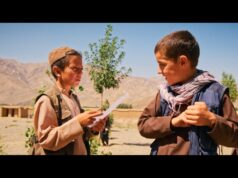
Indeed, via the dogs’ daily rounds, the filmmaker filmed a group of young Syrian refugees — “I was really moved by that human-animal bond, but at the same time the film weaves in and out of that relationship. It was important that the film is centred around Zeytin’s life. It’s an expression of dogs living life on their own terms and the validation that their lives still matter, even when they’re apart from ours.”
Zeytin emerged as the leader of the pack to be the film’s ‘star’ because, as Lo explains, ”she did have a very rare and singular quality where she was very stubborn, she always held onto her independence….she was unbridgeable even with food.”
“It was a real privilege to have found a dog like that,” Lo adds of finding a dog not distracted by cameras or humans.
The director was able to find the dogs around the city because a pet GPS company called Tractive GPS sponsored the film, and she could attach a tracker to them on a simple collar. Attaching GoPro cameras to the dogs via a harness wasn’t going to be feasible, so instead Lo donned an Easyrig and “basically I just crouched very low throughout the filming process to try to mimic the height that dogs are seeing. That was so important for me because if you’re going to tell the story of a dog with film, why not literally try to embed with their perspective? Because we do that for humans, we see the world through five or six feet constantly in our cinematography. So if you truly are respecting dogs as participants of the film, you try to empathize with their position.” Lo adds the she used an ARRI Amira and a Canon EOS C300, usually employing a stabilizer, and sometimes attached vintage Cooke lenses.
The team filmed in Turkey from 2017 to 2019, with an estimated total of six months of filming days. Even with all that footage, Lo was unsure if there would be enough material to sustain a feature, and even if there was, how audiences might react to it. “There was a lot of doubt throughout the whole process, doubt about whether the dramas that a stray dog goes through are relevant to human audiences, whether people think it’s worthy of their time to watch a dog just sniffing grass for over a minute. But in the end, I feel very very proud that we pushed through and emerged on the other side with a feature,” says Lo, “because it’s a statement that a stray dog like Zeytin deserves the kind of cinematic time and space that this film allows her.”
She adds how, “we were very conscientious of not wanting to use voiceover or narration or interviews to prescribe what her experience should mean to us, and leaving that opaqueness and that sense of mystery was our way of respecting her life.”
Sound design was also carefully considered. Lo worked with sound designer Ernst Karel, veteran of ground-breaking films like Leviathan, and he lent the team a bi-directional microphone so we “would be able to physically pick up sound from different directions in the field, so that you wouldn’t just be manipulating that later.”
Lo would handle the cinematography while one of her Turkish co-producers would “record all the different ambient sounds of the city and also conversations that were happening around the dogs.” The sound design can’t recreate a dog’s hearing of course, Lo adds, “but we tried to gesture at that, for audiences to imagine what hearing at a heightened frequency occasionally throughout the film would sound like, to gesture at what is it like to be in the head of someone that’s not human.”
Stray has been hailed as a cinematic triumph (not just for dog lovers) — it premiered as an official selection at Tribeca 2020 (which had to pivot online) and went onto play at festivals including the BFI London Film Festival, DOC NYC, Stockholm, and HotDocs (where it won the Best International Feature Documentary Award). It was nominated for two Cinema Eye Honours Awards and a Critics’ Choice Documentary Award.
Magnolia released the film in the US and now the perfectly monikered Dogwoof releases in the UK digitally on March 26, with special previews to celebrate National Puppy Day on March 23.
Lo says the film is “pretty idiosyncratic” and that makes it even more “gratifying that it is resonating with some people. I want the film to make people question their assumptions about what they consider to be humane or inhumane in terms of how dogs or stray animals are integrated into our social fabrics.”
For such a dog lover, she isn’t able to own a dog of her own right now, because of the demands of filmmaking and travels — “my life is too unstable” — but says, “that’s why I loved being in Turkey, you could befriend dogs and have dogs in your life despite not having the privilege of being able to own one, you could still have that interspecies connection that’s so important to all of our lives.”
And she keeps tabs on some familiar friends in Turkey. “Since we wrapped in in 2019, our co-producer Zeynep Kopru, who lives in Istanbul, whenever she comes across Zeytin, Nazar and Kartal, as well as the young men, she’ll take a picture for me on her phone and send it to me. And I always feel very relieved when I see those photos, because I was worried about them during the pandemic.”
Lo usually is based in Los Angeles but has spent much of the pandemic year in Hong Kong. She plans to return to the US soon and is busy thinking about her second feature documentary, which is being developed as part of her fellowship with Concordia Studio (the outfit founded by Davis Guggenheim and Jonathan King).
She can’t yet reveal the topic of her next film, but she says, “I want to continue making films that help to push forward the next social justice frontier, which I believe is including non-human beings into our spheres of moral consideration.”