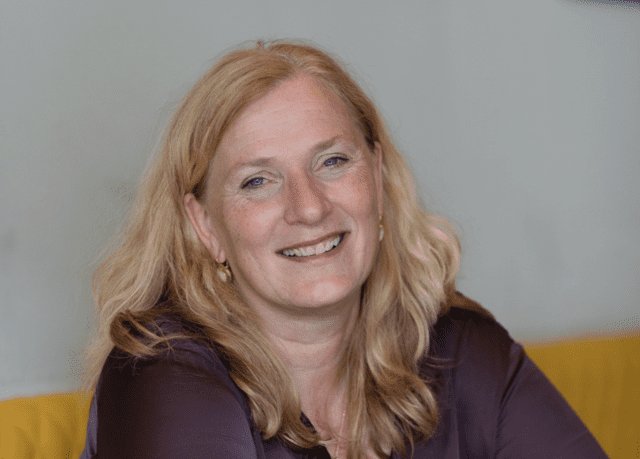
Simone van den Broek took over in March 2021 as Documentary Consultant at the Netherlands Film Fund with a determination to up the ante co-pro-wise and fire Dutch docs out into the world. But first, there is the matter of a pandemic to address.
The Dutch have always loved their docs, and The Netherlands has long been recognised as one of the global epicentres for documentary activity. Public funding levels have always been high, whether for film or broadcast, and all of the country’s film festivals eagerly embrace documentary and non-fiction. IDFA, of course, is one of the world’s top doc festivals and markets, itself an epicentre for co-production and funding support.
All of which is very encouraging. But for incoming Doc Consultant (a title which doesn’t do justice to the importance of the job) Simone van den Broek, this state of health and stability should be considered as nothing other than a starting point, a springboard, or “a huge opportunity”. Yes, the infrastructure is in place and the level of doc support is high (€3.47 million plus the potential to access Production Incentive support) but it’s now time, she argues, to rocket Dutch documentary towards greater success, at the same time addressing both how films are made and who is making them.
“We need to rethink our international position,” says Van den Broek, and therefore advocates greater commitment to co-production. While the level of Fund investment in documentary will remain the same, she suggests there will be much greater reliance on the part of doccers to get out into the world to co-produce. Who would have thought five years ago that filmmakers from Romania, Chile and South Africa would be in the running for Best Feature Doc at the upcoming Oscars, she asks. The landscape of the international doc world is shifting, she therefore argues, and she wants Dutch documentary to be even more prominent within that landscape.
Much ink has been spilt on the benefits of co-production, not least on how it shifts perspectives, delivers different viewpoints, promotes an alternative sense of aesthetic and offers access to brilliant creative and technical talents. But Van den Broek further argues that more attuned local investment means a greater requirement for producers to fish in international waters. This will in turn serve to elevate Dutch professionals out of their comfort zone, test better their qualities and instincts as filmmakers and ultimately enable them to deliver docs of a higher standard.
“I know this by experience as I have produced films that I financed fully in the Netherlands, and I thought later, ‘oh I should have gone into co-production,’ because it would have been much better for the film,” she says, herself a seasoned producer (Basalt Film) and responsible for acclaimed docs such as Farewell Paradise (Sonja Wyss) and Matthew’s Laws by Marc Schmidt.
That said, The Mole Agent, the Chilean documentary which will compete for the Oscar this year, is a minority Dutch co-production, courtesy of Rotterdam-based Volya Films.
It is a film that exemplifies another of Van den Broek’s mantras, that ongoing and critical examination of form and an uncompromising adherence to originality are essential in the delivery of quality doc. The Mole Agent is both hilarious and heart-breaking, looks like a gumshoe detective film and has the most unlikely of heroes at its core, an octogenarian spy in a care home. These were all qualities that convinced Dutch production house Volya to invest.
“Director Maite Alberdi combines the tools of theatre and factual elements to make a point and to tell a story, reaching a balance between lightness and [deep] emotions,” she says, before putting this into a Dutch perspective. “We make observational documentaries but it is essential to challenge ourselves more to find many other ways of telling stories, like introducing approaches we see in fictional films.”
In this she has full Fund support, she says, with the appointment of fellow Consultants, all of whom are eager to investigate, blur or expunge the lines between genres and sectors (whether they be animation, documentary, fiction or interactive) in order to tell the story in the most entertaining or engaging way. “The rules within different genres are not so strict anymore, so we are a larger team of consultants and it has been set up that way to be able to play around with form,” says Van den Broek.
Right now, however, elevating docmakers out of Covid-induced hardship is the most pressing concern and, as reported earlier, the Film Fund has initiated the Lock Doc Development scheme to support documentary production companies in developing their new feature documentary plans. At the same time it enables companies to continue (re)development of existing film plans for short or long documentaries, the progress of which has been disrupted by COVID-19, but which can still be revised or further developed in terms of artistic content and production.
Support through this scheme is available for a maximum of 10 production companies with a subsidy ceiling of €600.000. The deadline for applications is March 23.
Further support measures, which are open to doc and fiction makers alike, are Film Fast & Furious (which revisits the Film Fast Forward scheme, launched in 2020 to support the R&D phase of new audiovisual projects, both fiction and doc, affected by Covid) and the Music Mayday support scheme supports films to be made within 2021 that will have music as their “point of departure.”
“These are also an opportunity for us to make a broad invitation, so we can also be open for people that are not already Fund-supported,” says Van den Broek. “We are really looking to use this as an opportunity to get in touch with new talent. That is very important. That is what we want to use these measurements for. Where is the talent? And how can they find the Fund?”