

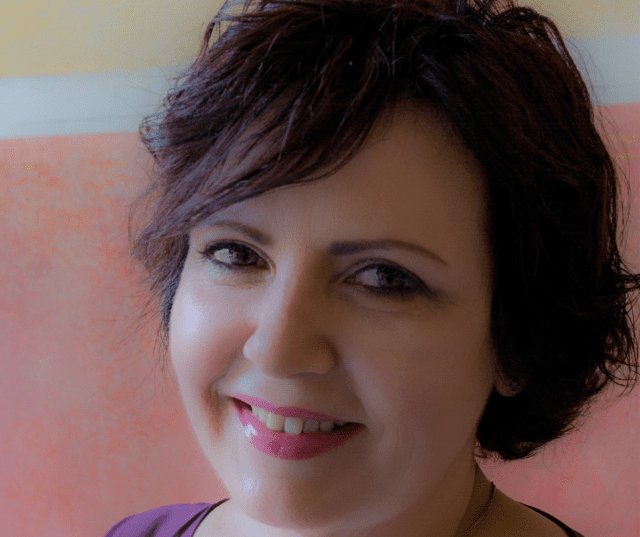
It’s seven months since Warner Bros Discovery’s streaming service HBO Max was launched across central and eastern Europe, the Nordics and Iberia – and gave a healthy boost to documentaries in the process.
“This has been the core of our success,” enthuses Hanka Kastelicová, Max’s VP Documentaries, of the extra visibility docs now have. “We are really a company that is growing. Currently, we are broadcasting in 74 countries.”
Two new HBO docs were premiered on Max to mark the launch in May 2024: tennis film Nasty, from directors Tudor Giurgiu, Cristian Pascariu and Tudor D. Popescu, profiling 1970s bad boy Romanian player, Ilie Năstase; and Hungarian director Gábor Hörcher’s Emma & Eddie: A Working Couple, about a couple who set up an adult-oriented web studio in eastern Europe.
Both titles posted strong viewing figures, as did HBO’s recent true crime doc, Car Gangs, directed by Dominik Bari and looking under the hood of a Slovak crime scene where car theft is huge business.
Max, meanwhile, is growing yet further. The platform is now live in Asia and is due soon to come to Turkey and Australia.
Over the last 12 years, the Prague-based Kastelicová has been backing outstanding new films from primarily eastern European directors: award-winning titles like Pawel Lozinski’s The Balcony Movie (2021) and Alexander Nanau’s Collective (2019).
HBO/Max continues to co-produce with western partners like Arte and BBC as well as with national film funds. In certain cases, the company will still look to fully finance docs, but with budgets rising it generally makes more sense to find partners.
“In the past, we were very protective about our content, but in the future I can even imagine discussing about collaboration in our territories with other broadcasters and maybe looking at the possibility of windowing,” Kastelicová says of the increasing openness towards sharing IP.
HBO/Max is no longer always aiming to control rights exclusively. It’s more important now (Kastelicová suggests) to be flexible and give producers the best chance both of financing their films and reaching an audience.
In 2024, seven HBO feature docs were released on the new platform. At the same time, HBO projects continued to register strongly on the festival and awards circuit.
For instance, Jakob Piatek’s Pianoforte (2023), about young pianists competing in the Chopin piano competition in Warsaw, recently won an international Emmy
“This is for sure success [for HBO],” Kastelicová suggests. “It is confirmation that we are co-producing the best content globally.”
A Danish-Spanish title, Only on Earth, directed by Robin Petré and about the environmental havoc wrought by wildfires in southern Spain, won the ‘doc in progress” award at Cannes Docs. It is expected to premiere at a festival later this year.
Other HBO-backed films have also picked up prizes. For example, Marie Dvořáková’s World Between Us, following Czech photographer Marie Tomanová as her career skyrockets in New York, was a prize winner at the Ji.hlava International Documentary Film Festival late last year.
“But what is success? It is more and more if viewers on our platform watch,” Kastelicová argues that getting an audience on Max itself is now just as important as picking up festival prizes. “We measure success mainly on how our local content is watched in the country of origin. This is the first measure. The second measure is if this content is watched not only in its country of origin but also in the other European territories.”
The commissioning structure at HBO is changing slightly. Kastelicová is becoming less involved in Polish documentary primarily because Warner Bros. Discovery Poland (which sprang out of Polish media giant TVN) already has its own documentary team.
“I really focus most on the central European countries, namely the Czech Republic, Slovakia, Hungary, Romania, Bulgaria, and the countries of the ex-Yugoslavia. These are my main territories,” the veteran exec explains. She adds, though, that Max is “one team,” and that colleagues in many other territories will continue to draw on her expertise.
Many HBO docs are co-financed by national film agencies and Kastelicová is well aware of the responsibility to ensure that these projects are also shown in cinemas wherever possible.
“It’s always a struggle, What we are recommending to our filmmakers, more than a classical cinema release, is making an event,” she explains why documentary makers now need to do more to capture the imagination of cinema goers.
Strategies could involve debates alongside the screenings or introducing the films’ main characters to audiences. HBO will always try to support the cinemas with their marketing campaigns for the documentaries. When the films are on the big screen, they will generally attract extra press attention. This, in turn, will help their profile when they’re launched a little later on the platform.
“We try to do the campaigns together [with the cinemas] and right after a short cinema release, we have it [the documentary] on Max. It’s a wave of interest that we then try to use.”
Kastelicová acknowledges, though, that theatrical distribution is “really difficult” in the current marketplace.
Data also reveals that audiences are becoming impatient with longer movies – and Kastelicová argues that docs sometimes need to become shorter to keep their attention. She “loves” longer films that go “deeper” into their stories but now questions whether such projects are sustainable.
“When I joined HBO in 2012, our feature documentaries were usually, like, 75 minutes. Now, sometimes, it is even two hours….In the meantime, there are so many impulses around us that it is simply pretty difficult to sit down and watch for two hours.”
Recently, when HBO was pitched a feature project about fast rising young Hungarian rapper, Pogány Induló, Kastelicová and her team decided to re-harness it as a four-part TV series instead.
“We are thinking about the generation that is watching mainly the short TikTok videos. We want to make something shorter.”
The HBO exec is also re-thinking festival strategy. Some titles, for example films like Lina Vdovîi and Radu Ciorniciuc’s Tata which premiered in the Toronto International Film Festival, will continue to launch at prestigious events like TIFF, IDFA, CPH-DOX and the Berlinale. However, other more mainstream HBO pictures are now just as likely to surface first on Max itself.
“We all need with the filmmakers to reflect on the changing environment,” Kastelicová says of the need for flexible and pragmatic thinking. “Any films without viewers doesn’t make sense…In the slate, we need to have the right balance between films that are more mainstream and films that are more artistic. For now, I think we have both.”
Over three decades, HBO has firmly established itself in central and eastern Europe as “the best producers of high-end documentaries in the region.”
HBO Europe looks to make around seven feature docs a year. Titles in the pipeline include Do Magic, the latest feature from Austrian-based Roma filmmaker Vera Lacková (director of How I Became A Parisian). This is in development and expected to be greenlit later in 2025. Also in development is Ilinca Calugareanu’s Cinderella Unbound. Meanwhile, HBO is also involved in the new feature doc from Tatjana Bozic (previously known as People In My House but now searching for a new title)
“My recommendation for the filmmakers is thinking about the length, not going over 90 minutes because more and more we see films around two hours…and I think some films we let become so long, we hurt them a little bit with the viewers – they don’t perform as well. And I think we can hit high quality with more moderate budgets,” Kastelicová concludes.





