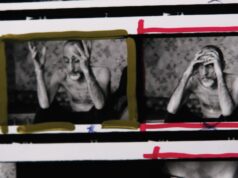
It was a tragic and shocking story that set in motion an international media frenzy. In July 2000, 21-year old Lucie Blackman, from the UK and working as a hostess in a Tokyo bar, went missing.
The case seemed initially baffling to Japanese detectives, so much so Lucie’s father Tim became very closely involved. He was concerned by the seemingly slow pace of the police search and so went to Tokyo with another daughter, Sophie, to bring Lucie’s disappearance to the attention of the Tokyo public. This involved continual TV appearances, a vast Tokyo-wide poster campaign and even alerting then-UK Prime Minister Tony Blair to the case while the politician was on a visit to Japan.
Little by little, however, the police investigators began to make progress, homing in on a suspect and eventually solving what was evidently a horrific murder case. The detectives also uncovered a series of equally tragic cases of kidnap, assault and murder perpetrated by the same offender, Joji Obara. Like Lucie, these victims were mainly non-Japanese and working in Tokyo bars without visas.
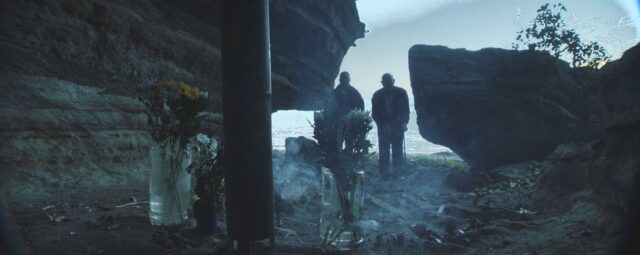
For those officers involved, the investigation was emotionally harrowing, and many of them return every year to the place where Lucie’s remains were eventually found. Director Hyoe Yamamoto was determined therefore to tell the heart-rending story of the investigation from their unique perspective.
Yamamoto had, like most people back in 2000, been very aware of this missing person case, even while then studying in the US. What’s more, he retained strong continuing interest in it, which was further piqued some years later when he read the 2010 book ‘People Who Eat Darkness,’ Richard Lloyd Parry’s account of the crime. (The book was optioned by 20th Century Fox in 2016.)
But it was when Yamamoto read Shoji Takao’s ‘Elegy for Detectives,’ which told the story of the investigation from the perspective of the officers involved, that he could see a way of shaping his own documentary about the Lucie Blackman case.
“It was a police procedural book, but it was very interesting in the fact that at the end they mentioned that all these detectives are actually still going to the site where they discovered the body and offering prayers after all these years,” Yamamoto tells BDE. “It got me wondering why that is, and why did it have that much impact on them? If I could talk to these detectives and find out why, what happened in the case, I thought that would make an intriguing documentary.”
“I began to think about how these men and women must have felt going into this difficult investigation and how the power of empathy for a foreigner they had never met led them to endure the long investigation that ensued. Despite the horror and brutal nature of the crime and the 20 years that have passed, I felt the story was still very much worth telling,” he adds.
Still-serving policemen were strictly off limits from an interview perspective, but the Tokyo Metropolitan Police Department raised no objections to Yamamoto and his team interviewing the now-retired officers who were involved over two decades ago. The testimonies of these officers are, at times, highly emotional.
“As I began the work, one of the relevant themes that emerged was how difficult it is to prosecute sex crimes,” Yamamoto stresses. “Hundreds of victims were identified, yet fewer than 10 cases were ever indicted by the prosecution. These sentiments are echoed by Lieutenant Tokie Maruyama and Sergeant Mitsuko Yamaguchi, the two female officers who interviewed the victims. In the emotional interviews, they express their struggles and anguish as women following the case. Lucie’s disappearance exposed the worst sex crime case in the history of Japanese crime, and it still poses a major challenge 23 years later.”
From a production and broadcast perspective, Netflix seemed the obvious outlet for the documentary. “No domestic broadcaster or platform was going touch this because they rarely do this type of true crime documentary,” Yamamoto says. “So Netflix was a natural choice…I think they were intrigued by this international aspect of the story. And they eventually gave us the green light.”
The film, which world-premieres worldwide on Netflix on July 26, will be screened in a slightly different form in Japan. Fewer international interviewees will feature, greater emphasis placed instead on the testimonies of the Tokyo detectives.
One of the film’s core contributors is Lucie’s father Tim Blackman, who agreed late to participate in the process, even as the film was being edited. Blackman himself hit the headlines in 2006 when he accepted a £450,000 ‘condolence’ pay-out from a friend of Joji Obara, the man was eventually convicted of killing Lucie. At the time, Tim Blackman stressed that there were ‘no conditions attached’ to the payment, such as a reduction of the murderer’s sentence.
This aspect of the story is not covered in Yamamoto’s film. As per why it isn’t included, the director stresses that the POV of the doc is specifically that of the police officers – “that was always the case,” he underlines.
“We wanted to make sure the family understood that we wanted to tell a story in a sensitive and respectful manner. It took a long time to convince Tim to do the interview. In fact, we had already started editing the film when he agreed to the interview. We had to stop what we were doing and do a new cut that would include Tim’s interviews,” the director adds.
Yamamoto returns to the film’s core premise, and articulates what still strikes him most vividly is how, even 20 years after Lucie’s death, the detectives still return to the place where her remains were found. “That always stuck with me,” he says. “This power of empathy that these detectives [feel] for Lucy and victims in general.”
“In other countries I’m not so sure if detectives would make it into a ritual to visit in the way that they did [in Japan], particularly after 20 years,” Yamamoto adds, further musing if the ritual may be a means that detectives employ to process better the horrific things they encounter in the line of duty. “It really made me wonder about the strange link or relationship between…the deceased and the detective, [but] it also has something to do with a probable Japanese sense of how we consider and treat the dead.”