Danish director Birgitte Staermose first went to Kosovo 20 years ago after one of her shorts was nominated at the European Film Awards. The film toured around and ended up playing at DokuFest in Prizren. She was later invited back to be a juror. This led to her making her award-winning 2009 short, Out Of Love. Combining documentary and dramatic elements, the film offered an insight in the tough lives of kids after the Kosovo war, selling cigarettes on the streets in order to survive.
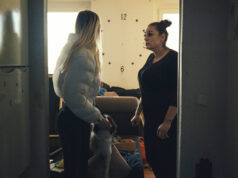
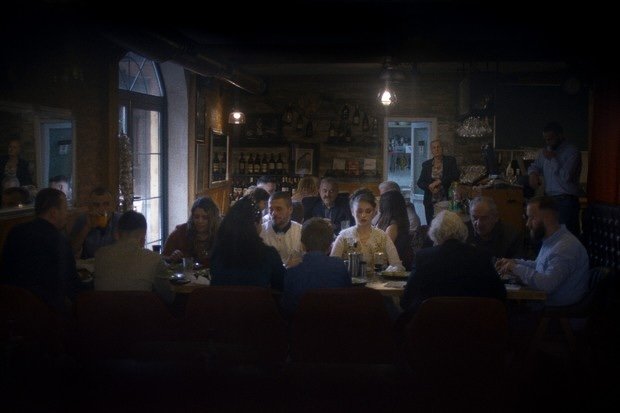
Now, the director has revisited the same characters to see what has become of them during the intervening years in her new feature doc Afterwar. The film, produced through Magic Hour Films, premiered this week in Berlinale Panorama. It will also screen next month at CPH:DOX.
“First, we just asked if they would allow us to interview them,” Staermose remembers how she approached her subjects for the first film back in 2009. Having spoken to them, she began to develop the project. Her technique was unusual. She used audio recordings and then filmed the street kids “performing” lines originally spoken by others.
“I purposefully switched the lines around so what they speak is not their own story.”
The director was always sensitive to the ethical challenges behind the documentary. She deliberately treated her subjects as if they were professional performers rather than documentary subjects.
“Yes, they were kids but they were also working people. I had a lot of respect for their time,” she says. “I was unsure about how to deal with them financially because they were working and I was asking them not to work.”
In the end, she paid the kids as performers (“the minimum wage for a child actor.”) They had been sent out to make money for their family but she made sure that their fees for appearing in Out Of Love went directly to them, not their parents.
Why has she now returned to these characters 15 years later?
“My primary motivation was that I started to see the struggle they had had over the years. They were very much survivors, strong characters all of them. They were not in any way behaving like a victim of the situation. They were amazingly capable people [but] I thought despite all their efforts, I could [still] see the struggle.”
Audiences tend to demand happy endings. “We like the American idea that if people struggle enough, they make it. It’s not true!” says Staermose. In this case, she wasn’t really able to provide one. Fifteen years on, these protagonists still have tough lives.
One of the protagonists, Xhevahire Abdullahu, has a bachelor’s degree in political science and speaks three languages but “she is still sitting in Frankfurt behind a cash register.” She may be “super smart” but that doesn’t mean she has been given the opportunities audiences will feel she surely deserves.
On the other hand, Gëzim, another of the street kids from the first film, has now turned into a doting father. He has two children of his own. “He is completely in love with those kids. He is the most loving dad you can imagine. I think he will do everything he can to protect them. His [own] father did not do that.”
Staermose doesn’t regard Afterwar as a documentary (although that was how it was presented in Berlin). “I don’t actually feel comfortable claiming to be a documentarian – because I am not! They know how to do things I don’t know how to do, just like I know how to do things they don’t know how to do.”
Her hybrid approach was strongly influenced by the American play ‘The Laramie Project’, for which a group of actors visited a town where there had been extreme homophobic violence. They interviewed the townsfolk and wrote monologues based on what they had heard.
She also went to a Belgian play featuring kids on stage talking about what adults had told them. “It was so powerful to put these words in these children’s mouths, like ‘my father says he will never die…’”
On Out Of Love, she collaborated with Danish playwright, Peter Asmussen. They took the original interviews with the Kosovan kids and turned them into poetic and moving monologues.
Over the years, Staermose has developed deep connections with Kosovo and its people. “You really know people!” her DoP said to her in wonderment as they walked the streets where she was greeted by passers-by. She has spent plenty of time in the country. She started working on Afterwar in 2017. The intervening years have been tumultuous. The characters and the filmmakers had to cope with the Covid pandemic.
The producer was Lise Lense-Møller of Danish outfit Magic House Films. There was support from Kabineti in Kosovo, Vilda Bomben Film in Sweden and Bufo in Finland.
Alongside hard hitting ‘documentaries’ like Afterwar, Staermose has also continued directing popular big budget TV dramas including The Spanish Princess for Starz and The English Game (created by Downton Abbey’s Julian Fellowes).
“I’ve always had a little double-sided [approach],” she reflects. “For the good of my career, it might have been better if I had chosen a little more distinctly…but I’ve always had a real arthouse side to me that likes breaking boundaries cinematically, and then I also have a side to me that I know how to do things that are quite mainstream. But I think what glues the two together is the performance part. I am a director who really likes to work with performers. You could say that is as true for this film as well as for The English Game.”
“But it’s true, it’s a little strange…” the director concludes as she contemplates her hugely varied career.