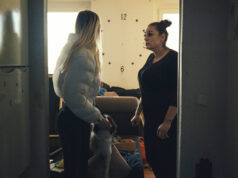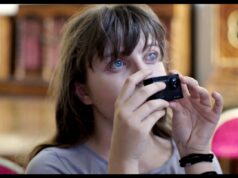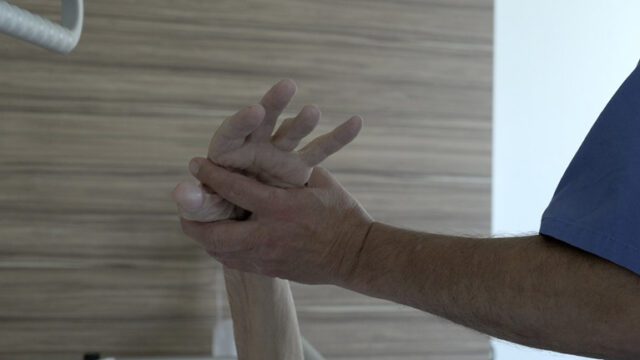
Around 10 years ago, an uncle of German filmmaker Philipp Döring fell sick. He had terminal cancer. Döring closely observed his ailing relative and was inspired by how the frail old man, a chaplain, kept up his spirits even as he moved ever closer to death.
“He was still a kind of a happy guy and that impressed me very much…I couldn’t really get it into my head that he could deal with his own death in such a way…This was the beginning of thinking about this topic,” Döring remembers how the idea for his movie Palliative Care Unit, screening in Berlin Forum, came to him.
At the time, the director had been thinking about his own death with feelings of mounting dread. “I probably always felt it. It is not that you are confronted with death so often and my uncle was a generation older than me…he even planned his funeral, what kind of CDs were to be played and stuff like that.”
Döring had been working a for a German theatre company, shooting “making of” shorts about new productions, working with Luk Perceval and other directors. In some ways, it was frustrating work. The shorts would be shown online or on the day of the premiere but there was no proper forum for them.
“No-one watched them and they were a little bit about nothing. People are interested in the plays, not about how they were made…But what I found fascinating was this group work, people in one place and they have to do something together although they are very individualistic people.”
Döring felt that “a palliative care unit could be a great thing to make a documentary about,” using some of the same observational techniques as in his theatre films.
One challenge was finding a unit that would actually let him in with his camera. Palliative care doctors, who often feel frowned on and are low down within the medical hierarchy, were keen for their work to be shown – but their bosses weren’t.
“The teams on the wards, they were usually very positive [about the idea of the film] because most people working in palliative care units think this is something that needs to be more known…but, of course, at some point you have to get permission from the management and the communication department and that became difficult. Someone you’ve never met says ‘no,’ maybe because they are scared of bad publicity.”
In the end, the Franziskus hospital in Berlin allowed the director in. “They were open from the start.” The medical director of the facility got right behind the project. Even so, the project was delayed for many months because of the pandemic.
Once it finally got underway, Döring was a one-man orchestra on the film, shooting, editing and doing everything else in-between. On the one hand, this was a financial necessity – he was producing and funding the doc too. On the other, he knew he needed to be discreet. It wouldn’t have been feasible to have been wandering around the wards with a big crew in tow.
“For the funding, I thought about trying [for public financing] but at film school, I studied fiction films and so I didn’t have any documentaries to show.”
It was a difficult project to present at any early stage. “And in Germany, for funding, you always need a TV station or distribution [in place]. I knew this would be really difficult. I thought, OK, I am going to spare myself getting “no, no, no, no.””
He had a camera already, invested in some new equipment and was soon ready to go.
Patients were asked by the doctor if they would consent to being filmed. Most said ‘yes.’ “It was always clear that the focus was not on the patient and his or individual story but about the work in general on this ward. I think there was a lot of trust from the beginning and most them said ‘sure, why not.’”
Patients tend to feel relieved to be on the palliative care ward. They’ll start to relax even if they are very sick. The atmosphere is very different from in other parts of the hospital.
“There is certainly a huge amount of grief, anxiety and fear,” the director points out that the patients are at the end of their lives. “But there’s a special thing. They talk about this. Usually in a hospital, it is not talked about. People, they are afraid to die. But there [on the palliative care unit], they have the space and time [to talk]. They are being helped there. It is indeed a positive atmosphere.”
When Döring told friends and acquaintances what he was working on, they would often say to him. “How can you do this? Isn’t it horrible?” He’d reply that it wasn’t horrible at all.
There were obvious formal challenges. It was crucial for the filmmaker to find the right place to position himself. Although he was using a handheld camera, he couldn’t roam around at will. “You can’t move around so much because you don’t want to disturb what is happening.”
Döring was at the hospital for around two months. During that time, he shot around 100 hours of material. This has been edited down into the 245-minute cut being unveiled at the Berlinale. The director isn’t apologetic about the length.
“The good thing was that I didn’t have anybody telling me it had to be shorter because I was the producer myself. I started editing. The first rough cut was 10 hours, the second was six and the third cut was around four hours. I got rid of everything that you don’t really need. What is left is worth seeing.”
Döring adds that this is a film about time. For the patients at the end of their lives, “time becomes so important because people feel there is not much time left.”
Making the movie has enabled the director to cope with that existential dread of death that he had felt so acutely when his uncle was ill. “I wouldn’t say that I have completely got rid of the fears but they have become less. That’s what you always say, death is part of life. It is one thing to say it and another to feel it and understand it emotionally. I think during the making the film, I made a big step toward that.”
With the prestige of the Berlinale behind it, Palliative Care Unit is already catching the eye of festival directors elsewhere. German Films have offered promotional support and the German press and media are showing plenty of interest in the doc.
“It is still something that is being talked about [in Germany], that there is not enough money and hospitals are dying,” the director explains why his four-hour epic about death is striking a chord.