Nelly & Nadine (a world premiere this month in Berlin) is one of several films that Swedish director Magnus Gertten has been inspired to make using remarkable newsreel footage shot in his home town of Malmö at the end of the Second World War.
In late April 1945, hundreds of refugees, from many different countries, arrived in Sweden. They were survivors from German concentration camps, hoping to rebuild their lives. Their faces are shown in beautifully framed close ups.
Gertten first saw the footage in 2007. He was haunted by it but initially felt it would be very hard to identify any of these anonymous women. His father, though, told him that he remembered seeing the women disembark. Gertten also discovered there were passenger lists with details of the arrivals, albeit without photographs.
“It was almost like mission impossible, but as a filmmaker you like that. It should be almost impossible to do your film,” the director reflects on his long quest to put names to the faces – and to tell some of their stories. His first film on the refugees was Harbour Of Hope (2011). He also later made Every Face Has A Name (2015), for which he tracked down some of the survivors.
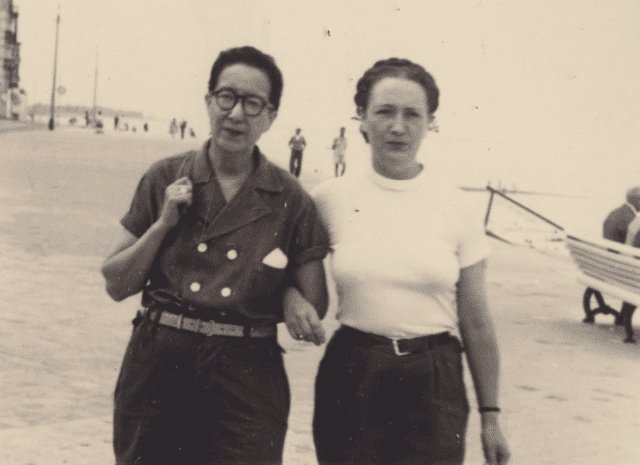
One of the refugees, looking thoughtful and very mysterious, was Nadine Hwang, daughter of a Chinese diplomat and a Belgian mother. In the 1930s, Nadine ran a celebrated lesbian literary salon in Paris. Arrested by the Nazis, she had been incarcerated in Ravensbrück where she had met opera singer and resistance fighter Nelly Mousset-Vos. The women both survived the camp. They were lovers who later spent their lives together. Nelly & Nadine (sold by Rise & Shine) tells their extraordinary story.
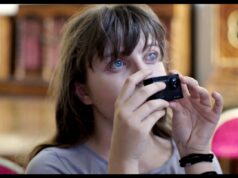
As he pieced together the details of what happened to the women, Gertten was working very closely with Nelly’s granddaughter Sylvie. She and her partner had approached the filmmaker after seeing Every Face Has A Name, telling him they had information about Nadine.
“We met in a bar in Paris. We drank some wine and they told me ‘we have the full story of Nadine Wang.’”
Sylvie lived in a beautiful farm house in the northern French countryside. She had some astonishing archive footage of her grandmother but was a little wary about whether she wanted to participate in the documentary. After all, the film would be touching on her grandmother’s lesbian relationship, the horror of the war and some very painful family memories. She hadn’t yet “dug through” the material in her possession.
Nadine, it turned, out, was a consummate filmmaker and photographer. Gertten was able to scan and use her 8mm home movie footage. “It was well kept and well shot,” he says of the material which is used in hugely evocative fashion in the documentary.
Gertten was startled when he first presented the film in an early phase to different TV channels. One TV buyer from Poland watched it, told him she was immensely moved by it but added that she would never be allowed to broadcast it on Polish TV. The director realised then that the sexist, homophobic and anti-Semitic prejudice the women had encountered 75 years ago was still very present in today’s society.
Thankfully, though, most financiers “fell in love” with the project. Not only was the story remarkable in its own right. Thanks to his assiduous research and all the help he was receiving from Sylvie and her partner, Gertten was able to tell it through the women’s own words – and with intricate and revealing imagery of both of them. “It’s not like me being the BBC narrator, telling this from a helicopter perspective,” the director says of how he was able to get inside the women’s lives.
Gertten was dealing with a very delicate part of Sylvie’s family history. He was determined not to exploit her. “I am the filmmaker. I need to ask questions, I need to challenge…but I also have this hippy philosophy. When you do a documentary like this, you have to love the people you do the film about. That love will show in the film,” he observes. “I am really fond of Sylvie and I am very impressed by her honesty.”
In Berlin, Nelly & Nadine will be in contention for a Teddy Award, one of the most coveted queer film awards in the world. The film celebrates its protagonists’ refusal to stay in the closet. They survived the Nazi concentration camps and went on to live their lives on their own terms, in the most open way. “I am not keen to have the most obvious messages in a film. I want the film to work inside the viewer…if it is well done, well constructed, there will be space for you the viewer to reflect on your own life,” the director declares.
Sylvie and her partner Christian should both be in Berlin later this week for the premiere. “We all need to celebrate…we are very happy that there will be a physical screening,” Gertten says after a production process that has taken several years.
Might Gertten make yet another documentary about another of those faces from the 1945 newsreel footage? “Two times I’ve already promised not to do anything more,” he jokes about how he keeps on being drawn back to that material. “I don’t think you can promise anything…”