

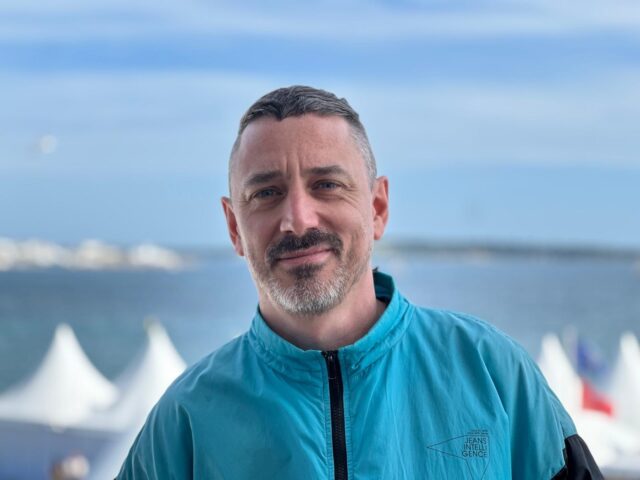
If it’s May, it’s Cannes, and if it’s Cannes, it’s docs.
Once again, for the next six days or so, the business of documentary film will be scrutinised, assessed, criticised and celebrated by players within the sector, whether seasoned or new to the game. New projects will be pitched, co-production opportunities will be examined, deals will be agreed, and at the end of it all, on May 19, we can all get inspired by some of the doc luminaries who made it to Cannes selection in 2026.
“I think Cannes Docs is a very particular program, as it is essentially the doc-specializing industry program within a gigantic, very fiction-focused Marché du Film and Festival de Cannes conglomerate,” programme Head Pierre-Alexis Chevit tells BDE. “As a result, there’s a very strong level of appreciation and acknowledgement for the documentary genre, and for everything it implies to be working in the field – the passion, community, challenges, hardships, dedication to the craft.”
“In its very own way – which includes a great deal of attention to quality human interactions and assertive artistic, ethical and political values – Cannes Docs is a highly substantial program of the Marché, certainly one of the busiest, offering what I believe to be both a very useful and very welcoming platform for documentary filmmakers and professionals,” he adds. “And benefitting from the unique, exhilarating, catalyst effect of Cannes in general. [This is] quite an unbeatable one, to be honest, when it comes to developing precious, potentially game-changing professional connections.”
The programme also celebrates a cinematic form which can, more than any other, hold power to account, especially within these ugly times. “I’m stating the obvious by saying that filmmakers and film festivals have a crucial role to play in preserving democracy, free speech, critical thinking, and in resistance to reactionary ideologies,” says Chevit (who, two years ago, was very vocal about the precarious situation of short-term contract festival workers, which was going all but unheeded by the CNC and Department of Labour alike.)
“Yes, I believe it is a responsibility that we have as cultural organizations to stand up for a certain political/ethical line, though of course it’s not possible in similar ways for big institutions and smaller, independent organizations or collectives. The pressing question also is – which kind of artistic and political independence and freedom will such organizations be able to preserve in the times to come, facing global attacks on general interest and on the (cultural and artistic) common good?”
Four docs in Official Selection are featured in this year’s Doc Day line-up of panels, interviews and addresses. These are Pegah Ahangarani’s Rehearsals for a Revolution (Special Screenings), Mahsa Karampour’s Into the Jaws of the Ogre (ACID Cannes), Mark Cousins’ The Story of Documentary Film – The 1970s (Official Selection, Cannes Classics) and, from Directors’ Fortnight, Once Upon a Time in Harlem by William Greaves and David Greaves.
“So overall, a very nice representation of most Cannes selections & sidebars. Note that there’s a feature doc at the Critics’ Week this year as well, Tin Castle, by Alexander Murphy,” Chevit reminds.
As in previous years, Doc Day will kick off with a conversation with the President of the Œil d’or Jury – this year, this is Academy Award-winning Mstyslav Chernov (20 Days in Mariupol, 2000 Meters to Andriivka). Opening the afternoon session of Doc Day, Oscar-nominated filmmaker and editor Ema Ryan Yamazaki will give a special keynote on how editing critically shapes a film, drawing from her work on Black Box Diaries (BAFTA- and Oscar-nominated, 2025) and American Doctor (Sundance 2026).
“The line-up of Doc Day talks will conclude with a tenderly disruptive, humorous, thought-provoking live performance by filmmaker Keith Wilson (Pleased to Announce: Episode 2), exploring the financial, emotional, and social costs of documentary awards campaigns,” Chevit adds. “Curated by Heidi Fleisher, this session is the follow-up chapter of a series of performances Keith recently inaugurated at CPH:DOX, set to continue with subsequent episodes coming up at other doc films fests in the months to come.”
Last year’s Doc Day examined the crossover between the doc and fiction sectors. This is a creative feature that is prominent in the Cannes Docs programme in 2026, with hybrid Docs-in-Progress projects such as Land of Evanescence by Trang Nguyen Thi Xuan (Docs by the Sea Showcase), The Undermine by Alice Nelson (Scotland Showcase) and Ba’s Book by Ashley Duong (Canada Showcase).
“This hybridity between genres, but also just the mere, simple concept of considering creative docs as style-expansive and genre-bending cinema, has been a strong common driving force for many important festivals and curated spaces around the world for quite some time by now,” says Chevit. “One of the ACID-selected films this year, Summer Drift (Virages), by Céline Carridroit & Aline Suter, is one great illustration of this hybrid cinematic approach.”
The Cannes Docs boss also flags up the newly revamped Co-Pro Social Club immersion course, a six-day capacity-building exercise which unfolds as “a profile-based educational pathway across the Cannes Docs program.”
“It is conceived to equip a cohort of emerging to mid-career creative documentary producers from around the world with practical tools and meaningful connections, helping them strengthen their career development and better navigate the global documentary landscape,” says Chevit, who is working with selected partner organizations from around the world, such as Indigenous Cinema Alliance, the Uruguayan Film and Audiovisual Agency – ACAU, BIPOC EURODOC, the Film Development Council of the Philippines, the Polish Film Institute, Proimágenes Colombia and Wallonie Bruxelles Images.
Furthermore, Chevit agrees with the suggestion that Cannes Docs serves as a neutral space in which documentary institutions can ply their trade; a home-from-home in the sun, and far away from domestic concerns.
“Something which I really deeply love about Cannes Docs is the community of documentary festivals joining us as official partners of the program, and apparently enjoying to form a big family of like-minded doc fests, happy to unite and shine all together at Cannes Docs, in what seems to be, indeed, a common space for these key actors of the global documentary system,” he says. “The concept surely is working, as the number of Cannes Docs Festival Partners has literally exploded this year!”
In addition to existing partnering festivals of CPH:DOX, DMZ Docs, Docudays UA, DokuFest, DOK Leipzig, É Tudo Verdade, Encounters, Festival dei Popoli, Ji.hlava, Movies That Matter, Thessaloniki, Visions du Réel and ZINEBI, the nine new or returning festival partners this year are DOCanarias, Doc Screens / Écrans du Réel from Beirut’s Metropolis cinema – “which we’re particularly proud of,” enthuses Chevit – IDFA, Pordenone Docs Fest, Porto/Post/Doc, RIDM, ZagrebDox and Yamagata IDFF (which celebrates Japan being this year’s Marché du Film Country of Honour).
“It truly is such an amazing feeling to be bringing together all these passionate documentary cinema propagators,” Chevit signs off.





