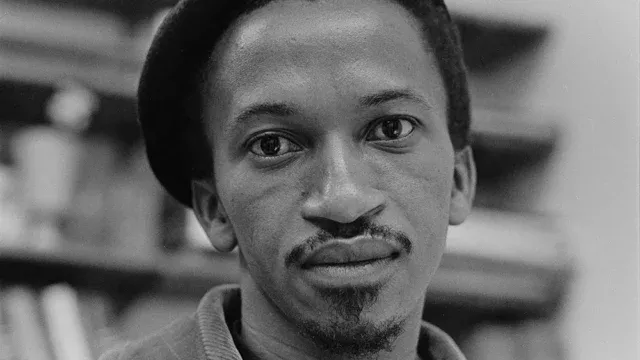
It’s a very poignant story. Ernest Cole, the brilliant South African photographer who highlighted the horrors of apartheid in his 1967 book House Of Bondage, died of cancer in New York in 1990. He was only 49 and an almost forgotten figure. But then, 60,000 of his negatives were discovered in a vault in Sweden in 2017 – and the world was again reminded of his brilliance.
Haitian filmmaker Raoul Peck tells Cole’s story in his new feature doc, Ernest Cole: Lost and Found, sold by MK2 and a special screening in Cannes (May 20).
As Peck tells Business Doc Europe, he identifies very strongly with Cole both as a filmmaker and an artist.
“In terms of photography, I have photographed all my life, both as a hobby and as a profession. Second, in the 1970s, I was studying in Berlin, and Berlin in the 70s was the epicentre of all liberation movements including the ANC [African National Congress], so I was familiar with some of those photos,” Peck says of how he first came across Cole’s work. “Some of those photos that you find in House Of Bondage followed me over years of political activism.”
Peck tackles his documentaries as if he is making scripted films. He thinks in terms of character and rhythm. “I don’t do biographies,” he declares. “I try to tell a story of a character and his evolution.”
He’ll research his subject exhaustively, reading, taking notes and steeping himself in his subject’s work. This is the method he used in his award-winning James Baldwin doc I Am Not Your Negro and it’s how he approaches Cole too. He is using a huge number of Cole’s images but they’re never being picked at random. Every one is placed in the film at the point where it can best help the narrative.
“I put myself in his shoes. It is really a very interactive process. Until the film is finished, I am still working on the text….the first step is to give yourself as much latitude as possible. I looked at thousands of pictures and I started playing with them, making thematic connections, and I started mapping them – and then stories emerge. You then say, OK, what do they say about Ernest.”
Peck decided early on that he wanted “Cole to tell his story himself. Once I decided that, everything else fell into place…I have to fabricate his own narrative through his mind, through his style, through his political views. As an actor would do, I submit myself to this character.”
That’s why the voice-over plays such a crucial part in the process. Oscar-nominated actor LaKeith Stanfield voices Cole.
Cole may have become famous for its images of apartheid era oppression and brutality but he was also a brilliant street photographer who captured memorable images of everyday life. In exile in New York, he aimed his lens at everyone from lovers to panhandlers.
“He wanted to be much more than just a political photographer. He is an artist. He considered himself as an artist. He considered he was doing something like what [celebrated Magnum photographer] Cartier-Bresson did. He didn’t want to be a chronicler of misery, like he said in the film. He didn’t want to be just a black photographer. He is an artist – without any adjective attached to it. That’s what some people don’t realise. [In the film] we are in the 60s and 70s. There are very few black photographers who are known or recognised. It’s not only photographers. The whole artists’ world is void of inclusivity, to use a common word today.”
Moving to the US was difficult for Cole. He was getting away from the horrors of South Africa at the time but didn’t find the freedom he expected. “It was to evade a prison and to encounter a new sort of prison – and being put in a box [again].”
Exile weighed very heavily on him. Peck, who now lives in Paris far away from his own homeland Haiti, understands exactly the anguish that Cole experienced.
“That was a key thing for me in the narration. I could relate to every moment. When you are far away from your country where catastrophe is happening, you are on the phone every day. You talk to your friends about it…it is in your head all the time. You wake up, you think what happened to my friend, what happened to my family, what happened to my school?” Peck reflects. “And the other side is that you can’t do anything. You are powerless. You can of course protest but you can’t help but feel the sense of isolation and powerlessness.”
Peck is encouraged by the strong sales that the documentary has already been achieved. US distributor, Magnolia, who also released I Am Not Your Negro, is already aboard. (“They know how to distribute a film like this.”)
“Of course, the incredible aspect is that there is already a revival of Ernest Cole’s work,” the director points out, citing recent exhibitions at MOMA and elsewhere. “It is really an important moment. The film shows a lot of this pictures for the first time. It will build another legacy for Ernest Cole.”
Peck’s James Baldwin documentary saw a huge spike in sales of Baldwin’s novels. He hopes something similar will happen now with Cole’s photography too.