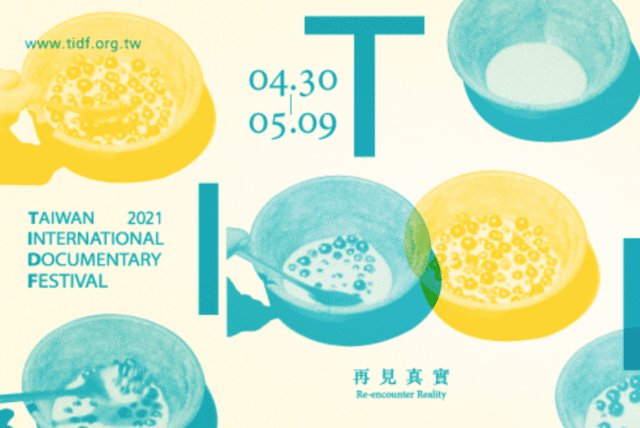
The feature documentary Inside the Red Brick Wall will open the 12th Taiwan International Documentary Festival (April 30 – May 9, 2021 in Taipei). Shot by the anonymous collective Hong Kong Documentary Filmmakers, the film chronicles the 13-day stand-off between the police and protesters at the Hong Kong Polytechnic University in November 2019 during the Anti-Extradition Law Movement.
Wood LIN, director of TIDF, comments: ‘Recording historical events, unveiling the truth, resisting oblivion – that has always been the core of documentary filmmaking, and Inside the Red Brick Wall fully embodies this spirit. The film deserves the attention of a wide audience, in Taiwan and internationally, and we are proud that the TIDF can offer this platform.’
The feature-length film received the 2020 Hong Kong Film Critics Society Best Film Awards, and has since been screened at numerous festivals. On March 15, 2021, the film was supposed to be shown in a Hong Kong cinema, but was pulled hours before its scheduled screening, following warnings it could be in breach of the National Security Law.
The opening film is part of a regular TIDF section that has been dedicated to independent Chinese documentaries since 2014. “Following the deterioration of freedoms in Hong Kong, the section was renamed Salute! Independent Documentaries in Hong Kong and China this year,” says a festival statement. The section features eight documentaries from Hong Kong, which demonstrate a wide range of artistic forms and narrative techniques. “The films shed light on Hong Kong’s tumultuous recent history, and as well highlight some of the deep-rooted problems in Hong Kong society, such as the brutal housing market,” the statement continues.
With Taking Back the Legislature, the Hong Kong Documentary Filmmakers produced another powerful work documenting the ANTI-ELAB Movement. The group, who chooses to stay anonymous due to safety concerns, was invited to conduct a post-screening session with the Taiwanese audience in the form of live streaming Q&A and pre-record video.
Another film that chronicles the city’s protest movement is Kanas LIU’s Trial and Error on the occupation of the Hong Kong airport in summer of 2019.
TIDF will also pay tribute in 2021 to the work produced by independent Chinese filmmakers. “In recent years, conditions for creative work in China have become more and more restrictive or even impossible. In spite of this, Chinese directors still manage to produce strong works,” says the festival statement, citing Cui Zhaosong’s debut feature-length film The Wandering Rock, telling the story of an indie rock singer, who is under surveillance for his dissident lyrics and speech. “The film is a powerful testimony of idealism and individualism in a restricted society,” the statement reads.
Other directors featured at TIDF this year include renowned director Zhang Mengqi, a member of the “Folk Memory Project” launched in 2010 which aims to save the oral histories from the rural survivors of China’s Great Famine (1958-1961). In her latest film Self-Portrait: Window in 47 KM, Zhang follows an 85-year-old man reflecting on his revolutionary history in pursuit of Mao’s “New China”.
Also selected for Asian Vision Competition, Lost Course is a film by first-time docmaker Jill Li who spent 8 years chronicling the villagers’ protest against corruption in the southern Chinese village of Wukan. The film won Best Documentary at the 2020 Golden Horse Awards.
The TIDF x Lightbox Outstanding Contribution Award established in 2014 to highlight people or organisations that have made crucial contributions to the development of Taiwanese documentary films. This year, the award to present this award to Ren Jian Magazine (1985–1989).
The festival writes how, “founded in 1985 by the late Taiwanese writer Chen Ying-Zhen (1937–2016), Ren Jian spotlights social inequalities and marginalised communities, documenting each corner of Taiwan with a humanistic focus and a fervour for truth in an era when freedom of speech was suppressed. At a time when documentary filmmaking was not widely practised, the influential works of documentary photography and literary reportage published in Ren Jian had brought to light numerous social issues, many of which were later made into films.”