

Emmy Oost is one of Belgium’s most innovative producers. Working through company Cassette for timescapes, she makes both documentaries and cross media projects – and her work invariably has a strong sense of political and social engagement.
Recently, Oost has been disturbed by the lack of women involved in mainstream public debates in Belgium. “As soon as you criticise something as a woman, you get very negative and hateful reactions. Many women feel it is very tough for their mental health to cope with it and therefore they retreat to social media where they just talk within their circle where they feel safe. But the message they bring is unable to spread widely in public opinion.”
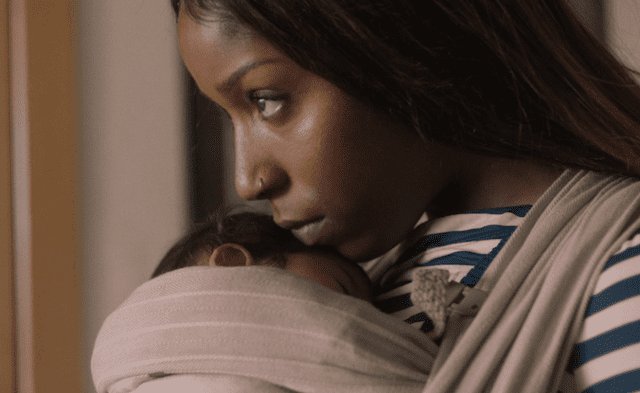
The new documentary series She They Us – Towards an Equal Future (featuring at Connext 2023 and receiving its world premiere at the Ghent Festival) deals with this imbalance. It profiles seven people facing discrimination because of gender, sexuality, colour, age, class and religion.
The subjects of the doc series are all “people trying to push the boundaries and taking a stance somehow,” as Oost puts it. Early during the research period, the filmmakers discovered that they had been focusing almost exclusively on “people of privilege.” They realised that they needed to cast their net wider.
“When you are a woman of colour and at the same time a Muslim woman, the discrimination you face would be different than if you were a man and Muslim, or [even] a woman not of colour [but still] Muslim,” Oost notes of the many different ways in which prejudice manifests itself. “We tried to be diverse. Of course, you can never be diverse enough. There are so many aspects we didn’t touch on, but we also found it important instead of ticking all the boxes [to make sure] that the stories came from the characters’ lives. It was not us who were dictating the stories…we would film the characters we chose, and we would see where their personal stories would bring us.”
This was a true passion project for Oost. She is one of the writers on the series alongside several others. The producer says that making the series as “a collective work” enabled the filmmakers to reflect many different points of view.
Tim De Keersmaecker, head of documentary at the RITSC (Royal Institute for Cinema, Theatre and Sound) in Brussels, is one of the other writers and was a key figure in kick-starting the project. ‘[But] we are both 40-plus,” Oost reflects on her age and that of De Keersmaecker. They felt they needed younger voices. “Together we looked for three directors who were younger than us and also had different visions on the situation.” That’s why Sam Peeters, Heleen Declercq and Zaïde Bil were drafted in.
The series consists of 5 episodes, each 45 minutes long. Esther van Messel’s First Hand Films came on board as sales agent after discovering the project at IDFA two years ago. “They [First Hand] also focus on female stories and so we felt we were the perfect match.”
Financing came from the VAF, broadcaster VRT, Screen Brussels and the Tax Shelter. The project is in the very final phases of post-production. Oost talks of the filmmakers’ desire to make the series “visually and creatively…stunning! We didn’t want to make it quick-quick, like a lot of television series are being made. We invested a lot of time to get the confidence of the characters and to be able to film intimate scenes with them.”
At Connext, Oost and her team are looking for interest from international distributors and festivals.
Oost is looking forward to the Film Fest Ghent premiere. “It’s a dear festival to me. It’s my home town and I have grown up with this festival,” she says. Two episodes will screen and the producer sees the selection as an endorsement of the project’s “cinematic quality…we have worked hard to get documentary series to the next level.”
What’s more, many years, Oost worked with Johan Grimonprez, for example on his classic 2009 Hitchcock doc Double Take. She may not be the producer on Grimonprez’s latest work, Soundtrack to a Coup d’Etat, which the director made in-house with Daan Milius as producer, “[but] as it was the first big co-production for them, I was involved as a consultant for Daan. He could call me on every occasion,” she notes.
The long-gestating project is in post-production and is expected to surface at a festival in early 2024.
Oost has another project in Connext, Lieven Corthouts’ This Is My Moment, about an Eritrean cyclist trying to make it in top European cycling races. The film recently locked and is being lined up for a festival premiere. The prolific producer was also involved in Juanita Onzaga’s Floating With Spirits, a VR project that had its premiere at Venice Immersive in the Venice Film Festival last month. This is about two young Mazatec sisters, Jocelynne and Jaquelyne, who reflect on the ancient rituals and storytelling that their shaman grandma used to share with them. This will also screen at Ghent and IDFA in November.
The producer’s sister An Oost oversees VR projects at Cassette for timescapes. The company has several other VR projects in preparation among them 275 Million Births And Deaths from Azam Masoumzadeh which will be pitched at the IDFA Forum, and The Time Of A Moment by Kate Voet and Victor Maes which was recently presented at the Venice Gap-Financing Market 2023.
Cassette for timescapes is a strong supporter of gender parity in the film sector. “I mainly work in the documentary sector and I feel surrounded by power women…all the top documentary festivals, they are led by women,” Oost notes. “I see a lot of female power around me…that’s about the energy and people striving to change the world through documentary.”
However, a few years ago, when she “did the maths,” Oost realised she was working with twice as many male as female filmmakers. She has therefore worked to turn that equation on its head. Now, the company partners with more female than male directors. “In the past, we were approached a lot more by men than by women [but] this is really changing,” the producer notes how gender equality is now taken very seriously within Flanders.





