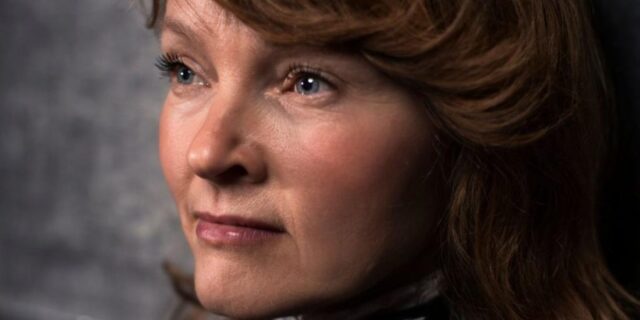
As she approaches her final CPH:DOX (running April 21-May 12) before departing to become Director of the National Film School Denmark, Business Doc Europe finds the event’s founder and CEO Tine Fischer in resolute mood.
It’s the second year in a row in which the festival has been held during the Covid pandemic, but she and her team are determined to deliver an event which works for the audience and industry alike. Not even a computer glitch (“last night all files on my computer including my iCloud drive – everything was erased!”) has put her off her stride.
“When we finished last year in April, we were high on energy and high-flying because things had turned out the way they did,” Fischer remembers of 2020 when she and her team managed to put together a highly successful digital event at the very last minute. They were among the first, anywhere in the world, to hold a festival remotely – and many other events subsequently looked to the CPH:DOX business model for inspiration and guidance.
“We were not devastated by the fact that the festival had been closed in a physical form because we had, overnight, invented something that worked,” the festival boss recalls. “We were extremely energetic and happy.”
Fischer acknowledges that she didn’t expect to be “sitting here now and opening a digital festival again.” She had shifted the festival’s dates to late April in order to have a better chance of avoiding the prospect of a second online festival. As matters have turned out, cinemas in Copenhagen will be opening just as the festival ends – which is why there are extra days of screenings now scheduled for May 6 to May 12.
“We’ve prolonged the festival,” Fischer explains. “It [would have been] unbearable for us not to meet our audience again but it’s also [important], industry-wise, that we support the re-opening of cinemas.”
We may be in the midst of a pandemic but Fischer hasn’t struggled to put together the 2021 programme. “I actually believe it is one of the richest selections we ever had in terms of quality,” she says of a programme which includes 177 new films – 47 world premieres, 9 international premieres and 6 European premieres among them. “It is an extremely good year.”
However, Fischer strikes a cautionary note about 2022. She is aware of many projects that are on hold because filmmakers have not been able to travel and shoot due to the pandemic. That may mean there will be significantly fewer docs on offer for next year’s programme. “It could be a tougher year to programme. It depends very much what happens now in terms of travel restrictions.”
This year’s event opens with Phie Ambo’s climate change documentary 70/30. CPHDOX also has its usual sprinkling of documentary stardust: Werner Herzog, Gianfranco Rosi, Shelly Silver, Errol Morris, Ulrike Ottinger, Spike Lee and Sergei Losnitza all have films showing, while legendary puppeteer Frank Oz (Yoda!) is presenting In & Of Itself.
Meanwhile, David Byrne, Slavoj Žižek, Seyran Ates and Marina Abramovic are among those giving talks.
“CPH: DOX really is a dialogue between social movements, political movements, between art, science and our own industry. That means we have been able to attract people who, in their own practices, are engaged in this way of working not only in their own field but across [other] sectors and fields. Someone like [philosopher] Slavoj Žižek has been involved in film for many years. Someone like David Byrne as an artist has been involved in music, film and contemporary art,” Fischer speculates as to why these heavyweight names are so eager to participate in the festival.
Acknowledging that these have been tough times for doc industry professionals, Fischer reveals that the festival is working “on a longer form of digital distribution, not only during the festival but on a yearly basis.” This will run on a revenue sharing basis and should provide some much needed support for producers and sales agents.
Fischer agrees that there has been a new found camaraderie between doc festivals that previously were fierce competitors. Last year, CPH:DOX itself was immediately willing to brief other events about what it had just gone through as one of the world’s first online festivals in the era of Covid.
“What happened during the pandemic was that we were one of the first ones to make this transition. Because it was so crazy to do it, [we felt] we really had to share it. Nobody should go through those crazy 10 days without knowing what they are getting into,” Fischer recalls. “Something happened. It wasn’t only us. People were sharing very sensitive information.”
Festivals from all over the world are now having monthly meetings to compare notes. Fischer talks of the “new openness.”
“Of course, we will be fighting for our profile and premieres but I really believe there is a different collaborative spirit – and I am not saying it just to be sweet!”
The festival boss is also looking out for the wellbeing of newcomers to the industry who, for obvious reasons, are currently struggling to make the connections they need to build their careers. “They are having to grow up in an industry that they can’t travel to or access in the same way that you could just one year ago. There is a specific responsibility for markets, festivals and other types of funding institutions to pay attention to that fact. I know because I have been sitting in the Ministry of Culture in a certain group that needed to re-start culture. One of the main focuses there is how do all the people coming out of film school and the new talents access the markets when there is going to be at least one more year in which markets either are not open or will be very limited.”
One of the key themes of this year’s event is the ‘RESET!’ Programme which is the main focus of the CPH:Conference and will explore how the film and media industry confronts the global challenges now facing it – and finds ways to readjust. “It is the beginning of a conversation that should definitely move on…I would just be so happy if some of what happens here goes on to happen in Leipzig and elsewhere,” Fischer states.