Filmmaker Victoria Fiore was born in London to Italian parents but has spent large parts of her life in southern Italy where her new film Hide And Seek (aka Nascondino) is set. “I would always be in Italy. I was basically brought up by Naples,” she says of the time she spent in the city during her childhood.
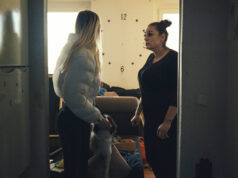
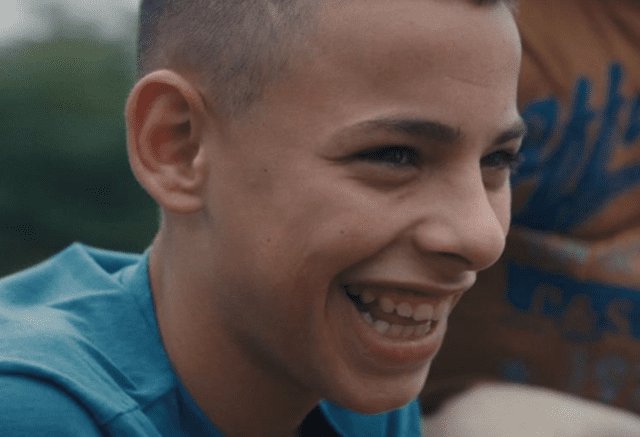
Her documentary (sold by Syndicado and screening in CPH:DOX’s Dox:Award competition) follows the angel-faced but very mischievous young Neapolitan Entoni, a kid from the impoverished Spanish quarter of the city.
Fiore shot the film over a period of five years. During that time, Entoni gradually gets into more and more trouble – and is eventually taken away from his parents by the authorities.
As Fiore points out, Roberto Saviano’s 2006 bestselling book ‘Gomorrah’, chronicling the misdeeds of the Neapolitan Mafia, transformed the way outsiders viewed the city – and how its inhabitants regarded themselves. The book spawned a very successful film and TV series – and many young Neapolitans began to dream about playing gangsters on screen.
“I just saw how so many young people saw within it [‘Gomorrah’] an identity,” Fiore observes.
Other, lesser films and TV dramas also perpetuated the stereotype of Naples as a Mecca for gangsters. Fiore wanted to show another side of the city.
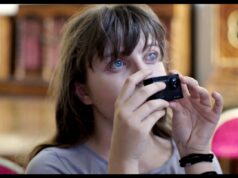
The director had a social worker friend who was conducting cinema workshops with children in the Spanish Quarter. Accompanying the friend, she took the first steps toward making Hide And Seek. “We started to bring a camera around and the kids started to say, ‘oh, this is how I want to tell my story.’”
Early during the gestation of Hide And Seek, Fiore and her cinematographer Alfredo De Juan were making connections with the Neapolitan families. Some of the children were already dreaming of playing mobsters. Adolescents, meanwhile, would recreate scenes from their favourite movies, robbing shops or brandishing flick knives.
Fiore filmed the traditional January ritual in which youths burned their Christmas trees. That was where she first encountered the “naughty but sweet” Entoni. “Entoni’s story just shone through,” the director remembers. “I fell in love with his energy. He had so much of it. We got along straight away.”
The boy was highly creative. He would take hold of the camera and come up with offbeat but ingenious ideas for films – for example, shooting a new version of Titanic on the beach.
Fiore grew very close to Entoni’s family. That was what allowed her eventually to film them in their most intimate moments. “We had been in touch with them for about three years. We were always eating out with them and them eating out with us. We had a very close relationship. We wouldn’t go every time with a camera, just sometimes when they were happy for us [to do so]. There was a lot of relationship building.”
This was how Fiore met Entoni’s grandmother, Dora, who also features prominently in the documentary. “She basically thanked us for what we were doing with the kids and for giving them some focus. She said I could go up to her house for coffee whenever I liked.”
Dora had endured a chequered life. Her husband went off the rails on drugs and she herself had begun to dabble in crime in order to have enough money to keep the family together. She was desperate to help her grandson avoid her mistakes.
“Dora didn’t allow herself to be filmed for about four years. At the beginning, she didn’t want to be recorded at all…then [it was] a little bit more, then just her voice, then maybe her shadow and then she allowed herself to be seen in full. That was a work of trust.”
Although Entoni was continually landing in scrapes, he had a strong work ethic. He wasn’t a fan of school, though. Once he got into trouble with the authorities, it was very hard for him to wriggle out of it.
“Once you’re labelled, once you have the state on you and everything against you, it’s really tough to fight against it,” the director says.
Fiore describes Hide And Seek as a creative documentary. She was determined to avoid using talking head interviews and clumsy, self-conscious exposition. Instead, she tells her story in more subtle and poetic fashion. For example, we will hear about the rising levels of youth criminality on a radio playing in the background or see a TV newscaster explaining a new policy that permits the courts to take the delinquent kids into custody.
Over the five-year shooting period, the director was also working on other projects. “It has been a struggle, an absolute labour of love to make this,” Fiore says. Her other films haven’t been easy either. (She cites Sounds Of Tehran (2018), a short documentary about Tehran-based sound artist Nesa, which was shot in the country.)
Slowly Hide And Seek came together. Producers Aleksandra Bilić and Jennifer Corcoran came on board. The filmmakers participated in various documentary development labs including the IDFA Academy and the Sheffield Doc Fest Meet Market. They secured support in the UK and Italy from, among others, the BFI Doc Society Fund and Film Commission Regione Campania.
Hide And Seek screened late last year at the London Film Festival. Fiore now is turning her eye toward fiction, developing a new dramatic feature called Aida. “It’s based on a real story in my family (and their mountain village). It’s a (tragicomic) love story between a farmer and a migrant woman whom the community can’t bring themselves to accept, with fatal consequences. It feels almost like a documentary (in that it’s rooted in real life experiences and filmed with non-actors of the same community) but the whole process is completely different,” the writer-director says of the project on which she will again be collaborating with Jennifer Corcoran.