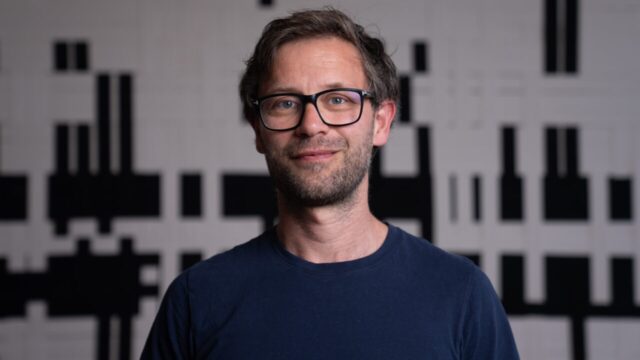
CPH:DOX’s Opening Gala presentation, Facing War, on March 19 will screen in the presence of both Danish Prime Minister Mette Frederiksen and former NATO Secretary General and current Norwegian Finance Minister, Jens Stoltenberg. These are two very heavyweight figures but Niklas Engstrøm, Artistic Director of the festival, is undaunted at their presence.
Facing War, directed by Tommy Gulliksen, looks at Stoltenberg’s tumultuous final years at the helm of NATO. Since Trump’s return to the White House, questions over the long-term future of the international organisation have only intensified.
“We are always trying to find an opening film that is really speaking to the here and now, that feels relevant and urgent. This year, when we selected the film, it was of course apparent to us that the future of NATO and the whole transatlantic alliance was in peril, but I don’t think we or anyone else for that matter were ready to see how fast it went,” Engstrøm notes of changes since Trump returned to office. “The world was quite different when we selected the film just a couple of months ago. Developments have been so fast that the film looks different today than when we selected it…in some ways, it almost feels like a document from another time period.”
This will be the first time that a Prime Minister has attended the festival. “It really makes sense [to have her at the opening]. She is really engaging in international diplomacy right now and that is what the whole opening night will be about.”
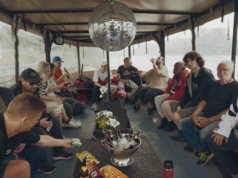
While dealing with the big political issues of the era, CPH:DOX also continues to look in detail at family, gender and the private sphere. One of the most intriguing titles in this year’s NORDIC:DOX section, The Nicest Men on Earth, from directors Josefine Exner & Sebastian Gerdes. This examines the predicament of men in Danish society. Research suggests that Denmark is the best place in the world to be a woman – but with women getting the top grades in school and landing the best jobs, where does that leave the Danish blokes?
Does Engstrøm consider himself to be a nice man? “I would say I am a very nice man,” he answers in the affirmative. He points out, though, that the title of the documentary is partly ironic.
“I think the development of the gender roles has been faster than average in the Nordic countries…the film asks what does it actually mean in a partnership when it’s the woman who has the money and actually earns more than the man. The film goes into that whole question – and does it in a funny and interesting way.”
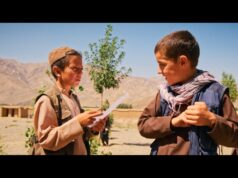
One trend apparent in the 2025 CPH:DOX programme is that several films have very young protagonists.
“Of course, there is something amazing with children,” the festival director reflects on the immediacy, “realness” and raw emotional honesty that so often comes from having kids at the heart of docs.
Engstrøm cites titles in this year’s programme like The Castle from Danny Biancardi, Virginia Nardelli and Stefano La Rosa, in which three children transform an abandoned building in the heart of Palermo. Sicily, into their own fantasy castle. “It’s a film which brings you into their world.”
Another title he mentions is Norwegian director Monica Strømdahl’s Flophouse America “where you really see an alcoholic, abusive family through the eyes of their 12-year-old son.” Then there is Chinese director Deming Chen’s Always about a young boy living in a poor mountain community who discovers the magical and transforming powers of poetry.
“It [this year’s programme] is also a line-up that shows us the immense differences in the world and touches upon some of the big issues…and the very, very small issues that are also part of our world today,” Engstrøm adds.
Thomas Balmès’ See You Tomorrow on the Moon, about an ordinary woman searching for peace in the final weeks of her life, is an example of a very closely focused and intimate film taking what the festival director calls “an existential approach.” It’s very different from, say, films in the selection like Facing War tackling the big geo-political issues of the moment.
“I would add that Ukraine is still very much at the top our minds,” Engstrøm notes of the many documentaries in Copenhagen continuing to reflect on Ukrainians’ experiences since the full-scale invasion by Russia three years ago. Ukrainian-made or Ukrainian-themed films in the selection include Alisa Kovalenko’s My Dear Theo, in which the filmmaker writes letter to her son from the front line; Olivier Sarbil’s Viktor, about a deaf war photographer; Viktor Nordenskiöld’s The Eukrainian, featuring Deputy Prime Minister Olha Stefanishyna who is overseeing Ukraine’s bid for EU membership; Oscar winner Mstyslav Chernov’s 2000 Metres to Andriivka and Olha Zhurba’s Songs of Slow Burning Earth.
A very wide array of guests will be descending on Copenhagen in the coming days. British 60s super model Twiggy will be in town for the screening of Sadie Frost’s new film about her.
Composer, musician and Nick Cave’s writing partner Warren Ellis will be giving a “mini concert” to accompany the screening of Justin Kurzel’s new feature doc Ellis Park (which deals both with his life story and his shelter for endangered animals in Sumatra).
Adam Kinzinger, one of the few US Republicans with the gumption to stand up against Donald Trump, will be Copenhagen to present The Last Republican, Steve Pink’s film about him.
Chinese artist Ai Weiwei will introduce his new film Animality, about animal rights, and is also the subject of Maxim Derevianko’s Ai Weiwei’s Turandot, about his debut as an opera director.
Eyal Weizman, the head of Forensic Architecture, will be taking part in a discussion about architecture, politics and human rights tied to Danae Elon’s film, Rule of Stone.
There’s even an Emmy-winning comedian, Jerrod Carmichael, who is being brought to Copenhagen to tickle the festival crowd as part of the ongoing collaboration with HBO MAX.
And, yes, AI is on the agenda. “It’s a theme we’ve been dealing with formally years now. It is also present in this year’s programme in very different types films. About A Hero [an adaptation of a script written by an AI trained on Werner Herzog’s oeuvre] is not the only one. There is also this new Danish series Another Worldand we are even presenting a film by 93-year-old Alexander Kluge [Primitive Diversity] who has also made an essay on AI.”
Finance-wise, Engstrøm says CPH:DOX is “pretty stable” and hasn’t been buffeted in the same way as other festivals and arts organisations internationally as governments swing to the right.
A few days before the event launches, the festival director is heartened that advance ticket sales look “really, really good…I think better than ever. I’m pretty confident we are looking into a very successful festival on the audience front.”
With over 200 films programmed, there are plenty of docs to choose from. The festival will also be full of networking opportunities and social events, even in these dark and unstable times.
“I think I will speak more for the role of art than of parties perhaps. Also, I am getting a bit older myself. But it is important of course, especially in times like this when you can almost get a depression from reading the news, that art can bring you another perspective…” Engstrøm concludes.