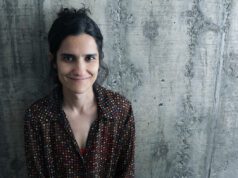
Fifteen years after her “first film” fell apart, US director Zia Anger has made My First Film, a deeply personal take on the experience, as told through her alter ego Vita (played by Odessa Young). The film world-premiered in the Next:Wave strand of CPH:DOX 2024.
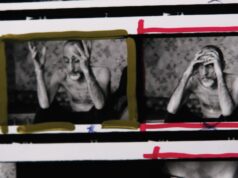
In My First Film, Vita describes the making of the first feature, ‘Always All Ways, Anne Marie,’ a semi-autobiographical film about a young woman who gets pregnant and decides to leave home. Fifteen years ago, Anger was an enthusiastic but inexperienced filmmaker, we are told. The shoot is chaotic, and her ego-trip methods have catastrophic effects on the production.
At CPH:DOX 2024, director Zia Anger described to BDE this initial attempt which inspired My First Film. She defines it as “an incredibly ambitious project” which she shot between 2010 and 2012 helped by a crew of five people, with friends and family members starring in it. Back then, she felt totally naïve and unprepared. She made it on a shoestring budget of $2,000, filming it “here and there, at random times.” “I made this film and I never really thought of it as failed, but it didn’t play anywhere. Nobody ever saw it, and I didn’t receive any feedback,” she says.
When did she realise that the experience could form the basis of a new film? “I didn’t talk about [the first film] for a very long time. For a while I didn’t make films. Then when I started making them again, everybody wondered: When are you going to make a feature? What do you want to do? And I didn’t know how to answer that question, [I didn’t] say I had already made one before. So I got really mad about it. But then I started to tell how it went, and all the reasons why it went wrong. And it turned into a good story that people wanted to hear.”
After that moment of realisation, Anger created a multimedia performance of the same name in 2019, touring for four years. MUBI boarded her feature project in winter 2022, after Anger and her co-writer Billy Feldman had finished the script one year earlier.
In the director’s notes, Anger says that she showed her first film to a small group of people in 2018. “On one side of the screen, I played the film, and on the other side of it I told the story of its making, typing words on my keyboards,” she says, admitting that this experience inspired her adding the ‘text-edited’ parts we see in her 2018 performance and in My First Film.
Anger defines her work as a piece of ‘autofiction’. “The film itself was built to unravel and almost fall apart. What I really like about the idea of autofiction is that there are truthful elements to it, but it isn’t bound necessarily by the truth as much as it’s about the revealing of truth. I feel very much that, rather than making a documentary or a hybrid, my intention was to make something that is fictional but based on a true story. As the making of the film went on, it felt more and more the unravelling of the story was just as important as the story itself.”
When speaking of casting Odessa Young as Vita/herself, she defines the actress as “a kind of shapeshifter.” “She can take on so many different roles, and whenever she’s on screen I’ve always been staring at her, and I also found her able to play somebody who could be very likeable but also very unlikeable at the same time. [..] We met and talked about the script, and it really resonated with her. That’s the most important thing when it comes to working with actors.”
During production, Anger left ample room for “the actors’ wants and needs,” thus adopting a very flexible directorial approach. “If they want to change the lines, [they can, and] I’m usually happy when they do it… It’s a collaboration [process] and what they’re bringing is their own perspective to tell the story, and I just want to be helpful, making their experience more exciting, fun and thrilling.”
The only ‘real’ character on screen is Anger’s own father, who also stars as Vita’s one. “He is a great actor, but he was just never really discovered in film. He studied acting, and I’ve worked with him many times. Most of the time [the work] is just about helping him memorising his lines and then ‘be present in the moment.’ Once we got there, it worked out really well. Of course, he’s my dad, so there’s always a bit of tension, but it’s not bad. When you’re making a film, tension can be great.”
My First Film was shot over the course of 22 days in October 2022. Commenting on the post-production process, Anger highlights how editors Joe Bini and Matthew Hannam’s main task was to tell the story in the best possible way, but also making it “legible” to the audience. “We used everything we had in our hard drives until the week we picture-locked it,” she adds.
Taking stock of her journey and looking ahead to new endeavours (which probably won’t be pieces of autofiction), Anger says: “I’m thinking about the idea of ‘trying and trying again, keep going, keep going,’ which is very Western. Personally, I don’t think I prescribe to that, but socially it’s really hard not to. So for me, I think what I really learnt from this entire process was, at my own core, [being aware of] what I really want to do and want to tell against what are the stories and the things I think I should do because Western society tells me I should do them.”
“Each version of telling this story, from the ‘real’ first film to My First Film was an exercise about the process of making things, and an exercise on how to be happy when you make something, how to treat people better and enjoy life more.”