It takes a brave filmmaking team to pivot when the story they thought they were telling suddenly changes – and also to realise when they’ve become a protagonist in the story.
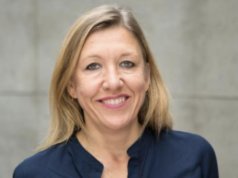
That’s what happened with Walls – Akinni Inuk, directed by Denmark’s Sofie Rørdam and Greenland’s Nina Paninnguaq Skydsbjerg. The film has its world premiere at CPH:DOX on March 21 in NORDIC:DOX competition.
In the mid 2010s, Rørdam had returned from working in Asia on human rights and legal and prison systems projects, and was spending time with her father, who lives in Greenland. She became fascinated by the concept of Greenland’s correctional facilities– where inmates are given more freedoms than in most countries. “The focus is on getting the inmates back into society. You could be an inmate and still work outside. I wanted the rest of the world to learn from this system. But I didn’t think this was my story to tell. I saw these young inmates were very creative, and one of them asked to borrow my camera.”
In 2017, she was allowed to give cameras to inmates to document their own lives, and via producer Emile Hertling Péronard of Ánorâk Film (Twice Colonized), recruited co-director Nina Paninnguaq Skydsbjerg to help keep the project running smoothly in Nuuk, Greenland’s capital. But in 2018, authorities decided to take away the cameras from the inmates and the original idea had to be rethought.
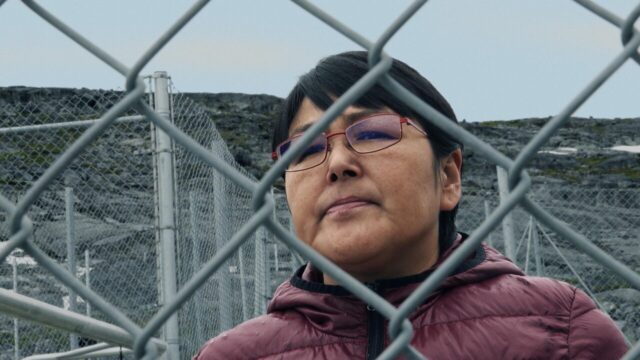
Thankfully, an even more impactful story had been unfolding – one of the prisoners who had been documenting her life was Ruth who was nine years into an indefinite preventive detention sentence. She had given up hope of ever being released, stuck in legal limbo because of the complicated systems between Greenland and Denmark.
Paninnguaq Skydsbjerg visited Ruth more and more, the two became true friends, and started having deeper discussions, helping each other work through past traumas and current hopes and dreams.
Eventually both directors realised that this unexpected friendship had to be the new focus of their documentary. Walls is not only a portrait of that friendship, it’s also an examination of the two-state legal system, as well as Ruth’s historic fight for her freedom.
Paninnguaq Skydsbjerg says it was a “coincidence of events” that led her from a role off-camera to being a protagonist. “Greenlandic people share a lot,” she says, “At some point, it feels superficial if the inmates were sharing stories and I wasn’t talking back. With Ruth, she’d be talking, and then ask me, ‘what do you think?’ This kind of monologue-based interview went into a dialogue.”
She continues, “I felt totally safe just being me [on camera] – I felt safe with Sofie, so I have no secrets. I was just calm and being myself, sharing everything,” even when she thought that some of her footage wouldn’t be used in the final film.
Back home in Denmark, Rørdam was open to the way the film started to change as a story of Ruth and Nina’s friendship. “It was just so beautiful to see that shift…their two destinies came together along the way.”
Paninnguaq Skydsbjerg adds that she found the camera to be a new kind of confessional as she was processing the upheaval in her own life. “I could say things to the camera that was actually difficult for me to say in front of Ruth or anyone. For her as well, something she couldn’t tell me in person, she could tell to the camera and then show me. For both of us, it was kind of a tool to talk about feelings that are very difficult to words in front of other people.”
Rørdam led on the parts of the film that concerned Ruth’s court case. She studied the thousands of pages of legal and court documents. Even if the film doesn’t go into that level of detail, they needed that information to protect Ruth and make sure they didn’t film anything that would interfere with the legal case.
Paninnguaq Skydsbjerg is still great friends with Ruth today, and hopes the way she and Rørdam helped Ruth see a new future can inspire others who see the film. “Even with the broken parts of my own history, I want people to remember how big of a difference you can make. When you sit in front of a human [you see] how much power you have if you just do a little bit – you have the ability to share your own story. You have your ability to give advice and help if you have strengths the other person doesn’t. And Ruth can share those strengths with me. Ruth is amazing in simplifying things, so when the world and our problems get too big for me, she can just simplify. Her weaknesses and strengths – and mine – are combined.”
Even with the complicated legacy of the colonial history between Denmark and Greenland, which is in the news yet again with Trump’s recent proposal that Greenland should belong to the US, Rørdam is proud that their film shows the power of collaboration. “We have this division, and there is the question of whose story it is to tell, but this collaboration of talking to each other, and the collaboration between Ruth and Nina, is a reminder that there are things you just can’t do by yourself. Instead of shouting about all this division, how can we come together and listen?”