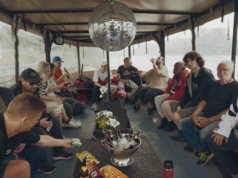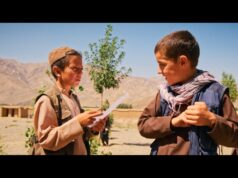
Raising a School Shooter is the final film in Frida and Lasse Barkfors’ trilogy about social stigma which included Pervert Park (2014), about convicted sex offenders, and Death of a Child (2017) where they meet parents responsible for their child’s death in a hot car. The filmmakers explain their new film, selected for Nordic:Dox Competition, to BDE.
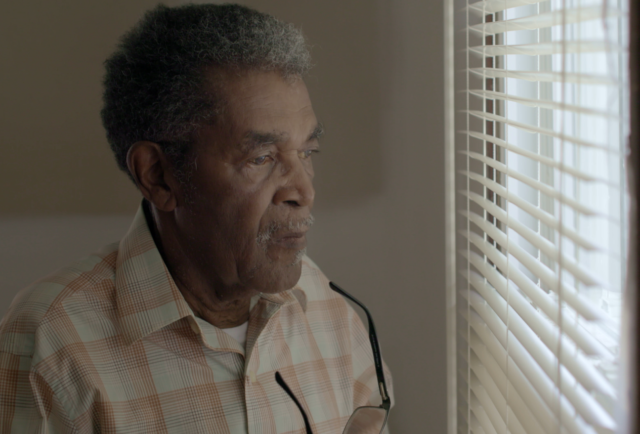
As with those earlier films, the Barkfors present a restrained, sensitive and humane portrait of what could otherwise be seen as a sensationalist subject: the parents of perpetrators of school violence. The insightful interviewees include Sue Klebold, the mother of 1999 Columbine shooter Dylan Klebold, Jeff Williams whose son Andy shot and killed two classmates in 2001, and Clarence Elliot, whose son Nicholas shot and killed his teacher in 1988.
Frida Barkfors explains how they navigate such tricky subjects: “We’re not journalists. We don’t have to meet our subjects with a critical angle, we can meet them as a human and we can learn from listening to their stories…We go in with an open mind and with a want to listen, and that helps people open up.”
The filmmaking duo note how, in some ways, this third film was the most difficult— partly because it was a long two-year journey to find their subjects. With the first film the community was gathered in one location, and with the second film there was a support group where they could meet the grieving parents. For the parents of the school shooters, Frida says, “it was almost impossible to contact them. We spent two years trying to track them down. And then they are so afraid of the media that their initial reflex was to shy away.”
The fact that the parents could see the delicate handling of sensitive subjects in the filmmakers’ earlier two features helped earn that necessary trust. As Lasse notes, “they got what we were doing.” The interviewees could also feel the open-mindedness that the filmmakers brought to the table. “We try to meet them as human beings. I just ask the questions I would ask if we didn’t have a camera,” Frida says. They filmed with their subjects for more than a year and a half.
The film premieres in CPH:DOX’s Nordic:Dox competition and, as with the first two films, Anne Köhncke produces for Copenhagen’s Final Cut for Real. Backers include the Danish Film Institute, DR, SVT, Film i Skane and Creative Europe. DR Sales handles sales.
The Copenhagen-based Barkfors, who are married with kids, say they have a great understanding as co-directors, as well as complementary skills. Frida says she is a bit more extroverted and leads on interviews while Lasse was more involved in the third feature’s editing process during the pandemic.
“We are in sync,” Lasse agrees. “Most of our work is talking, discussing what we are experiencing. We are very much in sync.” For such an ostensibly troubling subject, there is also a lot of love in the film. Lasse reflects, “the amount of love for their kids is not surprising, but it is so touching. We can see lack of love was not the problem.”
They purposefully only interviewed parents who had had enough time to process their emotions from violent incidents that occurred decades ago. Frida adds how “it was a very conscious decision that we didn’t choose parents where (shootings) happened recently, we felt they were too vulnerable. Some time needs to have passed.”
Another crucial artistic decision was to eschew news or other archive footage of the shooters. “That is the crucial decision because there is almost a genre of films about school shootings and they always start with the same footage,” Lasse explains. “We made it very minimalistic in order for us to take in what they are saying without having all that noise.”
That was something they reinforced in the editing process. As Lasse explains, an earlier cut of the film showed more fascination with the shooters themselves, but the pair knew “we made a film about the parents so we had to go back to the edit and get back on track.”
Because they don’t make journalistic-style films, Frida says that they don’t need to offer “a representation of the whole picture. We’re just showing the voices not heard.”
Frida continues, “We see victims and perpetrators in all our films. The people in this film are actually both in a way. In Pervert Park they were victims, they grew up and then they become perpetrators. In Death of a Child, they are the victims of losing their child, but they’re also, even if it was an accident, responsible. And in this film, even though they didn’t commit the crimes, they’re very much blamed by society. And then they’re also victims for their child’s crimes.”
In making Raising A School Shooter, the pair have thought a lot about the other families out there who were victims of the shootings. “It’s always in the back of our heads of how do we tell this story without minimizing their crimes,” says Frida. Lasse adds that “the idea is not to minimize anything, it’s to see what we can learn from the parents, it’s about preventing this from happening more.”
Swedish-born Frida and Danish Lasse have used America as the backdrop for this trilogy but they say they don’t have an obsession with the US. Frida says, “we’ve always seen our films as universal, not American. Of course with [schools shootings] it’s easier to find examples in America. [The film points out that there have been a staggering 1300 school shootings in the US since 1970]. The problems are universal, and unconditional love that parents feel for their children is universal.”
Lasse posits it may be a benefit that they are outsiders filming in the US. “We don’t know the place and the people so it’s not as loaded. There can be a freshness to it going somewhere you don’t know. It’s a different culture. Maybe there is some truth that we can bring something else.”
The trilogy has taken 11 years, but Frida says it hasn’t been as traumatic an experience as you might expect. “I think it’s been enriching. We have become happier in a way because learning about other people and their stations can never be a bad thing. It’s therapeutic.”