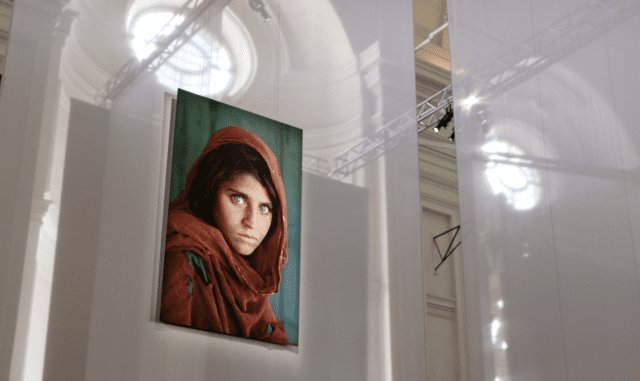
Mention the name Steve McCurry and not everyone will recognise it. However, show them one of his most famous photographs, for example his haunting image from the mid-1980s of the “Afghan Girl” and they will recognise it immediately.
As a photographer, the American seems always to have been at the eye of the storm. Whether it’s 9/11 or civil wars from Lebanon to Cambodia, he was there, capturing images. Now, French filmmaker Denis Delestrac tells his story in new feature documentary, McCurry: The Pursuit Of Colour (sold by Dogwoof and a world premiere at DOC NYC Saturday November 13, trailer).
This isn’t the first collaboration between Delestrac and McCurry. The photographer was also featured in a Delestrac TV doc almost 20 years ago.
As the director remembers, they met in very unusual circumstances. In 2000, Delestrac was a young writer and journalist. A producer friend was making a series called Nomads about prominent contemporary characters who were always travelling. He asked if Delestrac could contribute a short film on McCurry. “I said thank you but no thank you,” Delestrac remembers. At the time, he knew very little about the photographer. However, the producer wouldn’t take ‘no’ for an answer. Delestrac therefore found McCurry’s telephone number and rang him.
“He (McCurry) picked up the phone. That was in September 2000. He said meet me at 3pm on December 13th.”
The hitch was that the rendezvous was set…for a hotel in Rajasthan, thousands of miles away. Delestrac therefore travelled to India and was there at the appointed time. So was McCurry.
“That was how the friendship started and it was my first step into filmmaking.”
The two men stayed in touch. Delestrac lives in Barcelona. McCurry is in New York. However, whenever the opportunity arose, they would always have a coffee together. It was over 15 years later, though, that Delestrac finally decided to make a feature-length documentary.
The new film is intended to go way beyond discussion of that green-eyed Afghan girl – the McCurry picture that everybody knows. “A lot of image makers are labelled or seen through the filter of just one image when there is actually a very interesting body of work.”
Delestrac is investigating the mystery of just how the Magnum photographer is constantly able to tell such strong human stories “in just a single frame.”
The documentary was made over a period of five years. It includes contributions from the photographer’s family and friends as well as from admirers, among them the travel writer Paul Theroux (whose book ‘The Great Railway Bazaar’ was an important influence on McCurry.)
One striking early sequence show McCurry in Papua New Guinea, photographing a tribe as they perform rituals and dances in mud masks. As McCurry snaps away at the dancers, the film crew snap away at him.
Sometimes, Delestrac and his crew struggled to keep up with his subject. “Steve moves faster than us. He is one person with one camera and his energy is really exceptional. He never gets tired,” the director reflects. “It is a very interesting process to shoot an image maker. He is doing his work. He has got to be in what he calls his meditative state…we had to learn how to ‘dance’ together.”
He needed to do his work without getting in McCurry’s way – and McCurry had to give him space too.
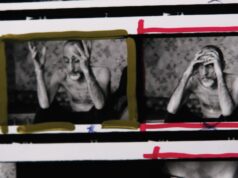
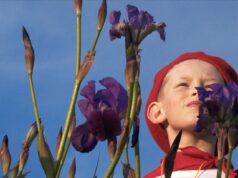
The documentary includes information about key formative moments in McCurry’s childhood in Pennsylvania – his mother’s illness and crippling injury he suffered to his arm as a boy. (Delestrac speculates that this injury spurred him to push himself harder and harder.) The film also chronicles its subject’s travels – how he roamed the world, learning his craft as he moved from place to place. In India, the photographer had an epiphany. He had always been shooting previously in black and white but he began to use Kodachrome colour film, transforming his photography in the process. Colour, McCurry discovered, allowed him to show the world in its full, resplendent “diversity.”
McCurry was always a man searching for a community to which he could belong. He found this briefly with his Afghan friends but war and death intervened.
It’s a measure of how much McCurry respected the documentary maker telling his story that he invited Delestrac into the inner sanctum of the office where he keeps his old equipment (brownie cameras from years ago and tens and tens of thousands of old prints).
“Steve is tough. More than tough, he is discreet and very, very secretive,” Delestrac says of his subject. At the beginning of the documentary, he challenged McCurry not just to repeat the same stories that you can find in old YouTube interviews. He wanted the photographer to talk frankly and intimately about what really mattered to him. In the end, McCurry complied.
Yes, the photographer has already seen the documentary and has given it his blessing. No, he didn’t ask for changes. “Dennis, it’s your film and I’m here to help,” McCurry told Delestrac.
In its own way, the documentary is as revealing about the photographer as McCurry’s images are about their subjects. Delestrac talks of the “invisible link of empathy that can sometimes last just a couple of seconds, a clack clack and ciao” which exists between McCurry and the people whose pictures take. They have faith that he is not exploiting or manipulating them. It’s apparent that he cares about them. The same can be said of Delestrac’s treatment of McCurry. The documentary may have a 90-minute running time and multiple changes of location but it is created with the same piercing gaze and affection as McCurry’s own work.