The Dutch doc feature project Here Be Dragons (Terra Incógnita), about an alien landscape in southern Spain where astrobiologists ‘dig the soil to fuel the technological revolution and to search for life in the Universe’, was pitched as part of the Nebulae RAW programme of DocLisboa 2020.
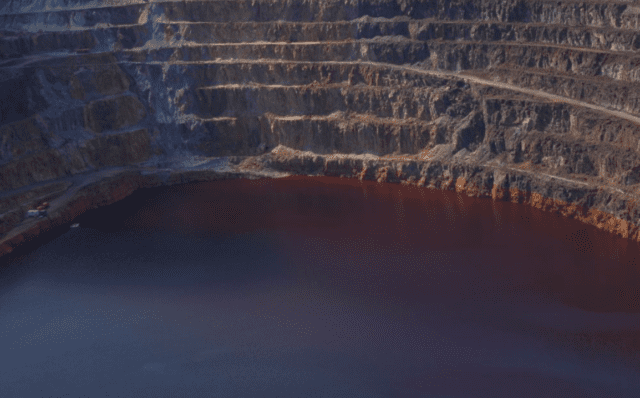
Produced by Manon Bovenkerk of Dutch outfit near/by film, Here Be Dragons tells of the surreal landscape of Río Tinto, a landscape within a landscape replete with excavated mountains and geometrical formations, and known for its mineral and chromatic wealth.
It has also become a site for AI remote robots being prepared to survey and drill Mars, for spacesuits to be tested and as an expedition site for astrobiologists to study its deep and extraordinary biosphere, in essence a home for intra-terrestrial life that uses radically different biological processes to currently known life and one that may explain the origin of life on Earth.
The Spanish/English-language 80-minute doc is currently in development, is mooted for delivery in 2021, and is budgeted at €150,000, with €30,000 in place. It is supported by the Netherlands Film Fund, AFK in collaboration with IDFA, EYE Film Institute and Netherlands Film Academy. During DocLisboa Nebulae, producer Bovenkerk is looking to garner a Spanish co-producer.
Director Maria Molina Peiró explains the project’s rationale. “We are a species with a metaphysical longing, ceaselessly trying to find some meaning to life, which invariably drives us into the arms of exploration or religion,” she says. “In Río Tinto men have hollowed out entire mountains, making holes the height of the Empire State building, while forming toxic mountain ranges from the waste material of the industrial and technological revolution. Today, these anthropic mountains that have devoured and buried entire villages, have become the perfect background to simulate expeditions to Mars, make speculations about terraforming a Planet B in case of environmental collapse, and to explore life on other planets.”
“Here be Dragons is a film that addresses themes of contemporary relevance,” she continues. “However, it has no intention of becoming any kind of sociological or ecological pamphlet. My aim is a different one, to capture the primitive images of a landscape where the temporal and spatial scale of man are continuously interrogated. I strive to create a film that will inspire audiences on a metaphysical level by questioning human limits and the life below and above us.”