

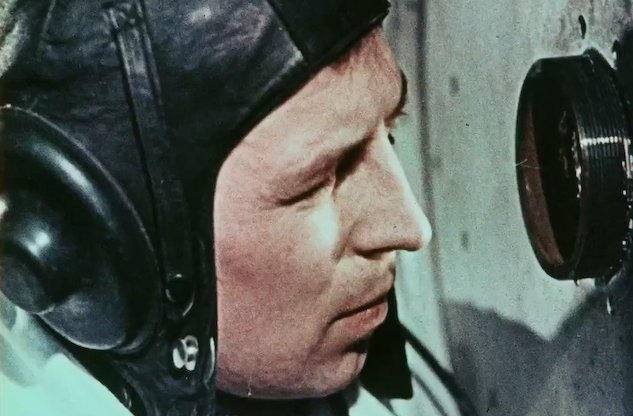
“I started the film 20 years ago,” Ricardo Leite says of his feature documentary, whose full title reads Lucefece: Where there is no vision, the people will perish, and which world-premieres in Doclisboa Portuguese Competition.
At film school, the Escola Superior Artística do Porto, where he studied between 1998 and 2002, Leite was part of a collective which made experimental shorts – and the new doc has links to the work he was doing then. “I saw this film [Lucefece] was a way to find my own path, my own language, but still with references from the school.”
The director is strongly attracted to old myths. As a student, he was fascinated by how filmmakers like Italian auteur Pier Paolo Pasolini (with films like Oedipus Rex and Medea) or Brazilian master Glauber Rocha (Black God, White Devil) used mythological tropes in their work. At the same time, he is influenced by the work of Jonas Mekas, the Lithuanian émigré and creative jackdaw who became the darling of the New York avant-garde world with his autobiographical and playful movies.
“When my two kids were born, I found myself filming them, filming their lives,” Leite explains how his work became increasingly personal.
Lucefece touches on the traumatic experiences the director’s father endured when he was imprisoned during the period of Portugal’s colonial war in Africa.
There were many different ideas to cram into the doc. “That’s why I contacted Eloy Enciso…I could never edit this film myself,” Leite says of the celebrated Spanish filmmaker who edited his documentary. “I had all these elements in my film but they were all scattered round. He [Enciso] helped me cut pieces off and connect [them]. He really helped me stitch all these pieces together.”
The director “knew it was risky” to incorporate so many themes into a single documentary but with Enciso’s help, he found a viable structure.
“We are friends still, very good friends, but we had very intense discussions about the path the film should take. The sequence about my father was Eloy’s suggestion. He felt my father could be a character in the film. To talk with my father about the war, about him being in prison, it was really, really a very, very difficult thing for me…but he [Enciso] convinced me to explore that side [of the story],” the director notes. “It is a really a strong part in the way I grew up, the way I see things, the way I film…my father had a great part in that.”
When it comes to cinema, Leite is a purist. He has a passion both for filmmaking and for film processing. He loves the feel of film and talks frequently of ‘cinema alchemy.’
“I don’t know, I always liked chemistry, I always liked the physicality,” he says of why he likes to develop his own work. At one stage, his ambition was to become a painter and he has a tactile approach to his craft. This doesn’t come without risks. He’d occasionally find himself using toxic chemicals in the film processing that he worried might damage the health of himself or his family. (He was working on the movie at home.)
“Coffee, spearmint, hyacinth, hydrogen peroxide, limes and vinegar,” the director has listed the low toxic substances that can be used for film development on his blog. His PHD was about the biodegradable processing of film – and so this is a subject he knows inside out. He is equally comfortable talking about the aesthetics of cinema and the science behind the medium.
The documentary deals in very poignant and mystical fashion with the death of the director’s sister from lung cancer. Her sickness had no link to his film processing but the documentary looks to connect many different parts of the director’s personal and professional lives.
Leite wrote and recorded the voice-over late on. He made many different versions of this commentary, tinkering with it throughout the editing process.
The director himself features in the film. In one short sequence, reminiscent of Harry Dean Stanton adrift in Wim Wenders’s Paris Texas (1984), he is shown walking through the desert wearing shorts and an incongruously smart jacket. “That was part of my idea. I was in the US, in the desert, and I shot a sequence that talked about the capitalist desert. Some pieces are missing in the capitalist desert…this was a reference to the idea of the pieces that are missing,” the director explains why he filmed himself walking through hot, rugged terrain wearing only half an outfit. He had no trousers and only had one boot.
Lucefece was made through production company Red Desert Films, founded in 2008 by Pedro Neves. “We have been working for some years. We have been doing mainly documentary. I come from an experimental background but I have been doing mainly documentary with Pedro,” Leite says of what is clearly a fruitful collaboration. Neves himself is currently shooting a film in Mozambique. “It [Red Desert] is a company that focuses on politics and social issues.”
Large amounts of archive material are featured in Lucefece. The director acknowledges that his producer had “a really rough time” in clearing rights to this footage. After the full-scale Russian invasion of Ukraine last year, the filmmakers found it almost impossible to license the images of Soviet astronauts like Yuri Gagarin – there was no way of wiring payments to the Russian archives. Other footage, for example from the Portuguese military archives, was a little easier to access but it was still expensive – and they were working on a modest budget. “It was long, long work,” the director sighs.
For some of the more personal scenes, Leite was able to draw on old VHS tapes of his own childhood. That didn’t cost anything – but the footage still had to be digitised.
Following the Doclisboa premiere, Lucefece will be at Porto Post Doc next month. Other smaller Portuguese festivals are also keen to invite the film. The director is waiting to see what international opportunities might open up for the doc. In the meantime, he is also beginning to work on new projects. “I have many ideas…one is fiction, to shoot in the Amazon forest in Brazil. I have a couple of ideas for documentaries. I have some ideas for a short film,” he says of the various irons he has in the fire.





