

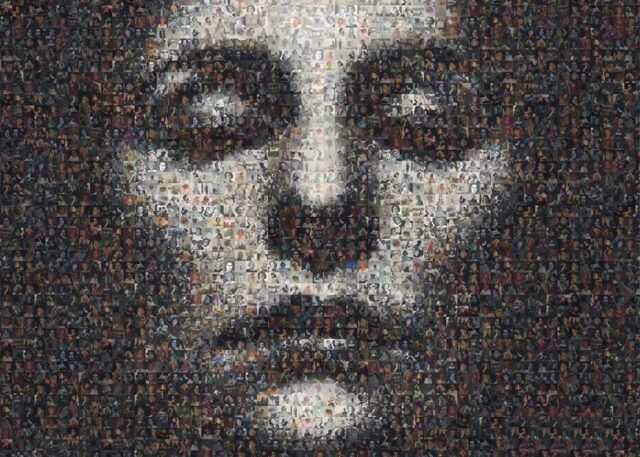
“In Germany, it is always personal,” Sandra Maischberger, the producer of the feature doc Riefensthal, directed by Andres Veiel, ruefully reflects. She is talking about why the story of Leni Riefensthal causes such discomfort.
The film, which world-premiered to rave reviews at Venice 2024 and which opens DocsBarcelona 2025, makes a damning case against Riefensthal, the director of Triumph of the Will and Olympia and whose patron was Adolf Hitler. After the Second World War, Riefensthal tried very hard to scrub her record clean. She claimed she wasn’t a fervent Nazi but was just doing her job. It wasn’t her fault, she said, that Hitler admired her so much.
Riefensthal’s anxiety over her past is one that many Germany families will understand. Maischberger admits that one side of her family had been “die hard National Socialists” during the Third Reich. Director Veiel, meanwhile, talks about his grandfather who was “a general in the war, responsible…for maybe 100,000 victims….He was very close to Himmler, the SS Chief.”
Veiel suggests his own family background was “an engine to make this film…it is not only pointing at her [Riefensthal]. It is pointing at my grandfather and pointing at myself. It’s not an easy game.”
Riefensthal’s attempts to airbrush her reputation were arguably always likely to end in failure. Through their meticulous research of her archives, the filmmakers have turned up several highly damning incidents from her past. In Poland where she was filming early in the Second World War, it appears that a throwaway remark she made (“the Jews out of the frame please”) led directly to the death of 22 Jews. It also turned out (although she denied it) that Gypsy extras she used in her film Lowlands later died in Nazi death camps.
Willy Zielke, one of the cinematographers on Olympia had a nervous breakdown, became schizophrenic, was institutionalised and forcibly sterilised by the Nazis. Riefenstahl didn’t intervene.
Veiel claims that “the aesthetics of Riefenstahl” are still hugely influential today. Watch state broadcast footage of the Beijing Winter Olympics or Russian military parades after the full-scale invasion of Ukraine and you’ll see images that owe a debt to her.
“It’s the celebration of strangeness, of the superior. It’s a depiction of supremacy, of course. You don’t see the weak, the sick people. You don’t see the dark side.”
Maischberger, who met Riefenstahl shortly before the filmmaker’s death aged 101 in 2003, has changed her opinion about the director.
“I thought she [was] an opportunist, thrilled by the possibilities the [Nazi] regime gave her – but going through the estate changed my mind. I found a woman who, even as a young girl, was already intrigued by all these patterns of fascistic belief. She was much more ideological than I thought.”
The producer still remembers how Riefenstahl made a grand entrance for her interview, “like a diva putting in a last appearance,” descending grandly the stairs, suddenly appearing in front of the camera crew and expecting reverence. There was no small talk. “She didn’t want to be polite or nice. I went there because I was curious about a person, but I felt I was meeting a facade.”
After a day and a half in her presence, Maischberger didn’t feel she had got behind the facade for even a moment.
At university, director Veiel studied psychology. It was a natural instinct for him to turn to his subject’s childhood to look for clues there. Riefenstahl had a domineering father, and a mother who was desperate to see her succeed on stage. Even so, that can’t explain her evasiveness and refusal to acknowledge what she knew.
“After 1952, she denied even being a witness,” Veiel observes of events at which Riefenstahl was clearly present. “She was denying her presence. Of course she lied, but you have different layers of denial. At the beginning, she said she was a witness, until 1948, and then later on, that she was no witness…her role is quite ambivalent and it is shifting.”
It’s possible that Riefenstahl came to believe her own lies. She also clearly felt that her status as an artist somehow lifted her above the inconvenience of having to answer questions about becoming too close to the Third Reich.
There were shocking repercussions after Riefenstahl appeared on a late-night chat show in the mid 1970s alongside Elfriede Kretschmer, a near contemporary who had been staunchly anti-Nazi. Kretschmer made it clear to Riefenstahl that she didn’t believe she was ignorant of Nazi crimes. For doing so, she was pilloried.
Veiel and Maischberger are too young to have watched this broadcast. However, Veiel was shocked during his research to discover the contempt shown toward Kretschmer. She received abusive letters and phone calls. “People named her an insect that you had to spray. [They asked] why she wasn’t gassed in Auschwitz…it’s actually horrible, the comments, but they tell something about the post-War reaction.”
Large parts of the German public were “fed up” with having to feel guilty about the Nazi era. They were angered by the protests by young radicals after 1968 in groups like the Red Army Faction. Now they wanted their voices heard. They insisted that Riefenstahl should be treated with more respect.
Veiel admits that some of the same flak thrown at Mrs Kretschmer may now be headed his way. After all, the right-wing nationalistic AfD (Alternative for Germany) party is a major force in Germany politics today.
“We will expect reactions like this but that’s the reason we made the film. We have a rising wave of right-wing extremists…think of Trump when he says migrants [are] spoiling the American blood. The film is a warning not to accept this new nationalism and celebration of the strong. That is what’s Riefenstahl’s ideology is. We are really experiencing a renaissance of it.”
The documentary is produced by Vincent Productions (producer Sandra Maischberger, executive producer Enzo Maaß) in co-production with WDR, NDR, BR, SWR and rbb. The production is supported by FFA, BKM, Medienboard Berlin-Brandenburg, Filmstiftung NRW, and DFFF. Majestic Filmverleih is releasing the documentary in the German-speaking territories. Beta Cinema is handling international rights.





