“Global climate changes and the avalanche of consequences is not something new, but it feels as though we are looking at it, but not just seeing it anymore,” director Gabrielle Brady underlines of her €718,000 budget hybrid project The Wolves Always Come at Night. “So a key intention of this film is to really focus on the personal, to make it visible and to stay with the emotional reality of the characters of the film.”
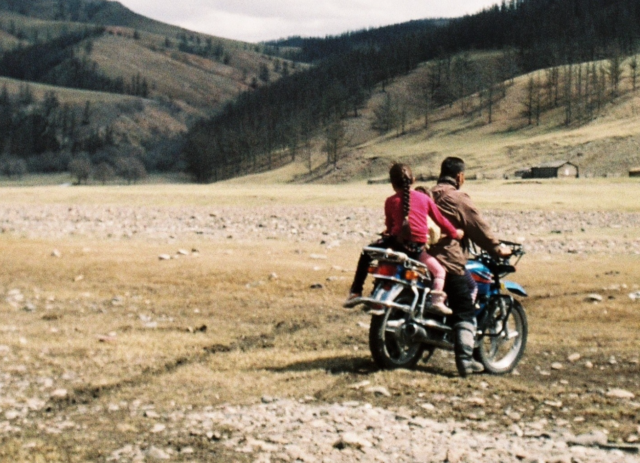
The logline of the film describes how, after they discover that their entire herd of livestock has frozen overnight, Mongolian herders Anktuya and Dorji are forced to move to the city’s polluted ‘ger’ districts, at which point ruptures within their relationship and within themselves begin to form. The film promises to “blend documentary and magic realism to reconstruct the journey of [the] nomadic family.”
“In just the last few years there have actually been hundreds of thousands of nomads that have moved, and it is growing at an exponential rate due to the rise of climate change events,” Brady notes. “So like my previous film I am taking a pretty well covered topic and theme but I really want to shift the gaze. I want to create a story and a vision with images that we have never seen before of this phenomenon, so really stepping away from any kind of clichéd tropes.”
With filming scheduled for early 2022, the film has development funding secured from FFA Germany, Screen Australia and BBC Storyville. Right now, producer Julia Niethammer of Chromosom Film (Germany) is looking for distribution, world sales, broadcast and other finance partners. Co-producers are Rita Walsh (Australia) and Ariunaa Tserenpil (Mongolia).
Filmmaker Brady lived in Mongolia for two years from 2008, she says, returning over the years and building “a strong network of friends and collaborators.”
“I will be taking a hybrid approach to the film,” she says, “incorporating raw observational documentary moments and more semi-scripted scenes. Me and Michael [Latham, DOP on this project, previously on Island of the Hungry Ghosts] will work with an ethereal and visceral feeling in relation to the connection of nature, in contrast to the more observational moments with the couple Anktuya and Dorji and their experience in the ‘ger’ districts.”
In her Munich pitch notes Brady adds how that she envisages “a creeping approach to the structure to invoke the feeling of terror as the incoming threats draw around the young couple. Observational scenes show life on the open steppes, filmed with a hand-held camera to capture the raw and nuanced daily routines of nomadic life. The beauty in nature will be captured as a kind of transcendental beauty, where natural occurrences play out as their own dramas…Using soft lighting and analogue lenses, we will work to get as close to a 35 mm feeling as possible, giving a timeless sensation to the film.”
Comments producer Niethammer of her director: “Gabrielle has an amazing way of absorbing atmosphere and stories and then translating those into her very own and very clear vision for images and sounds on the screen using the full symphonic range of cinematic tools.”
“[She] arrived at her film like her previous one through her own lived experiences and her intimate relationships, so her research came from her own life and interactions, and that also means that it is more organic and collaborative,” she ends.